How to Find a Hidden Water Leak Under a Sink: A Simple, Safe Check
Use dry paper towels and four focused checks to find a hidden sink leak, tell supply leaks from drain leaks, and know when to call a plumber.
You finish wiping the shelves, vacuum the floor, straighten the bedding, and open the curtains. A few hours later, sunlight catches particles in the air, and by the next morning a thin film seems to have returned to a dark tabletop. It is easy to conclude that the cleaning “did not work.” In many rooms, though, the more useful question is not whether dust came back, but where the next wave of particles came from and how quickly they are being removed.
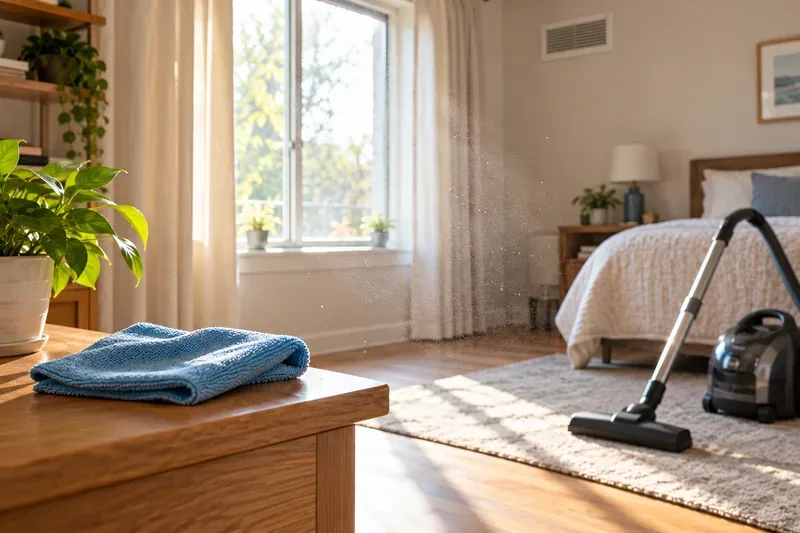
Illustrative example: imagine a bedroom called Room A. It has a carpet, fabric curtains, a forced-air heating and cooling vent, one frequently opened window, and a small bookcase. The room is vacuumed and dusted on Saturday morning. By Saturday afternoon, bright sun makes airborne particles visible again; on Sunday, the bedside table looks lightly dusty. This is only a hypothetical example, not a measured experiment or a claim about any specific home. We will use it to show how to separate normal resettling from a source that may need attention.
The U.S. Environmental Protection Agency (EPA) describes indoor dust as settled particulate matter from many sources. It can include outdoor soil and dust, pollen, mold spores, pet dander, dust-mite material, skin flakes, hair, and particles produced by indoor activities. EPA also notes that settled dust can be kicked back into the air by walking, cleaning, and vacuuming. See the EPA's guidance on sources of indoor particulate matter.
That matters in Room A. Vacuuming may remove a large amount of debris from the carpet while also temporarily disturbing some fine particles. Dusting a shelf with a dry tool can move material from the surface into the air instead of capturing all of it. Once activity stops, some of those particles settle again onto horizontal surfaces.
What to do: after a major clean, give the room some time to settle, then wipe frequently used horizontal surfaces with a damp cloth rather than repeatedly dry-dusting them. EPA specifically recommends damp dusting because it helps keep settled dust from returning to the air.
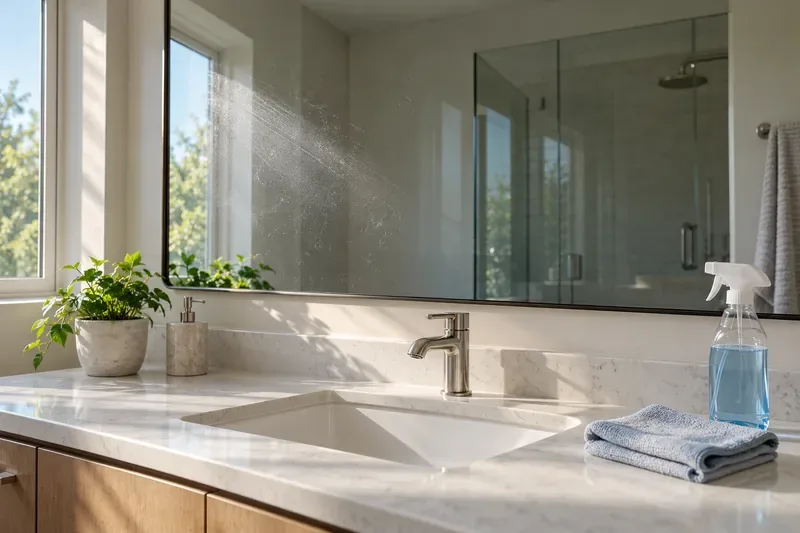
A shaft of bright side lighting can make tiny airborne particles unusually obvious. What you see in that beam is not a direct measurement of how dirty the room is. It simply means particles are present and illuminated against a darker background. The eye is very good at noticing this contrast.
In Room A, the Saturday-afternoon sun may reveal particles that were already present but nearly invisible under diffuse light. Their visibility does not tell you their exact concentration, composition, or health significance. EPA distinguishes particulate matter by particle size and source; a visible speck in a sunbeam is not a substitute for an air-quality measurement.
What to do: judge cleaning results by repeatable signs such as how quickly a wiped surface develops a visible film, whether the vacuum is collecting significant debris, and whether a particular activity reliably causes dust to appear. Do not use a sunbeam alone as your “dust meter.”
EPA notes that outdoor particulate matter enters homes through open doors and windows and through small openings and cracks. Outdoor sources can include road dust, vehicle pollution, pollen, smoke, and other particles. Indoor and outdoor air continually mix.
That makes Room A's open window important. If the room faces a busy street, dry soil, construction, high pollen levels, or smoky conditions, opening the window may bring in new particles soon after cleaning. In a different home with cleaner outdoor air, opening a window may not have the same effect. This is one reason there is no single cleaning schedule that works for every room.
What to do: if dust reappears quickly, compare a few days with the window mostly closed against similar days when it is open, while keeping other habits roughly the same. If outdoor air pollution or pollen is elevated, EPA recommends keeping windows closed and using appropriate filtration rather than assuming more ventilation is always better.
Carpet, rugs, upholstered furniture, bedding, and curtains can hold particles that are later disturbed by footsteps, changing sheets, sitting down, or airflow. EPA recommends vacuuming carpets and furniture regularly and notes that vacuums with HEPA filtration can help keep some vacuumed dust from escaping back into the room.
For Room A, the carpet and curtains do not automatically mean the room is “too dusty,” but they provide more surfaces where particles can collect compared with a sparsely furnished room with hard flooring. How much this matters depends on the material, traffic, pets, outdoor exposure, and cleaning frequency.
What to do: clean the highest-reservoir items deliberately. Vacuum the rug or carpet slowly, launder washable bedding on its normal care schedule, and vacuum upholstered surfaces when needed. If a vacuum visibly blows fine debris from its exhaust or leaks dust around the bag or canister, inspect its seals, filters, and maintenance instructions.
Some cleaning activities generate or resuspend particulate matter. EPA specifically lists cleaning among activities that can contribute to indoor particles and notes that vacuuming can increase airborne dust during and shortly after use. This does not mean vacuuming is counterproductive. It means the method and equipment affect what happens during the cleaning process.
In Room A, cleaning the floor first and then vigorously dusting the shelves could send new material down onto the freshly vacuumed carpet. Likewise, shaking bedding inside the room can put settled material back into the air.
What to do: work from higher surfaces toward lower ones, capture dust with a damp or dust-trapping cloth, and vacuum near the end. Avoid snapping or shaking dusty fabrics indoors when they can instead be carried carefully to the laundry area.
Airflow can redistribute particles throughout a room. A dirty or overdue HVAC filter may also reduce the effectiveness of particle capture. EPA advises changing HVAC and portable-air-cleaner filters according to the manufacturer's instructions. Its current home air-cleaner guidance says a higher-efficiency HVAC filter can improve particle removal when the system can accommodate it and recommends at least MERV 13, or as high a rating as the system can handle. See the EPA's Guide to Air Cleaners in the Home.
However, one common assumption goes too far: dust around a return grille does not, by itself, prove that the ductwork is contaminated or that routine duct cleaning will fix the room. EPA says evidence does not support routine duct cleaning for every home and notes that ordinary dust on return registers is normal. It advises considering duct cleaning when there is substantial visible mold growth inside hard-surface ducts, vermin, or excessive deposits of dust and debris that are actually being released into the home. See EPA guidance on air-duct cleaning.
What to do: first inspect and replace the accessible system filter if it is due, using the equipment maker's instructions. Vacuum or wipe dusty vent grilles. If particles visibly blow from supply registers, or you find evidence of pests, moisture, or heavy contamination, investigate the system rather than assuming routine duct cleaning is the first step.
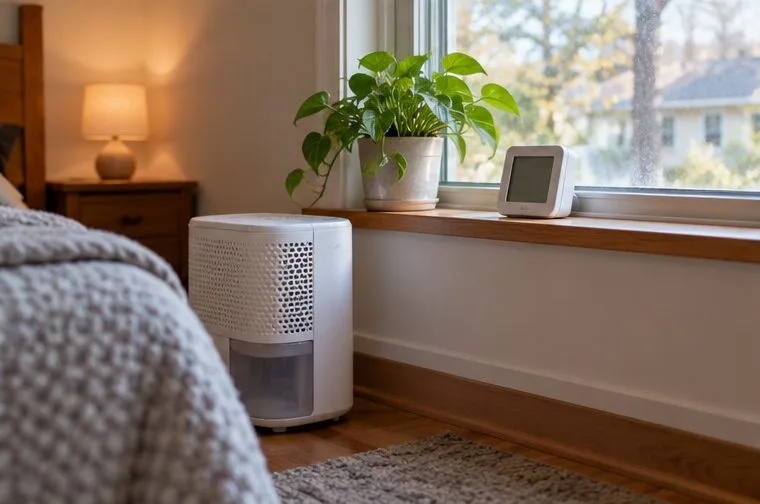
EPA says portable air cleaners and HVAC filters can reduce indoor particulate pollution, but no air cleaner removes all pollutants. The agency emphasizes source control first, with filtration as a supplement. For portable units, EPA recommends choosing a clean air delivery rate (CADR) suitable for the room size; HEPA filters are commonly used for particle removal.
A true HEPA filter, as defined by the U.S. Department of Energy and explained by EPA, is designed to capture at least 99.97% of airborne particles at 0.3 micrometers under the relevant test definition. That specification describes filter performance, not a guarantee that every particle in an actual room will pass through the filter. Airflow, room size, placement, operating speed, and run time all affect real-world cleaning. See the EPA explanation of HEPA filtration.
What to do: if airborne dust is the main concern after source control and regular cleaning, choose a portable cleaner sized for the room rather than selecting only by the words “HEPA” on the box. Run it long enough to circulate room air, and replace its filter on the manufacturer's schedule.
| Observation | What it may suggest | Useful next action |
|---|---|---|
| Dust returns mainly after vacuuming | Resuspension, vacuum leakage, or disturbed textiles may be contributing | Check vacuum filters and seals; damp-dust surfaces after particles settle |
| Dust is worse near an open window | Outdoor particles may be entering | Compare open- and closed-window periods; check outdoor air and pollen conditions |
| Dust gathers around a return grille | Normal airflow may be concentrating settled dust on the grille | Clean the grille and inspect the HVAC filter before considering duct service |
| Particles visibly come from a supply vent | An HVAC or duct issue becomes more plausible | Inspect the system and seek qualified service if substantial debris is being released |
| Dust is concentrated around bedding, rugs, or upholstery | Textiles may be acting as reservoirs | Clean those materials according to their care instructions and vacuum regularly |
A visible film of dust cannot tell you exactly what the particles are. Household dust is a mixture, and its composition differs from home to home. You also cannot diagnose mold, asbestos, lead, or another hazardous material simply because a surface is dusty. EPA advises extra caution when lead or asbestos may be present and recommends appropriate specialized procedures rather than ordinary dusting or disturbance.
What to do: if dust is associated with damaged old paint, deteriorating building materials, renovation debris, visible mold-like growth, a persistent moisture problem, or another specific hazard, address that source directly and use authoritative guidance for that material instead of treating it as routine housekeeping dust.
For most rooms, the goal is not to eliminate every particle. That is unrealistic. The goal is to slow the rate at which particles enter, reduce how much is generated indoors, capture settled material without unnecessarily redistributing it, and filter some of what remains airborne.
For hypothetical Room A, a sensible sequence would be: close the window when outdoor pollution or pollen is high; wipe hard surfaces with a damp cloth; clean textiles and vacuum with well-maintained equipment; check the HVAC filter; then consider appropriately sized portable filtration if airborne particles are still a recurring issue. This follows EPA's broader indoor-air principle that source control comes first and filtration supplements it. See EPA guidance on air cleaners and filters in the home.
If the room still develops heavy visible dust very quickly after those basic checks, look for a specific source rather than simply cleaning more often. Recent construction, an unsealed gap, deteriorating material, heavy outdoor dust, a malfunctioning vacuum, or particles released from an HVAC register are all more actionable clues than the vague impression that “the room is always dusty.”
A room can feel dusty soon after cleaning because dust is not a one-time layer that disappears permanently when wiped away. Some particles are resuspended during cleaning and then settle; some continue entering from outdoors; textiles and carpets can release material when disturbed; and airflow can move particles around the room. The most useful response is to identify the dominant source and pathway in that particular room.
In the Room A example, the next step would not be another full cleaning immediately. It would be a short, controlled check: damp-dust the main surfaces, verify the vacuum and HVAC filters, watch whether the open window changes how fast dust returns, and note whether particles are actually coming from a vent. That approach turns “Why is it dusty again?” into a problem you can narrow down instead of an endless cleaning cycle.
Use dry paper towels and four focused checks to find a hidden sink leak, tell supply leaks from drain leaks, and know when to call a plumber.
Bathroom mirror streaks often come from residue, dirty cloths, excess cleaner, or dried water. Find the likely cause and a gentle way to fix it.
Reduce overnight window condensation by controlling indoor moisture, improving airflow, monitoring humidity, and knowing when the window itself needs attention.
Reduce cooking and kitchen odors without fragrance by improving ventilation, cleaning grease and food residue, managing waste, and finding persistent odor sources.
Learn why ceiling fans wobble, which warning signs mean turn it off, and what you can safely check before calling an electrician.
Learn why indoor plant leaves turn brown at the edges, how to read clues about watering, humidity, salts, and light, and when to seek expert help.
Keep stored clothes dry without mothballs: measure closet humidity, reduce moisture at the source, dry garments fully, choose suitable storage, and inspect for mold.
Musty towels often point to lingering moisture, washer residue, or slow drying. Learn how a hypothetical laundry example helps narrow the cause and what to change first.
Keep balcony plants hydrated during a short trip with a plan based on pot size, plant needs, sun, and wind. Compare wicks, self-watering pots, and plant sitters.
Move a heavy houseplant safely without scratching hardwood, denting flooring, spilling soil, or straining your back. Use a protected path, a dolly, and a controlled team lift.