How to Find a Hidden Water Leak Under a Sink: A Simple, Safe Check
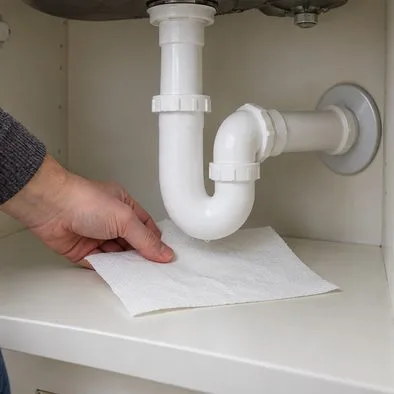
Use dry paper towels and four focused checks to find a hidden sink leak, tell supply leaks from drain leaks, and know when to call a plumber.
A refrigerator door seal can seem to be doing two contradictory things: the rubber around the door may feel warm, yet the door may also feel as though it is no longer gripping the cabinet as firmly as before. Those symptoms are not automatically connected, and neither one alone proves that the refrigerator is failing.
Manufacturer guidance supports two useful distinctions. First, warmth around the door opening can be a normal part of refrigerator design because heat is sometimes routed through the cabinet near the gasket to reduce condensation. Second, weak sealing is more often linked to contamination on the gasket, a gasket that has come loose, door alignment, obstructions, or physical damage. The exact design varies by model, so the owner’s manual remains the best source for model-specific limits and repair procedures.
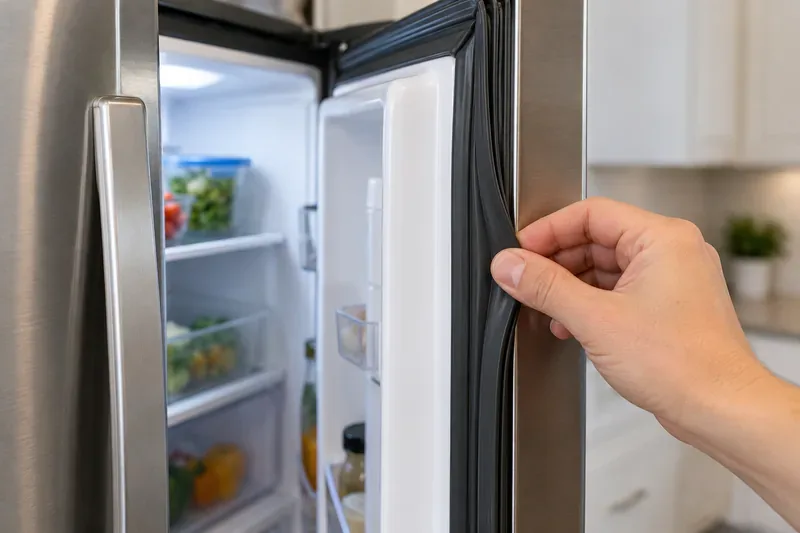
Verified explanation: many refrigerators deliberately warm parts of the cabinet around the door opening. Whirlpool explains that a heat loop can run inside the refrigerator walls near the gasket, mullion, or cabinet flange to help prevent moisture and frost on the exterior. Samsung likewise says anti-condensation components may be installed around the sealing area. This means a seal or frame that feels mildly or moderately warm is not, by itself, evidence of a bad gasket.
What to do: compare what you feel with your model’s manual and look at the whole refrigerator, not just one warm spot. If the cabinet is warm but the refrigerator and freezer are maintaining normal temperatures, the doors close fully, and there is no unusual smell or visible damage, the warmth may be normal operation. See Whirlpool’s explanation of why refrigerator cabinet areas can feel warm and Samsung’s support guidance on warm sealing areas.
Context-dependent: the exterior can feel warmer during initial cool-down, after a large grocery load, during frequent door openings, or in a hot kitchen because the refrigeration system may run longer. Whirlpool also notes that a dirty condenser can make heat rejection less effective and can increase exterior warmth on models where the condenser is serviceable.
What to do: if the refrigerator has recently been installed, heavily loaded, or used more than usual, give it time to stabilize and keep the doors closed as much as practical. If the exterior stays unusually hot or cooling performance is getting worse, check the manual for condenser-cleaning instructions, ventilation clearances, and service guidance. Do not assume every model has accessible condenser coils; some designs are not intended for routine owner cleaning.
Verified explanation: LG and Frigidaire both identify dirt or residue on the gasket as a cause of poor sealing. A magnetic gasket needs broad, even contact with the refrigerator cabinet. Dried spills, crumbs, grease, or sticky residue can prevent part of the gasket from sitting flat.
What to do: inspect the entire gasket, especially the bottom edge and corners. Clean it using the method recommended by your manufacturer. LG’s current support guidance advises wiping residue away with a warm towel and drying the gasket thoroughly; Frigidaire also recommends cleaning a gasket that is not sealing properly. Start with LG’s door and gasket troubleshooting guidance or Frigidaire’s refrigerator door guidance, then follow your own model manual if it differs.
Verified explanation: on some refrigerators, a removable gasket is pressed into a channel around the door. If part of it pulls out, sags, or twists, magnetic contact may weaken even though the gasket itself is not torn. GE Appliances notes that removable gaskets must be fully seated in the door groove and should present a smooth sealing surface.
What to do: with the door open, trace the gasket all the way around. Look for sections that are lifted, folded, or visibly displaced. If your manufacturer says the gasket is owner-reseatable, press the loose section back into its channel. If you are unsure how the gasket is retained, do not pry it out. Consult the manual or service instructions first. GE’s general guidance is available in its refrigerator gasket support article.
Verified explanation: a gasket can be perfectly clean yet still seal poorly if the refrigerator is not positioned correctly, a shelf or container blocks the door, a drawer is not fully seated, or the door is misaligned. LG’s September 10, 2026 support update lists food interference, shelf or drawer position, loose gaskets, and floor or leveling issues among common causes of incomplete door closure.
What to do: remove anything extending beyond the shelf fronts, confirm bins and drawers are fully seated, and check that the refrigerator is stable and level side-to-side. Use only the leveling procedure in the model’s installation instructions. Do not rely on a generic rule for every refrigerator, especially built-in models.
Context-dependent: rubber and flexible plastics age differently depending on heat, cleaning products, usage, and design. A small cosmetic seam is not necessarily damage; LG notes that corner seams can be normal manufacturing features on some gaskets. But a split, missing section, hardened surface, or persistent gap can prevent a reliable seal.
What to do: inspect for actual breaks, permanent waves, sections that no longer touch the cabinet, or areas where the internal magnet appears displaced. If the gasket cannot sit flat after cleaning and correct seating, look up the exact replacement procedure for the model or arrange service.
No. “Grip” is subjective. Some refrigerator doors feel strongly held just after closing because pressure inside the cabinet has not yet equalized. Whirlpool explains that warm room air can enter when a door is opened; after the door closes, changing air pressure can make it temporarily harder to reopen. That resistance can fade in less than a minute, which is normal and should not be confused with gasket magnet strength.
What to do: judge sealing by consistent contact and refrigerator performance rather than by how much force one opening requires. Check the perimeter for visible gaps and look for recurring condensation, frost near the door opening, or temperatures that do not stay stable.
Verified as a screening check, not a complete diagnosis: Frigidaire recommends closing the door on a dollar bill and feeling for resistance when pulling it out. Samsung also describes a paper-resistance test in its door troubleshooting. A section that releases with almost no resistance can help locate a weak-contact area.
What to do: use plain paper or a bill at several positions around the door, compare one section with another, and treat the result as a clue. A single easy spot may reflect door geometry or a local gasket issue. If several areas have little or no resistance and you also see cooling or condensation problems, move on to cleaning, alignment checks, and model-specific service guidance.
Service becomes more appropriate when the door cannot close fully after obstructions are removed, the gasket is torn or will not stay seated, the refrigerator is visibly misaligned, frost repeatedly builds around the door, condensation persists despite a clean and fully closed door, or food-compartment temperatures are not staying where the manufacturer specifies.
Also seek service if the cabinet becomes abnormally hot together with poor cooling, unusual electrical smells, repeated breaker trips, or other signs that go beyond a simple gasket issue. The sources above explain general patterns, but they cannot establish the cause of a specific refrigerator without the model number, installation details, and inspection.
In short, warmth near a refrigerator door seal is often intentional, while loss of grip deserves a closer look at cleanliness, seating, alignment, obstruction, and gasket condition. Treat the two symptoms separately first. That approach avoids replacing a perfectly good gasket when the warmth is normal, and it also helps catch a real sealing problem before it turns into recurring condensation, frost, or unstable temperatures.
Use dry paper towels and four focused checks to find a hidden sink leak, tell supply leaks from drain leaks, and know when to call a plumber.
Bathroom mirror streaks often come from residue, dirty cloths, excess cleaner, or dried water. Find the likely cause and a gentle way to fix it.
Reduce overnight window condensation by controlling indoor moisture, improving airflow, monitoring humidity, and knowing when the window itself needs attention.
Reduce cooking and kitchen odors without fragrance by improving ventilation, cleaning grease and food residue, managing waste, and finding persistent odor sources.
Learn why ceiling fans wobble, which warning signs mean turn it off, and what you can safely check before calling an electrician.
Learn why indoor plant leaves turn brown at the edges, how to read clues about watering, humidity, salts, and light, and when to seek expert help.
Keep stored clothes dry without mothballs: measure closet humidity, reduce moisture at the source, dry garments fully, choose suitable storage, and inspect for mold.
Musty towels often point to lingering moisture, washer residue, or slow drying. Learn how a hypothetical laundry example helps narrow the cause and what to change first.
Keep balcony plants hydrated during a short trip with a plan based on pot size, plant needs, sun, and wind. Compare wicks, self-watering pots, and plant sitters.
Move a heavy houseplant safely without scratching hardwood, denting flooring, spilling soil, or straining your back. Use a protected path, a dolly, and a controlled team lift.