Store cooked pasta and sauce in separate shallow, covered containers so you can portion them, reheat only what you need, and keep leftover meals easy to customize. This method works for home cooks preparing extra pasta for the next few days. Allow about 15 minutes of hands-on organizing time; cooling and chilling take longer. Refrigerate perishable food within 2 hours—or within 1 hour if the temperature is above 90°F—and keep the refrigerator at 40°F or below.
Prerequisites
- Tools: Clean shallow food-storage containers with tight-fitting lids, a serving spoon, and a refrigerator thermometer if you do not already know your fridge temperature.
- Time: About 15 minutes of hands-on time; cooling and chilling time varies with portion size and refrigerator conditions.
- Difficulty: Easy.
How to Store Cooked Pasta and Sauce Separately
Step 1: Set aside only the pasta you plan to save
Before serving, use a clean utensil to move the extra pasta into a clean container. Separating the portion before it is mixed with sauce keeps the leftovers flexible and avoids handling food that has already been on individual plates. If the pasta has already been served, save only food that has not been left out beyond the safe time limit.
Step 2: Portion the pasta and sauce into separate shallow containers
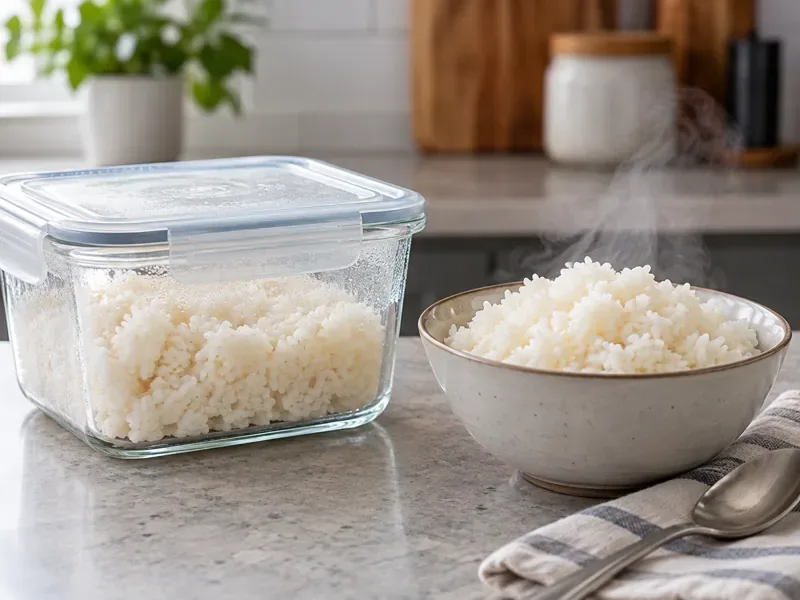
Divide the pasta into meal-size portions rather than packing it into one deep container. Put sauce in a second shallow container, or divide it into small portions of its own. Shallow containers help leftovers cool more quickly and evenly. Leave a little room at the top so you can stir or toss each portion easily later.
If the pasta is sticking together, toss it lightly with a small amount of olive oil before storing. Use only enough to coat the surface; a heavy coating can make the pasta greasy and can keep sauce from clinging when you combine them later. This is a texture tip, not a food-safety step.
Step 3: Cover, label, and refrigerate promptly
Cover each container with a tight-fitting lid. Mark the contents and the date so the plain pasta and sauce are easy to identify and you can use the oldest portion first. Refrigerate them promptly; do not wait for a large batch to reach room temperature on the counter. FoodSafety.gov advises refrigerating perishable foods within 2 hours, or 1 hour when they are exposed to temperatures above 90°F. A refrigerator should be set to 40°F or below.
Step 4: Use refrigerated portions within 3 to 4 days
Keep the pasta and sauce covered and refrigerated, and plan to use them within 3 to 4 days. That is the USDA recommendation for refrigerated leftovers. If you will not use them within that window, freeze them in freezer-safe containers while they are still within safe storage time. For best texture, freeze in portions you can thaw and reheat in one meal. Label the contents and date before freezing.
For a simple household example, if dinner leaves two cups of pasta and one cup of marinara, split the pasta into two shallow containers and the marinara into two small containers. Refrigerate the portions promptly. On a later evening, take out one of each, leaving the other meal sealed and cold.
Step 5: Reheat one serving and combine at the end
Reheat only the amount you plan to eat. Warm sauce in a saucepan or microwave-safe bowl, stirring as needed. Add the pasta and toss until it is heated through; a splash of water can loosen pasta that has dried in the refrigerator. If using a microwave, stir during heating so the food warms more evenly. USDA guidance for reheating leftovers is to reach 165°F. Use a food thermometer when checking a substantial portion, and avoid repeatedly cooling and reheating the entire batch.
Troubleshooting
The pasta has clumped together
Separate it gently with a fork as it warms. Add a spoonful of water to the pan or microwave-safe dish, cover loosely for microwave heating, then stir and toss. Next time, portion the pasta while it is still easy to separate and use only a light coating of oil if needed.
The pasta or sauce sat out too long
Do not rely on smell or appearance to judge safety. Discard perishable leftovers that have been at room temperature for more than 2 hours, or more than 1 hour in temperatures above 90°F. Refrigerating them afterward does not undo the time spent out.
The sauce is watery after thawing
Stir the sauce as it reheats; some separation can be a texture change from freezing. Heat it until steaming, then toss it with the pasta. For a cream-based or delicate sauce, freeze a small test portion first because its texture may change more than a tomato sauce.
FAQ
Should I rinse cooked pasta before storing it?
Usually, no. For ordinary pasta served with sauce, drain it well and store it in a clean container. Rinsing is generally unnecessary and can wash away surface starch that helps sauce cling.
Can cooked pasta and sauce go in the same container?
Yes, if you prefer, but storing them separately makes it easier to reheat a suitable amount and use the sauce with other foods. Either way, use a shallow covered container and refrigerate promptly.
How long can cooked pasta leftovers stay in the refrigerator?
Use refrigerated leftovers within 3 to 4 days, with the refrigerator at 40°F or below. If you are unsure how long they have been stored or whether they were chilled promptly, discard them.