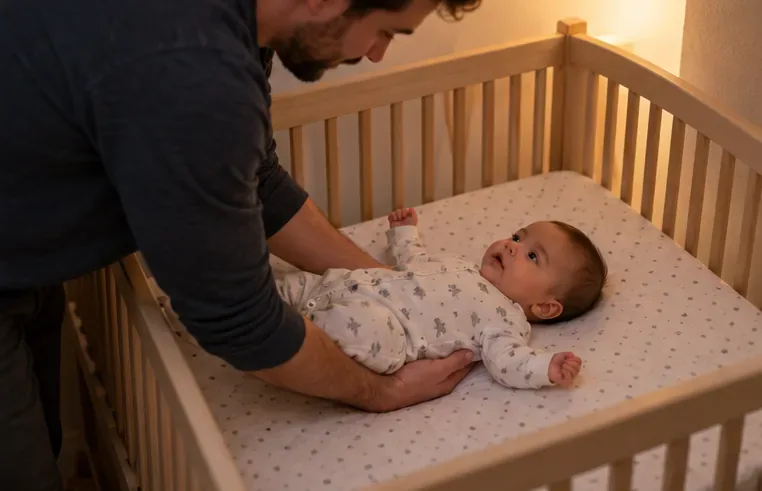
Do you know, 1 hour after birth, baby can imitate adult gestures and when 3 months old, baby can recognize mother's mood in every sentence? Not only that, according to experts, infants also have many abilities that even adults do not "keep up".

You may be surprised by the possibilities that you can achieve in the first 2 years of your life
1 / After birth: The ability to imitate
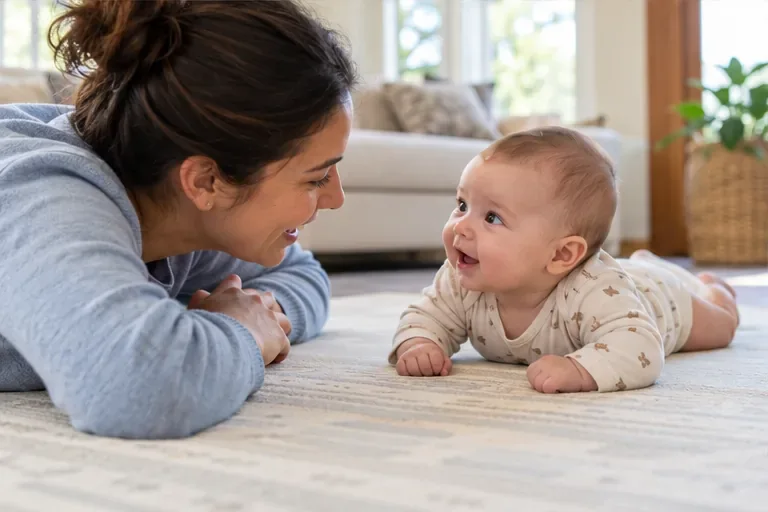
As soon as 1 hour is born, babies have the ability to imitate parents' gestures. The movements of the lips, tongue, the change of the shape of the mouth or even eye smiles can not make it difficult for the baby. More amazingly, experts have found that, after only a few days of age, babies are able to distinguish their mother tongue and other languages.
2 / The development of the infant : 3 months old and the ability to perceive emotions
According to research by British scientists conducted to observe the brain response of 3-month-old babies, the sound processing cortex has been active. In addition, experts also found that, when hearing sad sounds, the cortex specialized in processing emotions and activities changed. Therefore, mothers do not despise. Even at the age of 3 months, through the mother's voice, the baby has already recognized the mother's unhappy mood!
3 / Children 4-5 months old: Guess words at lips
Many studies have shown that, even without hearing sounds, 4-month-old babies can tell who is speaking their mother tongue. Even, babies can recognize vowels and consonants of all languages in the world and distinguish the differences in each sound. However, if not raised in a bilingual environment, most babies will lose this ability by the time they reach 8 months of age.
At 4-5 months: babies can read lips, match faces on silent video with “ee” and “ah” sounds.
The latest results released are that 4-month-old babies can tell if someone is speaking their mother tongue without sound, just looking at a silent video on the screen. However, this ability will disappear at the age of 8 months, if the child is not raised in a bilingual environment.
![In the first 2 years, your baby has grown spectacularly!]()
The standard "formula" to take care of a 4-month-old baby 4-month-old baby is almost a tiny adult with a fairly "moderate" meal, sleep and rest schedule. Therefore, mothers do not have to pretend to wake up in the middle of the night to breastfeed. However, the mother's concern revolved around a completely different matter
4/7-month-old child: The ability to recognize fear
In a 2009 study, Finnish experts found that 7-month-olds were able to "decipher" the facial expressions of those around them and detect dangers when not. parents beside.
5/8-month-old children: Passionate about justice
Not only awareness, 8-month-old children are also very excited to see that everything has "cause and effect". Watching a play with two lines of good and evil characters, while 5-month-olds hardly showed any attitude towards evil characters, 8-month-olds showed special interest when the character evil is punished.
6/13-month-old child development: The ability to judge
Research by experts at Concordia University, Montréal (Canada) shows that 13-month-old children have the ability to judge the actions of those around them, thereby making their own decisions.
According to the study, after seeing a person pretend to be happy when receiving an empty box, 64% of children showed a distrustful attitude and did not imitate the person's actions. However, with a person trusted by the baby, who does not react artificially when receiving an empty box, the babies will imitate this person's actions, even if this is "strange".
More surprisingly, the Hungarian experts also conducted research and demonstrated that, not only the ability to judge, 14-month-old children also know how to evaluate the effectiveness of an action. For example, when an adult is tied with two hands and uses his head to turn on the light switch, the children will not imitate this action, even if this is a trusted person. Because for babies, this is not as effective as turning the light switch manually.
![In the first 2 years, your baby has grown spectacularly!]()
"Bare hands" stimulates children's brain development As a building needs a solid foundation, for children to be intelligent and comprehensive development, parents should support to stimulate children's brain development from an early age. No special equipment or tools are required, just beware of the following!
7/15 months old: The ability to predict the action
You want to find a doll and you find a box with a part of the doll's hair sticking out? What you will do? Do you think the doll is in that box?
In an experiment conducted at the University of Illinois (USA) in 2008 showed that 15-month-olds were able to put themselves in your shoes and think about what you would do in this case. Babies are not at all surprised if you find the doll in that box. Even if you "ignore" the box, the children will be surprised and wonder why you ignored the box.
>>> See more discussions with related topics:
Stimulates development of children 5 months old
Combined foods inhibit a child's development