Home
» Babies
»
How to Introduce a Bottle When a Breastfed Baby Refuses It
How to Introduce a Bottle When a Breastfed Baby Refuses It
A breastfed baby can nurse comfortably and still reject a bottle the moment it appears. That does not automatically mean the baby dislikes pumped milk, that the bottle is “wrong,” or that breastfeeding has created a problem. Bottle feeding is a separate motor and sensory skill. The nipple feels different, milk can flow differently, the feeding position changes, and the familiar breastfeeding parent may still be close enough that the baby expects the usual routine.
The most useful approach is usually to change one variable at a time and keep the experience low-pressure. Current CDC guidance says a baby learning to use a bottle may need time, recommends offering it when the baby is calm and not extremely hungry or full, starting with a small amount, letting the baby take breaks, and stopping when the baby shows fullness cues. The CDC also notes that some breastfed babies may accept a bottle more readily from someone other than the breastfeeding parent.
First decide what problem you are actually trying to solve
“My baby refuses a bottle” can describe several different situations, and the best next step depends on the goal.
Situation
What may help most
Main tradeoff
You need occasional bottles for appointments or errands
Short, low-stakes practice sessions with expressed milk
Progress may be slower, but there is less pressure on the baby
You are preparing for daycare or returning to work
Practice several weeks before separation, including feeds by the future caregiver
Requires planning and pumping time
The baby accepts the bottle but becomes upset during feeds
Reassess nipple flow, position, pacing, temperature, and pauses
You may need to test a few variables rather than changing everything at once
The baby refuses all milk away from the breast
Get feeding support early, especially if separation is imminent
Professional assessment may be needed to distinguish preference from a feeding difficulty
Option 1: Change the timing before changing the bottle
A common mistake is waiting until the baby is very hungry. That can work for a baby who already knows how to bottle-feed, but it can backfire during learning. Crying is a late hunger cue, and a frantic baby has less patience for a new feeding method.
The CDC recommends introducing a bottle when the baby is calm and not too hungry or too full. A practical window is when the baby is awake, comfortable, and showing early interest in feeding but is not yet distressed. Start with a small amount so the goal is practice, not finishing a full feed.
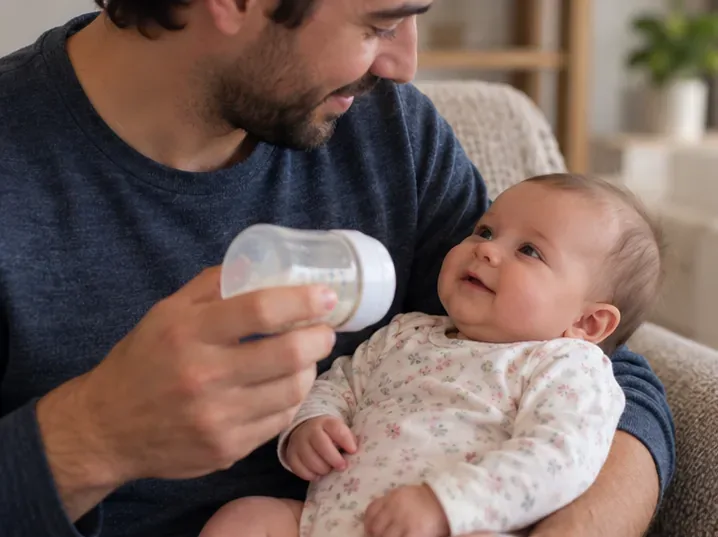
Start when your baby is calm and curious. Let the bottle be offered as an invitation rather than something that must be accepted.
Best fit: a baby who pushes the bottle away immediately or escalates quickly. Tradeoff: you may “waste” a little expressed milk during practice, so small volumes are useful at first.
Option 2: Let another caregiver offer the bottle
For some breastfed babies, the strongest cue in the room is the breastfeeding parent. They can smell milk, recognize the usual hold, and expect the breast. The CDC specifically notes that a breastfed baby may be more willing to take a bottle from someone else.
Try having a partner, relative, or future childcare provider offer the bottle while the breastfeeding parent is out of sight or even out of the house. This is not required for every baby, but it is a low-risk experiment when refusal happens mainly in the breastfeeding parent’s arms.
Best fit: a baby who becomes more frustrated when the breastfeeding parent offers the bottle. Tradeoff: some babies are more comfortable learning with their primary caregiver, so a different feeder is not automatically better.
Option 3: Make the nipple easy to accept, but do not chase every bottle on the market
Bottle nipples vary in shape, softness, length, and flow rate. A baby who refuses one may accept another, but there is no universal “breast-like” nipple that works for all breastfed babies. The goal is not to perfectly imitate the breast; it is to find a nipple the baby can latch onto comfortably and control.
Start with a slower flow that allows the baby to suck actively rather than having milk pour into the mouth. If the baby repeatedly coughs, gulps, leaks milk, pulls away, or seems overwhelmed, flow may be too fast. If the baby sucks hard for a long time with little transfer and becomes frustrated, flow may be too slow. These signs are not diagnostic on their own, but they can help guide what to test next.
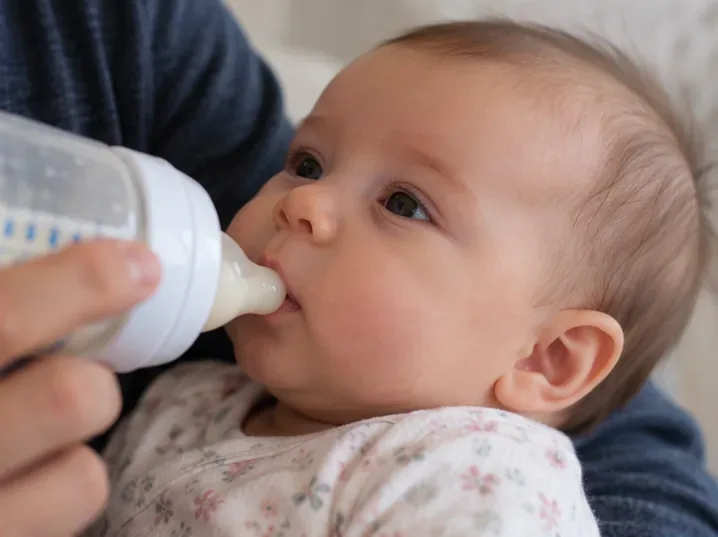
Touch the nipple to the lips and allow the baby to draw it in. A gentle, responsive start can reduce resistance.
Instead of placing the nipple deeply into the mouth, touch it to the baby’s lips and give the baby a chance to open and draw it in. This respects the baby’s feeding cues and may reduce defensive refusal.
Best fit: a baby who mouths the nipple but will not sustain sucking, or who seems uncomfortable with milk flow. Tradeoff: changing nipples too frequently can make it hard to learn what actually helped. Give a reasonable setup more than one calm attempt unless the baby is clearly struggling.
Option 4: Use paced, responsive bottle feeding
Paced feeding is less about a rigid technique and more about giving the baby control. CDC guidance recommends holding the bottle at an angle rather than straight up and down, letting the baby take breaks, and stopping when fullness cues appear. NHS responsive-feeding guidance similarly describes holding the bottle almost horizontal and allowing pauses.
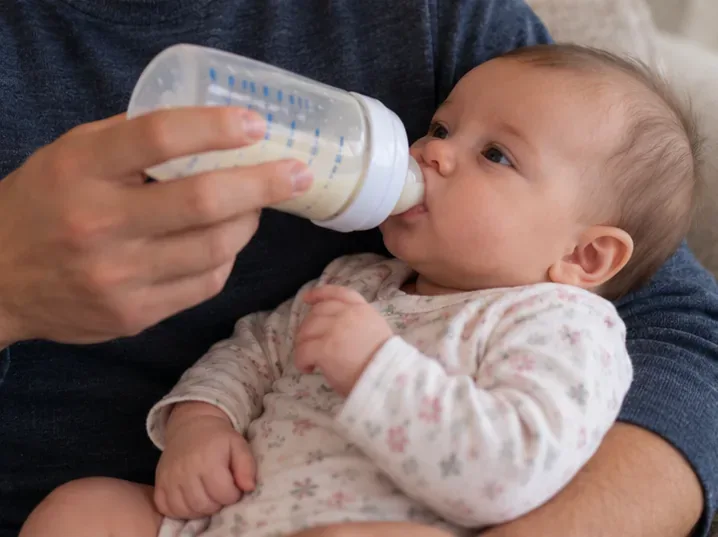
Keep the bottle closer to horizontal than vertical so milk flow is not driven mainly by gravity, and pause when the baby needs a break.
Hold the baby close and supported, generally more upright than flat.
Keep the bottle just tipped enough to keep milk in the nipple rather than pointing it vertically downward.
Pause when sucking slows, the baby releases the nipple, turns away, splays fingers, or looks overwhelmed.
Do not insist that the bottle be finished.
Best fit: babies who accept the bottle but gulp, cough, finish unusually fast, or become upset partway through. Tradeoff: feeds may take longer than a gravity-driven bottle, but the baby has more control over flow and stopping.
Option 5: Test milk temperature without assuming warm is always better
Some babies prefer expressed milk close to body temperature; others accept it cool or cold. There is no requirement that breast milk be warmed if it has been stored safely. If refusal is consistent, try one temperature change at a time rather than changing nipple, caregiver, position, and temperature all in the same session.
If you warm breast milk, use a container of warm water or another safe warming method. Avoid microwaving because it can create hot spots. Follow current breast-milk storage and handling guidance from the CDC.
Best fit: a baby who latches onto the bottle but pulls off as soon as milk reaches the mouth. Tradeoff: warming adds preparation time, and some babies may later expect that same temperature.
Option 6: Practice regularly if you know bottles will be needed
The CDC recommends beginning pumping practice a few weeks before returning to work or school so both pumping and bottle feeding have time to become familiar. If your baby accepts a bottle once and then does not see one again for weeks, the skill may not stay familiar.
For families who know daycare, work, or travel is coming, it can be more useful to build a predictable practice routine than to wait until the first day of separation. The frequency does not need to turn every feed into bottle practice. The aim is familiarity without creating a daily battle.
Best fit: families with a known upcoming separation. Tradeoff: replacing breastfeeds with bottles can reduce breast stimulation, so if maintaining milk supply matters, pumping at roughly the times the baby receives milk away from the breast can help. CDC guidance says that when you are away from your baby, pumping about as often as the baby drinks breast milk helps signal your body to keep making milk.
What if the baby turns away or cries?
Turning away, closing the mouth, or disengaging are reasons to pause or stop. Forcing a feed can make bottle refusal more entrenched.
Stop treating the bottle as a test the baby has to pass. Turning the head away, closing the mouth, pushing the bottle away, relaxing the hands, or disengaging can all be cues that the baby needs a break or is done. CDC guidance emphasizes following hunger and fullness cues rather than forcing a baby to finish a bottle.
If a practice session becomes a struggle, pause, soothe the baby, and return to normal feeding. Repeatedly forcing the nipple into the mouth or withholding breastfeeding until the baby “gives in” can make feeding more stressful and risks inadequate intake.
When a cup may be more practical than continuing to battle a bottle
If an older infant has never accepted a bottle and is approaching the age when cup skills are developmentally appropriate, a cup may eventually be a practical alternative. The American Academy of Pediatrics notes that cup introduction can begin around 6 months as babies start complementary feeding. For a younger infant who needs milk away from the breast, however, the safest alternative feeding method should be discussed with the pediatrician or a qualified lactation professional rather than improvised.
Best fit: older infants nearing or past about 6 months who consistently reject bottles. Tradeoff: cup drinking is a separate skill and does not eliminate the need to make sure the baby takes enough milk overall.
When bottle refusal needs professional help
Bottle refusal is often a preference or learning issue, but feeding problems deserve prompt attention if intake is falling. Contact your baby’s pediatrician or a lactation professional if the baby is taking very little overall, is not gaining weight as expected, seems unusually sleepy or weak, has persistent coughing or choking with feeds, or feeding is consistently painful or distressing.
For young babies, diaper output is also an important clue. CDC guidance says that by day 5 to 7, a breastfed newborn typically has at least six wet diapers per day; fewer wet diapers, continued weight loss after day 5, or concern that the baby is not getting enough milk are reasons to contact a health professional promptly. The exact expected pattern changes with age, so use your pediatrician’s advice for your baby.
A simple troubleshooting sequence
Start with timing: offer the bottle while the baby is calm, before crying begins.
Reduce pressure: use a small amount and stop if the baby becomes upset.
Change the feeder: have another trusted caregiver try.
Check flow and position: use a controllable flow and a more horizontal bottle angle.
Try one sensory change: test milk temperature or a different nipple, but not five changes at once.
Practice before it becomes urgent: especially if work or childcare separation is coming.
Escalate when intake is the problem: get medical or feeding support rather than continuing a stressful experiment at home.
How to know whether your approach is working
Success does not have to mean a full bottle on the first try. Look for smaller changes: the baby stays calm when the bottle appears, touches or mouths the nipple, takes a few sucks, pauses without distress, and gradually drinks more over repeated sessions. A good feeding plan should protect total milk intake, preserve breastfeeding goals where possible, and reduce—not increase—stress around feeding.