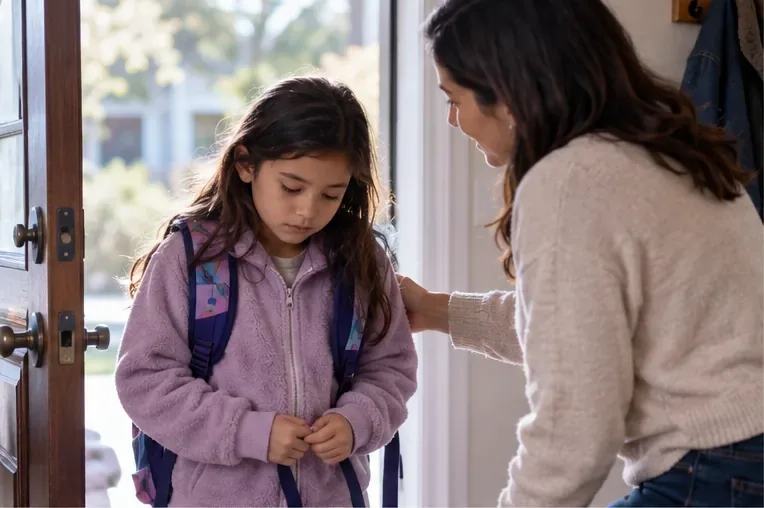
How to Teach Chores Without Redoing Every Task for Your Child

Teach kids to do chores with fewer reminders: set a clear finish line, model one task, step back, and correct only what is unsafe or unfinished.
Teething fever makes you anxious. Did you know that each baby has different signs of teething? The most common symptoms are irritability, refusing to breastfeed, or biting the breast or nipple if they are bottle-fed, loss of appetite, and even some teething babies with a mild fever.
Teething is an exciting and important stage in a child's development. This is a milestone that marks your baby's transition to foods other than milk. The teething stage is when the first tooth comes out of the child's gums. This can be uncomfortable for a few days. Therefore, you can learn about the related issues that cause a teething fever to know how to help reduce the discomfort.
Usually in the period from 4-7 months old, the baby will grow the first tooth. Some babies may teething a little earlier at about 3 months of age. The first erupting teeth are usually the lower two incisors, followed by the two upper incisors and then the two upper incisors, then the two lower incisors.
Time later, the first molars appeared. The upper molars grow last. Most babies have 20 baby teeth before 3 years old. Therefore, if your child is older than 3 years old but does not have enough teeth, you should take him to a doctor to know his oral health status. In addition, regular dental health check-ups help dentists detect dental problems in time such as tooth decay, deviated teeth, joint mismatch ...
In rare cases (with a rate of about 1 / 3,000 babies), newborn babies already have 1-2 teeth (also known as newborn teeth ) or teething just a few weeks after birth. In this case, if the baby's teeth interfere with the feeding or are shaking and put the baby at risk of choking, you should take your baby to the doctor for proper treatment. If your doctor tells you that these newborn teeth are not affecting your baby, you don't need to worry too much.
Some of the signs below will help you recognize when your baby starts teething and a fever caused by teething.

When the baby enters the teething stage, the baby will have typical signs for you to easily recognize such as:
Drooling a lot
Stubborn
Or fussy
Or bite
Love to chew
Swollen, red gums
Stop breastfeeding
Struggling to sleep
Rub cheeks, pull ears
Put your hand in your mouth and bite
If the baby has weaned food, he may not eat or eat
Some children have diarrhea (teething) and teething fever.
In addition to the signs of irritability, difficulty eating and sleeping, a child with a fever teething has some signs such as:
Runny or stuffy nose
Sneezing or coughing
Baby has diarrhea, vomiting
Rash
When your baby gets into teething, the swollen gums may cause the baby's body temperature to be a bit higher than normal, but teething fever is usually not high or has no diarrhea. If the fever is higher than 38 ° C and diarrhea, the baby may have another disease that is not teething or during teething, the child often put dirty hands in the mouthpiece, biting unhygienic objects. to infection and fever. Therefore, take your child to the doctor to be examined and correctly diagnosed with the health problem that they are facing.
There are many opinions that children have fever and diarrhea when teething. This is not correct. Teething doesn't directly cause diarrhea, according to the American Academy of Pediatrics.
But there are several possible reasons for the relationship between a child's fever and diarrhea when teething. The teething time usually starts at about 6 months, this is also the time when mothers usually start to feed babies . Your baby's immature digestive system may take a while to get used to new foods. This can cause changes in your baby's bowel movements, including diarrhea.
Around this same time, the baby loses the antibodies the baby received from the mother at birth. When the body has less antibodies and the child tends to put everything in his mouth, he increases the risk of infection leading to an infection that causes diarrhea .
In addition, the child's diarrhea during teething can be due to causes such as food allergy , food sensitivity (especially to foods the baby eats for the first time), side effects from medication, traveler's diarrhea , or even diarrhea for no apparent cause.
If your baby is teething and has gum pain, you can give your baby a silicone ring to chew on or wash your hands thoroughly and gently massage your baby's gums with your fingertips.
To make the teething process easier for your baby, you should apply the following tips:
Some babies enter the teething stage or drooling. Therefore, you should wipe your baby's mouth more often to keep it clean and to prevent rashes around the mouth, cheeks, chin and neck. If your baby drool a lot, you can put your baby on a bib and put on a diaper rash.
Wash your hands thoroughly every time you rub your baby's gums.
During teething, your baby's gums will swell and hurt. To relieve your baby's pain, you can put the chewing ring in the refrigerator and let your baby use it. Do not leave the ring in the freezer compartment as this could cause the tool to crack or stop contaminated with chemicals. If you don't have a chewing ring, you can replace it with a clean, wet towel. You can put the towel in the refrigerator before giving it to your baby.
Note when choosing to buy a chewing ring for your baby: Avoid buying a ring with liquid inside because the ring can crack, leak fluid, making your baby at risk of swallowing. Read the directions carefully before giving them to your baby. If the instructions do not ask you to boil it to disinfect the ring, do not do it because changes in temperature can cause the ring to become damaged and easily crack.
If your baby has already eaten, you can feed him a snack to satisfy his chewing and biting needs. But note that you must monitor when feeding the baby, avoid choking, choking can endanger life .
The painful swollen gums can make your baby cranky, if your baby is over 6 months old, you can give ibuprofen or acetaminophen to help relieve the pain. However, you should consult your doctor about the proper administration and dosage.
Absolutely do not give your child aspirin in any form such as giving it to a child or rubbing it on his gums because it will cause his child to have Reye's syndrome .
Do not rub your baby's gums with alcohol.
Absolutely do not use gels or any other medicine to rub on baby's gums. Some medicines contain belladonna or benzocaine that can be dangerous to a child's health.

Dental care for a baby before the first tooth comes in is very important for the long-term oral health of the child. Every day, clean your baby's gums with a clean cloth, gauze, tongue swab or gently brush with a baby brush and water. When your baby has teething, brush your baby's teeth twice a day, especially after eating and before going to bed.
You can build up this habit for your child by showing them and imitating you or their siblings brushing. In addition, you can choose a suitable toothbrush for your baby and you can play songs that teach children to brush teeth on YouTube for them to watch and imitate. When your baby knows how to handle the toothbrush well, you can let them brush their own teeth, show them how to floss their teeth regularly.
Although the baby teeth will fall out when the child is about 5-6 years old, if they do not take good care of their teeth, the decay will cause the baby teeth to "fall before the deadline". This unintentionally leaves a gap too soon before permanent teeth erupt. Therefore, the remaining teeth tend to be chained together to fill the gaps that make it difficult for permanent teeth to grow, even to erupt, or at the wrong position.
With children about 3 years old, you can let them brush their teeth with a baby toothpaste. Choose a cream that is low in fluoride and use a pea-sized amount or less for your child. Do not let your child swallow the toothpaste because the fluoride in the toothpaste can be harmful to them.
To prevent baby's tooth decay, you should not give your baby milk at night. Children drinking milk while sleeping can cause tooth decay and plaque formation on the teeth, making it unsightly.
The American Dental Association ( ADA ) recommends that parents have their children examined their teeth when they are 1 year or 6 months after the first tooth appears. The aim is to detect a child's dental problems early and the dentist will advise parents on effective dental care for their child.

Young children when teething will often be fussy, restless, stop feeding, stop eating for a few days ... But if the baby has a fever or has the following signs, take your child to the doctor as soon as possible:
Babies under 3 months old with fever above 38 ° C
Baby over 3 months old with a fever above 39 ° C
Fever lasts more than 24 hours
High fever is accompanied by diarrhea, vomiting, or rash
Sleep well, doze
The crying won't stop and you can't comfort your baby
Diarrhea (passing bowel movements) lasts more than 1 week
There is blood in the stool
Baby's weight decreased significantly (more than 5% of body weight loss)
Signs of dehydration (dry lips, dry skin, little urination, crying without tears ...)
Teething can be an uncomfortable time for both mother and baby. This is an inevitable stage in a child's development. Therefore, you should learn carefully to have an appropriate method of child care.
If your child has a fever, please refer to the article " 8 safe and fast ways to reduce fever for children" to know how to reduce fever in the right way.
Teach kids to do chores with fewer reminders: set a clear finish line, model one task, step back, and correct only what is unsafe or unfinished.
Learn why toilet-trained children may start having pee or poop accidents again, what patterns to track, how to respond calmly, and when to call the pediatrician.
A child may repeat a reassurance question to process information, seek connection, or manage worry. Learn how to respond and when persistent anxiety needs support.
Learn how to set screen-time boundaries with predictable routines, warnings, calm follow-through, and better transitions—without turning every device handoff into a fight.
Teach children to handle losing without shame or explosive anger by validating feelings, setting behavior limits, modeling recovery, and practicing at the right difficulty.
A calm, practical plan for after-school meltdowns: reduce overload, keep limits clear, track patterns, coordinate with school, and know when to seek help.
Learn how to respond when a child feels unwanted, ask supportive questions, recognize bullying or ongoing distress, and know when to seek extra help.
Learn how to set up a shared bedroom for siblings with different bedtimes, from planning around age-based sleep needs to creating separate sleep spaces and quiet routines.
Compare full-day, gradual, and temporary at-home return plans, plus health checks and school supports that can help a child reenter safely.
Learn when a child can try to solve a friendship problem, when adults should step in, and how to tell whether support is helping or needs to change.