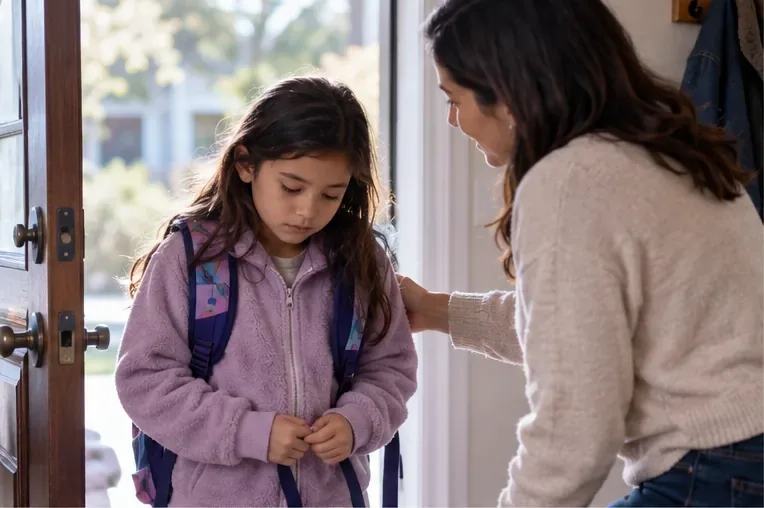
How to Teach Chores Without Redoing Every Task for Your Child

Teach kids to do chores with fewer reminders: set a clear finish line, model one task, step back, and correct only what is unsafe or unfinished.
To take care of your child's teeth and teeth, you teach them to brush their teeth properly, choose toothpaste products suitable for their age. But you do not pay much attention to choosing a toothbrush for your baby because you think that every child's toothbrush is the same.
The fact is that for your baby to love oral hygiene, you can choose a toothbrush that is suitable for the child's age, eye-catching colors, good materials that do not harm the baby's enamel and gums. So to choose the brush according to what criteria?
Children's toothbrushes are available in many sizes, shapes, and colors, making it difficult to buy. If your baby is not interested in brushing, try to find out why. A toothbrush that is too hard to hurt your baby's mouth, or the color and style that your baby doesn't like may be the cause. Therefore, choosing to buy a toothbrush with the right color and size ... will make brushing your child's teeth more enjoyable.
For your baby to love oral hygiene, mothers choose a toothbrush for the baby, according to the following criteria:
You should not choose any baby toothbrush and let your baby use it without considering the size of the brush. Baby toothbrushes need to fit comfortably in the child's mouth cavity, making them easy to hold to brush their teeth.
The mother should choose a toothbrush according to the child's age, preferring one with a small brush tip so that the baby can easily clean the entire tooth surface and the inner teeth without causing pain in the inner cheeks or gums.

Soft bristles are the second most important thing to consider when choosing to buy baby toothbrushes. The reason is that the use of a bristle brush will easily damage the gums and erode the child's enamel . In addition, you should pay attention to the bristles of the brush, choose a brush that has a wavy surface, thin bristles to help brush the teeth.
If your child is over 3 years old , you should instruct him on how to clean his tongue after brushing his teeth for effective oral care. Explain to your child that the bacteria that cause tooth decay are not only lurking in the teeth, but also "station" on the surface of the tongue.
Do not for cheap or any other reason but choose to buy a brush that is floating or has unclear labels for your baby to use. These products are often substandard, with potential problems with dental health.
When choosing to buy a toothbrush for your baby, it is best to bring your child along. After you have chosen the product according to the above criteria, let your child choose the brush with their favorite color, shape or cartoon character. This will make them enjoy each time they brush their teeth.
The only way to protect your baby's oral health is to take care of his or her teeth early . If you are wondering how to take care of your child's teeth, please:

If children are not shown how to properly brush their teeth or do not like to brush their teeth, they can just brush their teeth through the speaker, make a rule to finish things, even brush their teeth very hard ... This can easily damage gums, abrasion enamel.
Therefore, you should teach your child to brush their teeth properly by following these steps:
Step 1: Rinse mouth with water to clean the oral cavity. Rinse the brush under running water and apply a pea-sized amount of toothpaste to the brush.
Step 2: You instruct your baby to lightly bite the two teeth together, bared their teeth, place the brush horizontally and slightly tilted against the gum line, the bristles of the brush should be in contact with both the teeth and gums. Teach your baby to move the toothbrush in a circular direction to clean the outside of the teeth one after another. If your baby does not like to brush their teeth with a circular motion, you can teach your child to clean their teeth by gently brushing from the top down for the upper teeth and opposite to the lower molars.
Step 3: Instruct the child to open their mouth and brush the inside of the teeth similar to the outside.
Step 4: To clean the chewing surface of the teeth, instruct your child to place the brush parallel to the chewing surface, then gently brush with a circular movement from the inside out. A few rounds should be brushed to ensure that the chewing surfaces of the teeth are brushed clean.
Step 5: Clean the tongue, you instruct your baby to brush the top of the tongue with the brushing surface of the brush (if any) or with a special tongue brush. This helps to effectively eliminate odor-causing bacteria and dental problems .
Step 6: Clean the oral cavity by rinsing your mouth with water several times. Clean the scaly brush before storing it in place.
To build good oral hygiene habits for children , you should clean their teeth as soon as their child's first tooth appears or even earlier. You can use a soft cloth or tongue cloth soaked in warm water for daily oral hygiene.
If your baby is old enough to brush his / her own teeth, you should practice your baby the habit of brushing his teeth twice a day, morning and night just before going to bed.

In order for your child to love brushing and protecting their oral health, in addition to choosing the right toothbrush for your baby, you need to choose the right toothpaste for your child . You can choose a fluoride toothpaste to help combat cavities and protect your teeth effectively.
According to the American Academy of Pediatrics (AAP), a fluoridated toothpaste can be used as soon as the baby has their first tooth, but it is important to note that the amount of toothpaste used is no more than that. the size of a grain of rice. For children aged 3-6 years old , the amount of toothpaste that babies use should be only one bean. For older children, the amount of cream that the child uses should increase gradually, maybe equal to a grain of corn (corn).
For effective oral protection, in addition to proper dental hygiene, your baby should also limit the consumption of juices, soft drinks, foods containing sugar ... The consumption of these foods increases the risk. tooth decay in a child . You should practice for your child the habit of rinsing clean right after using these foods.
You should take your baby to the dentist periodically every 3 months / time and take him to the doctor as soon as he notices that he has dental problems.
Taking your child to a regular dental check-up helps early detection of dental problems such as cavities, deviated teeth and other dental problems. This helps dentists come up with the optimal treatment for the baby. You should start this as soon as your baby is 12 months old , or even younger, as soon as he has a few teeth, because prevention is better than cure.
Children's oral health is just as important as physical health. So choosing a toothbrush for your baby, teaching children to brush their teeth properly and building a habit of brushing twice a day helps to protect their child's health effectively.
Teach kids to do chores with fewer reminders: set a clear finish line, model one task, step back, and correct only what is unsafe or unfinished.
Learn why toilet-trained children may start having pee or poop accidents again, what patterns to track, how to respond calmly, and when to call the pediatrician.
A child may repeat a reassurance question to process information, seek connection, or manage worry. Learn how to respond and when persistent anxiety needs support.
Learn how to set screen-time boundaries with predictable routines, warnings, calm follow-through, and better transitions—without turning every device handoff into a fight.
Teach children to handle losing without shame or explosive anger by validating feelings, setting behavior limits, modeling recovery, and practicing at the right difficulty.
A calm, practical plan for after-school meltdowns: reduce overload, keep limits clear, track patterns, coordinate with school, and know when to seek help.
Learn how to respond when a child feels unwanted, ask supportive questions, recognize bullying or ongoing distress, and know when to seek extra help.
Learn how to set up a shared bedroom for siblings with different bedtimes, from planning around age-based sleep needs to creating separate sleep spaces and quiet routines.
Compare full-day, gradual, and temporary at-home return plans, plus health checks and school supports that can help a child reenter safely.
Learn when a child can try to solve a friendship problem, when adults should step in, and how to tell whether support is helping or needs to change.