How to Teach Chores Without Redoing Every Task for Your Child
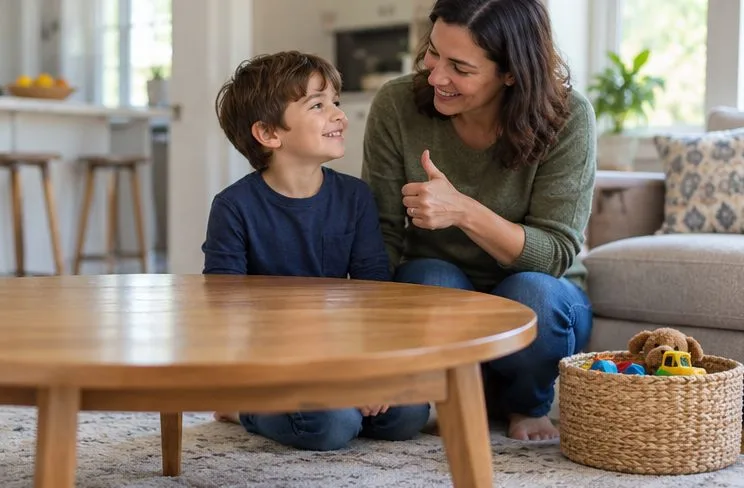
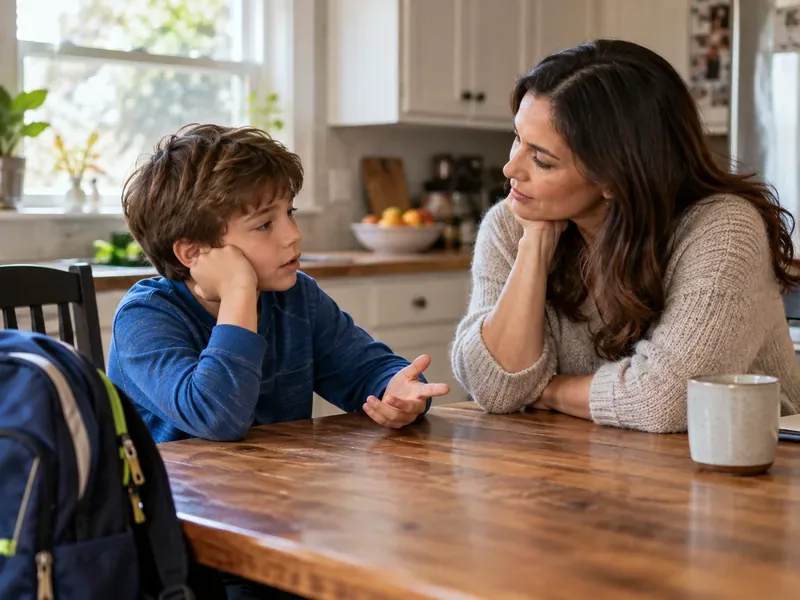
Teach kids to do chores with fewer reminders: set a clear finish line, model one task, step back, and correct only what is unsafe or unfinished.
From a young age, you should build a habit of reading for children. This not only helps children have a rich imagination, promotes creative thinking, but also encourages more brain activity.
You can easily see that a child who has a habit of reading will have a richer imagination, logical thinking and creativity than those who are lazy to read. Building this good habit for your child will help your child enjoy reading and learning more. The first step in building a reading habit for your child is a positive attitude toward reading by all members of your family.
As a parent, you first need to take responsibility for developing children's reading skills. In this article, aFamilyToday Health gives you 6 tips to help build this good habit for children and good books for children should be in every family bookcase.
This is simple, right? In fact, children learn most of the habits of their parents . Therefore, if you want to build a habit of reading for your child, make sure your child sees you doing this often. If your child sees you reading often, he will also imitate these habits and begin to read on his own. Make your children understand how important reading is not only for entertainment but also as a channel for keeping up with information, adding knowledge and connecting with others.
Discuss with your child what they have read recently. This is not simply about discussing the content of the story, but talking about similarities between stories or events, or new or ongoing issues. This makes it easier for you to see what your child is absorbing and what genre of book or author they like. Encourage your child to maintain their interests.
Note that while talking with your child, you should be comfortable and skillful so that your child does not feel being questioned or pressed.
In addition, if possible, work with parents of children who enjoy reading and form groups so they have the opportunity to play together, exchange books and discuss together.

If you keep books that you read as a kid, give them back to your child. Share with your children how the characters or content in those books have influenced you.
Encourage your child to read books written in their native language. This not only helps your child to better connect with the national culture, but also builds strong language skills. When the skills of reading and understanding your child's native language are mature, you can let them read books in other languages.
After a while of choosing books and reading to them , let them choose books according to their preferences. Don't force or dictate, let your child freely choose his own book, but you should be there to help if your child needs advice or assistance.
As a parent, you need to understand that it is very important to monitor your child's reading, not force them to read about books you think they should read.
A very helpful way in building reading habits for children is to apply a “policy”: reading rewarded books with all family members.
Encourage family members to join the reading game and specify the number of books to read, summarize the content ... if you want to win the top position. This not only helps the whole family improve knowledge, create a healthy competition among members, but also helps connect everyone.
While implementing this "policy", you can encourage people to read a variety of books. If your child accomplishes this, you should reward her for memorizing it. Note: a reward or gift should be a tangible item for your child to easily see every day, avoid using food as a reward.
The secret to building a reading habit for children is not necessarily limited to reading. You can let your child listen to audiobook stories, plays / movies made from literary works.
In addition, you should often "ask" your child to help read electricity and water bills, bill after going to the supermarket or write down what you need to buy for the coming week ... It's important to pay attention to details in the list and shouldn't miss out on any of the mentioned details.
Occasionally, instead of taking your child to the bookstore, go with your baby to the library. Seeing many people interested in reading here will stimulate children.

Here are some good books for children that aFamilyToday Health would like to introduce to you.
Adventure story cricket - To Hoai
The corner of the yard and the sky (poetry) - Tran Dang Khoa
Southern forest land - Doan Gioi
Dream Island - Nguyen Nhat Anh
The sky in the egg (poetry) - Xuan Quynh
Fruit story - Pham Ho ...
Foreign authors:
No family - Hector Malot
The strange adventures of Karik and Valia - Yan Larri
The Little Prince - Antoine de Saint-Exupéry
Alice in the Land in the Mirror - Lewis Carroll
The secret garden - Frances Hodgson Burnett
Charlotte and Wilbur - EB White
Love you forever - Robert Munsch
How much do you love me - Sam McBratney
At the end of this aisle - Shel Silverstein
Pippi long socks - Astrid Lindgren
Red-haired Anne under Green Gables - LM Montgomery
Charlie and the chocolate factory - Roald Dahl ...
Like many other habits, the development of reading habits for children needs to be built up by parents from the early years of their child's life . So, from a young age, you should read books to your child, show them books with lots of beautiful pictures ... When your child has gone to school and can read, you should let your child read and introduce it to him. Children books with simple content, suitable for their age, eye-catching images such as illustrations, comics, word stories for children ... Then gradually introduce to children literary works that are popular with many children. my favorite.
When reading habits are ingrained in children's minds, children will tend to develop more in tastes, interests, genres and authors. When children understand the connection between reading and social, historical, and political contexts, they will automatically appreciate reading.
Teach kids to do chores with fewer reminders: set a clear finish line, model one task, step back, and correct only what is unsafe or unfinished.
Learn why toilet-trained children may start having pee or poop accidents again, what patterns to track, how to respond calmly, and when to call the pediatrician.
A child may repeat a reassurance question to process information, seek connection, or manage worry. Learn how to respond and when persistent anxiety needs support.
Learn how to set screen-time boundaries with predictable routines, warnings, calm follow-through, and better transitions—without turning every device handoff into a fight.
Teach children to handle losing without shame or explosive anger by validating feelings, setting behavior limits, modeling recovery, and practicing at the right difficulty.
A calm, practical plan for after-school meltdowns: reduce overload, keep limits clear, track patterns, coordinate with school, and know when to seek help.
Learn how to respond when a child feels unwanted, ask supportive questions, recognize bullying or ongoing distress, and know when to seek extra help.
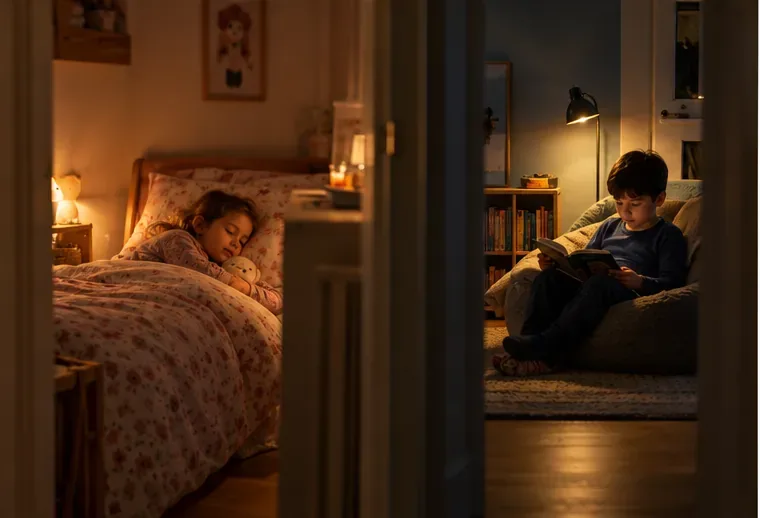
Learn how to set up a shared bedroom for siblings with different bedtimes, from planning around age-based sleep needs to creating separate sleep spaces and quiet routines.
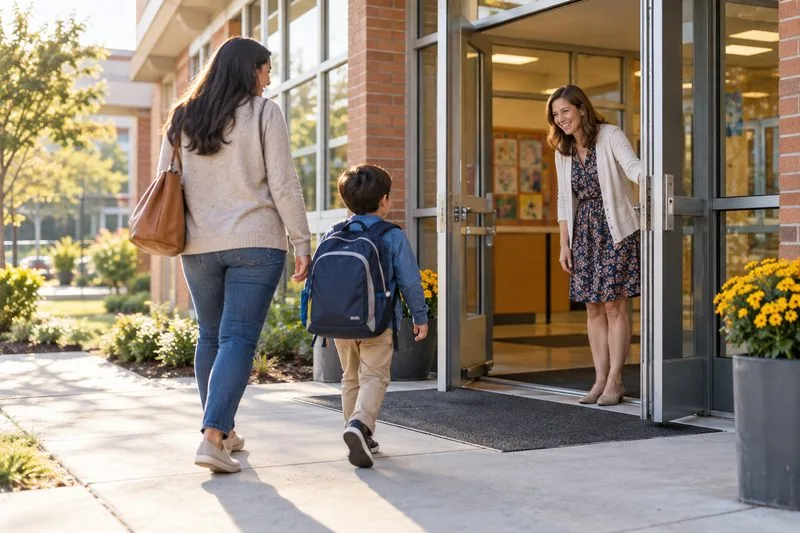
Compare full-day, gradual, and temporary at-home return plans, plus health checks and school supports that can help a child reenter safely.
Learn when a child can try to solve a friendship problem, when adults should step in, and how to tell whether support is helping or needs to change.