How to Teach Chores Without Redoing Every Task for Your Child

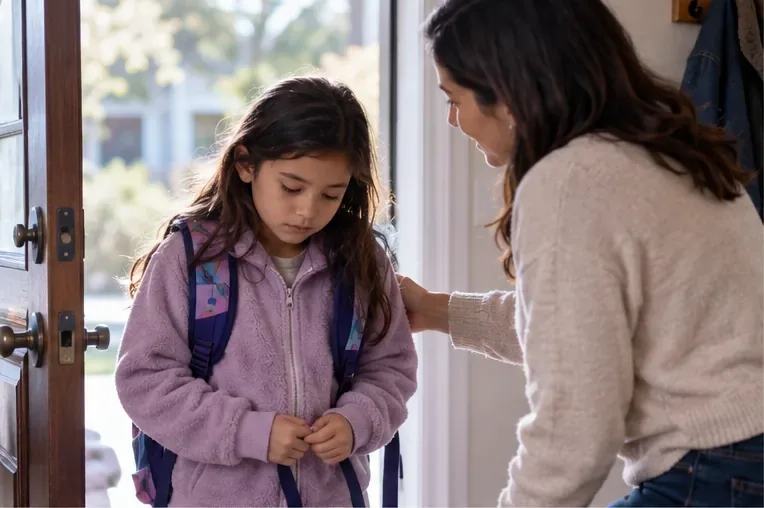
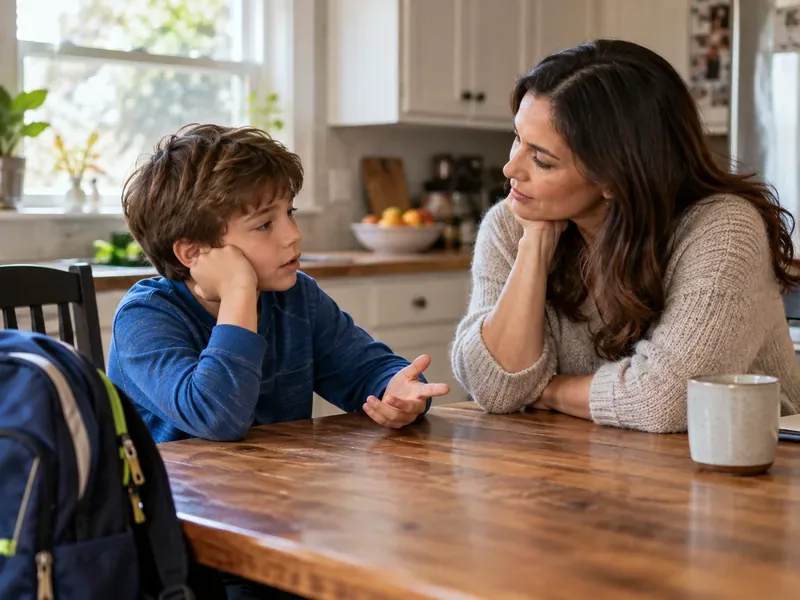
Teach kids to do chores with fewer reminders: set a clear finish line, model one task, step back, and correct only what is unsafe or unfinished.

Parents often want their children to be smart and healthy. In addition to adding nutritious foods, there are other ways to help your child be smart.
Sometimes, my darling goes out all day and won't stop for a minute. Now let your baby be alone because this is the time that he wants to learn everything around. Here are some effective ways to help children improve their experience and knowledge. Along aFamilyToday Health learn through article below!
Most babies learn one new word each week. Between 18 months and 2 years old, your baby can speak 50-100 words. The more children talk, the more new vocabulary they learn.
Experts also recommend telling your baby your stories. For example, what did you do during the day and how you did it. This is a great way to express yourself and help your child learn more vocabulary throughout the day. In addition, this is also the time when you should read more books to your children. You can tell stories in different tones for each character in the story. This will make the baby happier and more interested in the story.
Tell your baby in a quiet, slow, not too fast voice that will make him difficult to understand and not interact. Children often love to hear the voices of people around them because they find it easier to understand. You can also improve your baby's reading and spelling ability by talking to them and using a wider range of vocabulary.
Intelligence development is very important for children's cognitive and development. You should encourage children to share their feelings. This is also an important skill for future children.
When your child plays with you and accidentally bumpes you, explain to them that it was just an accident. If your baby does not show regrets about it, at this point, you help him recognize the problem. The child's attitude is very important because the fact that he or she does not admit mistakes means that their social skills are not good.
The same job will give your baby positive emotions. For example, if your child shares something with you, take the time to tell him what he / she will get from sharing. You could say something like: "How did you share with you?", "How happy did you make you?". By combining emotions and actions, you are building emotional intelligence for your baby. This will follow you for the rest of your life.
Dramatic games often increase focus and control over yourself. Here are two games to help children learn and control themselves.
Inversion: Take a simple set of photos and show each person and item for your child. Assuming the first picture is a picture of a sun, when you point to a picture for your child, ask your child to say, "Evening" instead of "day" (or "moon" instead of "sun").
If your baby is not old enough to play talking games, you can play games with tunes. For example, you can play the drum once and your child plays the drum twice.
These are games for 3 - 4 year olds to help promote self-control. This is also related to math skills, ability to plan and solve problems.
Do you want to create the best atmosphere for your baby to play? Decorate your baby's room according to design magazines or ideas from a developmental molecular biologist.
To help children create naturally, you should give them a friendly environment so that they can develop their imagination. This doesn't mean your baby has to have new or expensive toys. An empty box or a few pencils are also great toys for children. You give your baby space and time to experience new things.
You can give your baby many choices in entertainment. For example, you might ask if your child wants to listen to music, draw pictures, color, play with a puzzle, or build a house. Any game encourages creativity in children.
According to one study, when parents praise their children's efforts, they work harder and learn better. So when you want to compliment your child, say, "You're working hard." It matters what the child did to get that result.
When growing up, children will form a growth mindset. This means they believe they can do more if they try. On the contrary, what babies can do is thanks to innate ability and IQ, which means they have fixed thinking.
A study of more than 30 years shows that children growing up in growth-thinking families always outperform those with fixed thinking. Children with a growth mindset always have a new attitude toward failure, they do not pay attention to their mistakes. Children just understand mistakes are problems that need to be solved.
At 9 months, your baby can look at your fingers to see what you are pointing at. Research shows that kids learn a language faster if you point your finger at an object. For example, you point at the truck and say "truck".
Children can talk to you about an event or someone. This means you and your baby can interact with each other. If you can do this, it means your baby is getting older.
When you let your baby go to the zoo, you can show your child the bear, the tiger, the leopard, the lion ... and then describe these animals. This helps to promote baby's language development greatly.
Teach kids to do chores with fewer reminders: set a clear finish line, model one task, step back, and correct only what is unsafe or unfinished.
Learn why toilet-trained children may start having pee or poop accidents again, what patterns to track, how to respond calmly, and when to call the pediatrician.
A child may repeat a reassurance question to process information, seek connection, or manage worry. Learn how to respond and when persistent anxiety needs support.
Learn how to set screen-time boundaries with predictable routines, warnings, calm follow-through, and better transitions—without turning every device handoff into a fight.
Teach children to handle losing without shame or explosive anger by validating feelings, setting behavior limits, modeling recovery, and practicing at the right difficulty.
A calm, practical plan for after-school meltdowns: reduce overload, keep limits clear, track patterns, coordinate with school, and know when to seek help.
Learn how to respond when a child feels unwanted, ask supportive questions, recognize bullying or ongoing distress, and know when to seek extra help.
Learn how to set up a shared bedroom for siblings with different bedtimes, from planning around age-based sleep needs to creating separate sleep spaces and quiet routines.
Compare full-day, gradual, and temporary at-home return plans, plus health checks and school supports that can help a child reenter safely.
Learn when a child can try to solve a friendship problem, when adults should step in, and how to tell whether support is helping or needs to change.