How to Teach Chores Without Redoing Every Task for Your Child
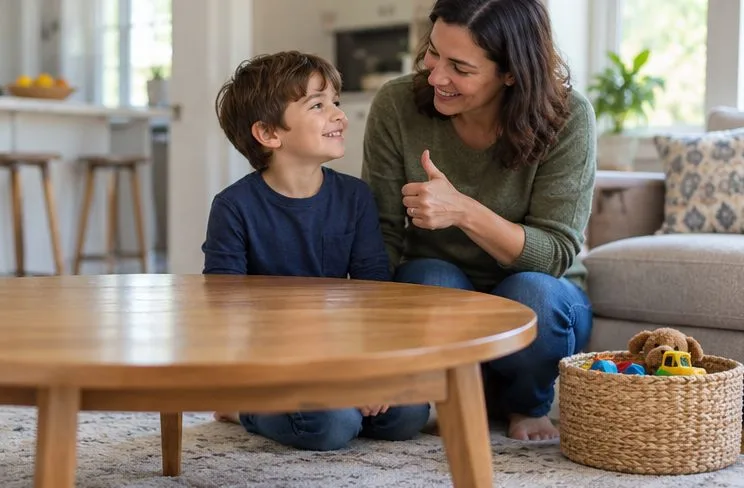
Teach kids to do chores with fewer reminders: set a clear finish line, model one task, step back, and correct only what is unsafe or unfinished.
Baby skin is inherently fragile and different from adults. Therefore, sunscreen for babies is no exception. The ingredients in the product must be really fit with safety to complete the task of protecting the little angel from the effects of the sun.
There are many sunscreen products with different characteristics that confuse many parents: Sunscreen in water form, spray form, cream or stick form, sunscreen for exercise and of course indispensable. Sunscreen for children . But do you already know why kids need their own sunscreen? In fact, this problem is more complicated than we think.
First, babies under six months should not be exposed to too much sunlight. If you intend to let your baby go out, instead of using sunscreen, you should prepare a hat and long-sleeved clothing to "shield" your baby from the sun because at this age, the child's skin is still It is still quite thin, the density of skin cells is quite low and the chemical composition of the sunscreen will be very easy to penetrate into the body, causing negative effects.
Only when your baby is six months old should parents give their baby creams containing zinc (Zinc) or titanium (Titanium) with an SPF of about 30 or higher to protect baby's skin.
Undeniably the benefits of giving your baby sunbathing will help the body produce enough vitamin D, limit rickets and cure jaundice. However, when parents accidentally expose their children to ultraviolet (UV) rays for too long, it can cause sunburns , damage to the skin and eyes or even have a potential risk of developing skin cancer . This risk will increase if childhood as well as teenagers, children do not take necessary measures to protect the skin.

When choosing a sunscreen, there are 3 factors that you cannot ignore:
Suitable SPF number
Water resistant (protects your baby from playing in the water or sweating)
Resistance to UVA and UVB rays (also known as a board spectrum sunscreen)
Experts recommend that parents should consider products that contain an SPF (Sun Protection Index) of at least 35 or more. SPF protects the skin from the ultraviolet rays from the sun , which is known to cause redness and even burning.
Sun protection ability according to each SPF index includes:
Low level protection: SPF 6 - 10
Moderate protection: SPF 15, 20, 25
High level protection: SPF 30 - 50
Very high level protection: SPF 50+
Some other information you may be interested in: a sunscreen with an SPF 6 will only block 75% of UVB radiation, while a sunscreen with an SPF 15 protects against 93% of the effects of the sun. Sun. Sunscreen products with SPF 30 eliminate up to 96% of the effects of radiation and the SPF 50 sun protection index blocks 98%.
In addition to the above essential factors, a good sunscreen product, suitable for infant skin, still needs the following characteristics:
Fast absorption, avoid stickiness
Healthy and non-irritating
Do not make your baby's eyes sting if accidentally contacted
Has no odor or contains alcohol to prevent skin drying out.
To choose the right sunscreen for your baby, you should choose products that fully meet the above criteria, preferring products with water-based ingredients that dissolve into the skin quickly.
There are many parents who show concern about the best sunscreen products for their children. However, no matter what kind of product, how to use and reapply after a certain period of time is also one of the most important factors to maintain resistance to the negative effects of ultraviolet rays. for your skin. You should note:
Do not ignore the ears, arms, legs, shoulders, and back of the neck
The amount of sunscreen used for children should be equal to 2 knuckles of adults
Reapply sunscreen every 2 hours if your baby is active in the sun
Apply cream whenever your baby will be exposed to sunlight, preferably 15-30 minutes before going outside
Pay attention to the shelf life of the sunscreen because its skin protection will fade over time from the moment you open the lid.
In addition, you can further protect your baby by limiting taking children out from 10 a.m. to 4 p.m., using sunglasses to avoid dazzling, using long light colored clothes ...

Of course, young children need vitamin D to help their body absorb calcium, keep bones strong, and sunlight helps their bodies get this mineral in a great way. Doctors have given encouragement to children from birth to puberty to consume about 400 IU vitamin D / day in the body.
If you are concerned that your child is not absorbing enough vitamin D due to using sunscreen, parents can completely supplement their baby with functional foods or formula beside foods rich in vitamin D such as mushrooms, eggs, fish, soy milk and cheese ...
Teach kids to do chores with fewer reminders: set a clear finish line, model one task, step back, and correct only what is unsafe or unfinished.
Learn why toilet-trained children may start having pee or poop accidents again, what patterns to track, how to respond calmly, and when to call the pediatrician.
A child may repeat a reassurance question to process information, seek connection, or manage worry. Learn how to respond and when persistent anxiety needs support.
Learn how to set screen-time boundaries with predictable routines, warnings, calm follow-through, and better transitions—without turning every device handoff into a fight.
Teach children to handle losing without shame or explosive anger by validating feelings, setting behavior limits, modeling recovery, and practicing at the right difficulty.
A calm, practical plan for after-school meltdowns: reduce overload, keep limits clear, track patterns, coordinate with school, and know when to seek help.
Learn how to respond when a child feels unwanted, ask supportive questions, recognize bullying or ongoing distress, and know when to seek extra help.
Learn how to set up a shared bedroom for siblings with different bedtimes, from planning around age-based sleep needs to creating separate sleep spaces and quiet routines.
Compare full-day, gradual, and temporary at-home return plans, plus health checks and school supports that can help a child reenter safely.
Learn when a child can try to solve a friendship problem, when adults should step in, and how to tell whether support is helping or needs to change.