How to Teach Chores Without Redoing Every Task for Your Child

Teach kids to do chores with fewer reminders: set a clear finish line, model one task, step back, and correct only what is unsafe or unfinished.

At this point, your baby is about to come of age to learn to speak, so what you say to your baby always makes sense. You can help your baby learn and practice his language skills better in the following ways:
As your baby starts trying to decipher your sentences, it becomes more difficult for them to understand what you are saying if you speak too quickly. To give your baby a chance to start learning words, talk to them slowly, clearly and simply.
Go ahead and talk as you normally would, but emphasize simple words or phrases that are commonly used in everyday life. For example, during mealtimes, when you say, "I'm going to pour apple juice into a glass," pick up the box of apple juice and show your baby: "Apple juice, this is apple juice" and point ly and said: "Ly". Always pause for a moment to give your baby time to understand the meaning of the word before continuing to say the next phrase.
The pronouns often confuse your baby, so use sentences like: "This is my book" or "This is My doll", accompanied by a pointing gesture at the object you are talking about.
By this point, your baby will be able to speak many words. You can multiply this time to create imitation games with your baby. All you need is to talk to your baby using a few simple consonants and vowels. For example, when your baby says, "Ba-ba-ba-ba," you will imitate: "Ba-ba-ba-ba". If your baby responds: "Skin-skin-skin-skin", continue to imitate: "Skin-skin-skin-skin". If your baby shows signs of secret words, you can try suggesting a few other examples to encourage him to imitate. When your baby shows no interest in imitating, change roles and let him be the imitator. Practicing this habit often for several months, your baby will begin to imitate what you say without prompting.
Talk to your baby about everything, even if it's just the trivial things you go through during the day. Tell stories to your baby naturally, but you also need to pay attention to tell them in a way that they can understand (You should not confuse this with storytelling to your baby).
You may feel bored and tired of having to repeat children's songs many times a day. However, your child not only enjoys the repetition greatly, but is also able to learn a lot of vocabulary from those rhymes. You can rely on the songs of the children's characters or create your own. Most importantly, sing to your baby every day.
Maybe your baby has not understood the content of the story, but your child will surely enjoy the simple rhyming melodies and vivid illustrations in the book. Point to the many different objects, animals or people in the book, then start asking, "Where is the dog?" Your baby will surprise you by pointing your finger in the right place for the answer you expect.
Even if your baby is unable to speak, he or she is beginning to take in information and will often respond to what you say, whether it's just screams or an expressive expression.
After a while, your child will learn to make some small “requests” from you, such as: “Kiss me, baby”, “Wave goodbye”, or “Give mum a doll Hey! Please add the phrase "go" or "nha" so that the baby will say it later without you having to teach him. But be aware that sometimes your baby will not listen to your suggestions for months, or if he does, the baby's reaction will not happen consistently or he will respond immediately. Do not be disappointed when the baby does not follow, instead show the baby how to do (eg waving goodbye to someone), he will automatically learn. You should not force or force your baby to follow if there are too many people around.
Teach kids to do chores with fewer reminders: set a clear finish line, model one task, step back, and correct only what is unsafe or unfinished.
Learn why toilet-trained children may start having pee or poop accidents again, what patterns to track, how to respond calmly, and when to call the pediatrician.
A child may repeat a reassurance question to process information, seek connection, or manage worry. Learn how to respond and when persistent anxiety needs support.
Learn how to set screen-time boundaries with predictable routines, warnings, calm follow-through, and better transitions—without turning every device handoff into a fight.
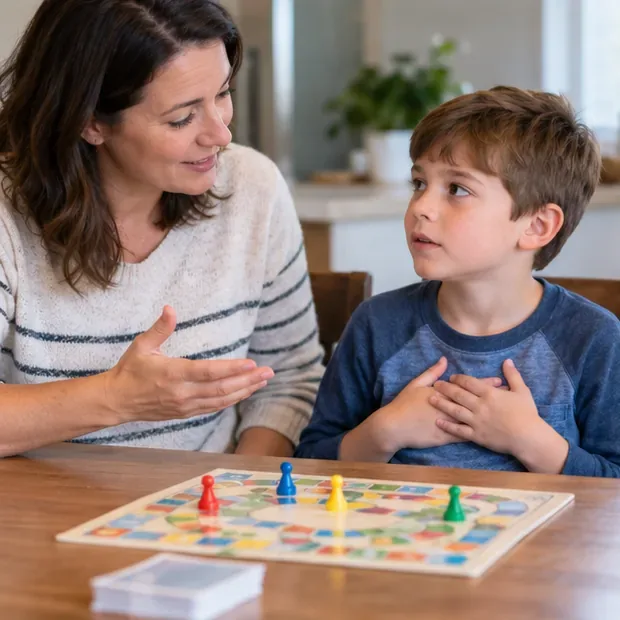
Teach children to handle losing without shame or explosive anger by validating feelings, setting behavior limits, modeling recovery, and practicing at the right difficulty.
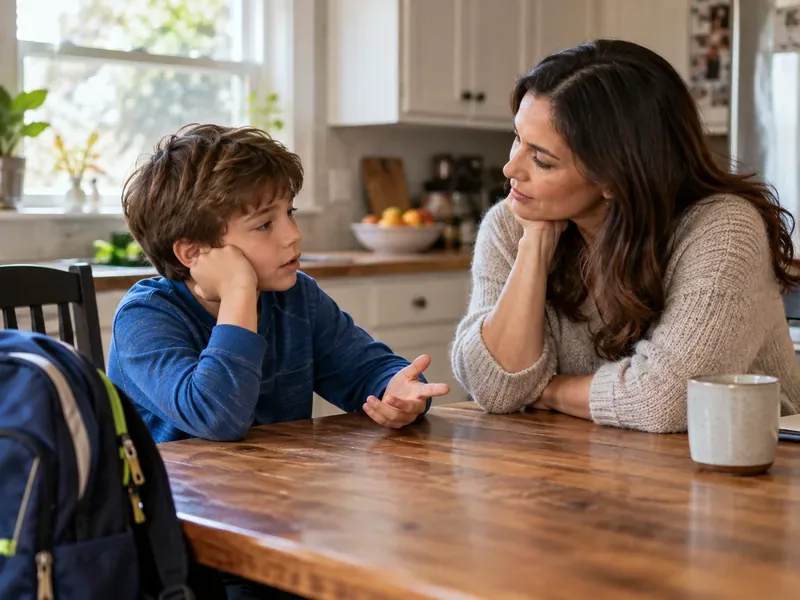
A calm, practical plan for after-school meltdowns: reduce overload, keep limits clear, track patterns, coordinate with school, and know when to seek help.
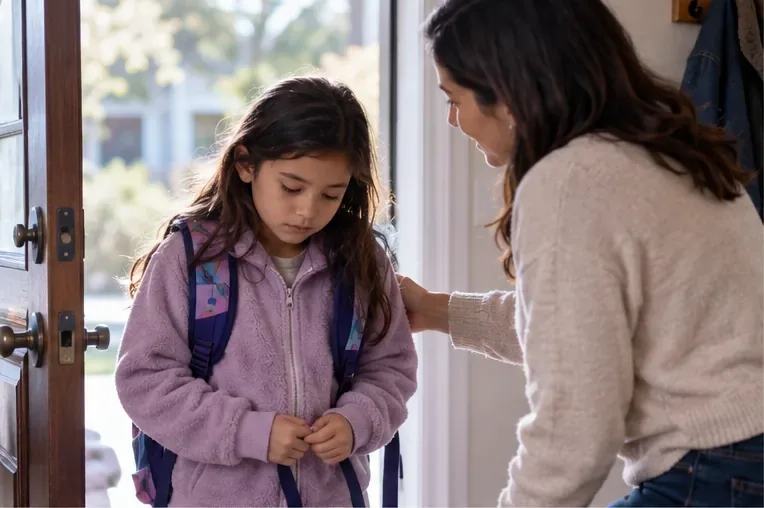
Learn how to respond when a child feels unwanted, ask supportive questions, recognize bullying or ongoing distress, and know when to seek extra help.
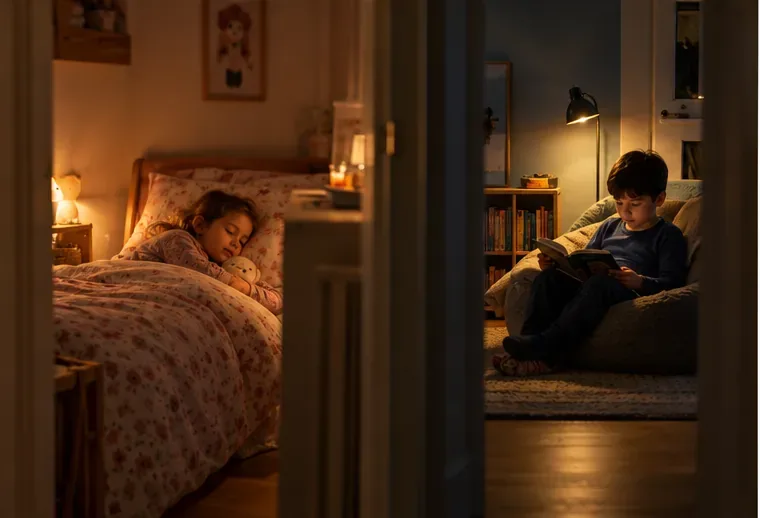
Learn how to set up a shared bedroom for siblings with different bedtimes, from planning around age-based sleep needs to creating separate sleep spaces and quiet routines.
Compare full-day, gradual, and temporary at-home return plans, plus health checks and school supports that can help a child reenter safely.
Learn when a child can try to solve a friendship problem, when adults should step in, and how to tell whether support is helping or needs to change.