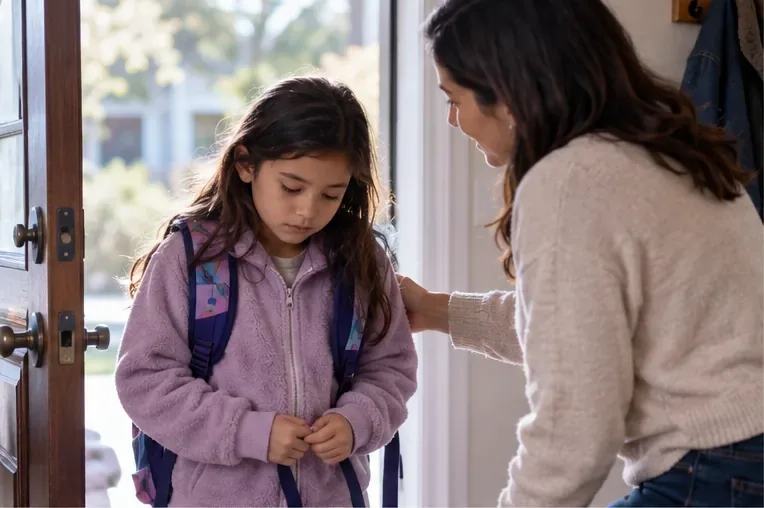
How to Teach Chores Without Redoing Every Task for Your Child

Teach kids to do chores with fewer reminders: set a clear finish line, model one task, step back, and correct only what is unsafe or unfinished.

Children always have bad habits. It is the parent's job to help their children quit these bad habits before they get worse. So how to help the baby? Let aFamilyToday Health learn about this issue.
No one is perfect, everyone has a certain bad habit such as nail biting , nose picking ... Sometimes, these habits originate from childhood and follow us throughout life.
Children are often naive and unaware of their actions. Therefore, babies are easily affected by bad habits. If these habits are not controlled in the first place, they will eventually become difficult to control. This is the reason why when parents see a baby having bad habits they often worry and care.
Giving up a habit is not easy, but it is not eternal. With patience, care and concern, parents can completely help their children give up this bad habit.
Parents too pay attention to bad habits and punish the baby will lead to negative effects. Because attention will encourage the baby to repeat the bad behavior. Therefore, it is best for parents to avoid paying attention to their baby's bad habits and give them time to give up on their own.
Praise and reward your baby for good actions and avoid bad habits. This helps your baby understand that their good actions have been recognized and appreciated. From there, the baby will understand what is good and what is bad.
Babies can only avoid wrong actions when they realize that it is not good. That means parents have to explain to their baby why the action is not correct. When aware, naturally the baby will no longer be interested in that and will gradually forget.
Children often have many bad habits at the same time. Therefore, parents should not try to force the baby to give up all at once, but prioritize removing the habits that cause the most consequences. Parents do not rush, but keep calm with the baby. Never nag a baby in front of friends or other people. Instead, talk to your baby privately.
The cause of bad habits is mainly because the baby is stressed. Therefore, parents should talk and observe the baby to determine the cause of stress. Listen to your baby's problems, be patient, show him the love and support from parents to help him get rid of these habits. Understanding the cause also helps parents find other alternatives to help the baby get rid of bad habits.
Setting rules is very important. This will help your baby understand that if he or she violates the rules, he or she must take responsibility and accept the consequences. In addition, this is also a method to control bad habits.
Show that you always have trust in your baby, love and support them. Parents give your baby the chance to make decisions at important times. This will help your baby develop confidence and decision-making skills.
Explain right and wrong things to your baby to help them understand their own behavior and decide which habits are appropriate. Parents' patience will help babies give up bad habits easily.
Teach kids to do chores with fewer reminders: set a clear finish line, model one task, step back, and correct only what is unsafe or unfinished.
Learn why toilet-trained children may start having pee or poop accidents again, what patterns to track, how to respond calmly, and when to call the pediatrician.
A child may repeat a reassurance question to process information, seek connection, or manage worry. Learn how to respond and when persistent anxiety needs support.
Learn how to set screen-time boundaries with predictable routines, warnings, calm follow-through, and better transitions—without turning every device handoff into a fight.
Teach children to handle losing without shame or explosive anger by validating feelings, setting behavior limits, modeling recovery, and practicing at the right difficulty.
A calm, practical plan for after-school meltdowns: reduce overload, keep limits clear, track patterns, coordinate with school, and know when to seek help.
Learn how to respond when a child feels unwanted, ask supportive questions, recognize bullying or ongoing distress, and know when to seek extra help.
Learn how to set up a shared bedroom for siblings with different bedtimes, from planning around age-based sleep needs to creating separate sleep spaces and quiet routines.
Compare full-day, gradual, and temporary at-home return plans, plus health checks and school supports that can help a child reenter safely.
Learn when a child can try to solve a friendship problem, when adults should step in, and how to tell whether support is helping or needs to change.