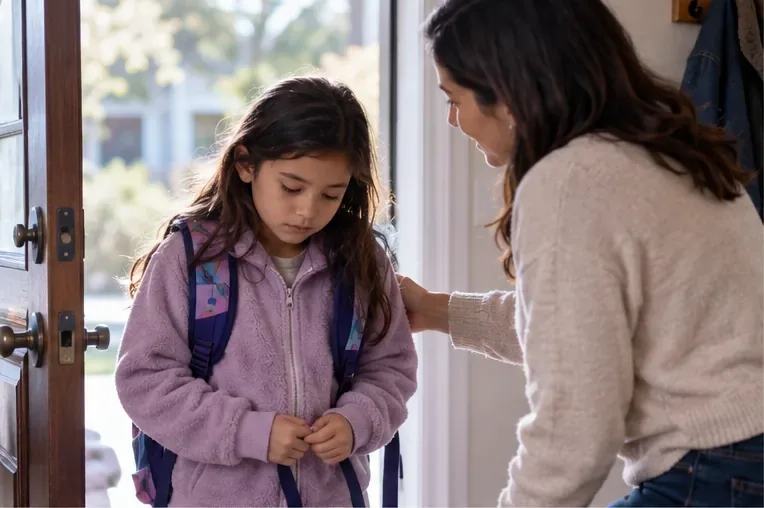
How to Teach Chores Without Redoing Every Task for Your Child

Teach kids to do chores with fewer reminders: set a clear finish line, model one task, step back, and correct only what is unsafe or unfinished.
Your baby's feelings are gradually becoming clearer. Over the next few months, your baby will be able to learn to evaluate, mimic mood and be able to show empathy in the first place. For example, if your baby hears someone crying, he may begin to cry along. Even though your baby is only just beginning to learn about his feelings, he will begin to learn everything from you. In the time to come, your child will be able to follow what he sees you treat everyone.
During the last week of the 8th month, your baby will be able to:
Bounce up from a sitting position;
Switch from crawling on stomach to sitting;
Play a game of clapping and waving goodbye;
Pick up small objects with fingers (so keep dangerous objects out of reach);
Seek quite a bit around the baby's own house;
Do not stop calling "mother" or "daddy".
If your baby sleeps in a private room and is afraid of separating from you at night, take extra time to read, cuddle, and play soothing music before you put them to bed. Maintaining this routine regularly before going to bed will make your baby feel safe to sleep more easily.
As soon as you are sure that you can start the routine in the bathroom or living room, all the work in your baby's bedroom should be done when he is asleep. It is important that you teach your baby that his sleeping place is a good place, not a place where he will be pressed until he needs to sleep.
Most doctors will not schedule a checkup for the baby this month. On the plus side, it means no serious problems with your baby; on the negative side, you won't be able to tell how your baby is developing. Be prepared to ask questions for the next month's checkup, but don't be afraid to call your doctor right away if you have any concerns you are concerned about and can't wait until your next visit. .
Diarrhea
Diarrhea is a condition in which your baby's stool is loose. Your baby has diarrhea if you notice your baby has bowel movements more often than usual; loose or prolonged stools and contain mucus or blood. Your baby's stools will be yellow, green, or dark in color and will probably smell worse than usual.
The most common causes of diarrhea in babies are gastrointestinal infections, viral respiratory infections. When your baby has a cold, he has no food intolerance or food allergy and is on treatment with antibiotics. Too much fruit or fruit juice in your baby's diet can also cause diarrhea.
If your baby has diarrhea, here are some tips to apply:
Call your doctor right away if your baby develops dehydration, is vomiting, refuses to eat or drink, if you notice blood in the stool and if your baby's belly is enlarged (swelling and protrusion) or if your baby has a fever that lasts longer 24 hours. In addition, little urination, dark urine, sunken eyes, dry mouth, tearlessness and irritability or lethargy, are all symptoms of moderate to severe dehydration.
Give your baby plenty of fluids to avoid dehydration, but avoid juices and drinks high in sugar. Water, breast milk and formula are better options. You can also give your baby a rehydration solution for children.
Help your baby feel as comfortable as possible. Always keep your baby's bottom dry and use cream when diapering.
Try to determine the cause: does your child have symptoms caused by other viruses? Have you tried any new foods recently? Have you given your baby any antibiotics lately?
Prevent diarrhea by thoroughly washing your hands and your baby's regularly, you should also wash the fruits and vegetables you feed your baby.
Oral problems
If your baby's teeth are deviated: you don't need to take your baby to the dentist. The position of the first baby teeth will not affect the baby's smile later on. In fact, baby teeth often deviate, especially the lower incisors, and often form a V-shape as they grow. The upper incisors also seem very large compared to the ones below. And in some babies, the upper molars will appear before the lower molars, but this is nothing to worry about.
When the baby is two and a half years old, he or she will have twenty full teeth. And although teeth are still not uniform in proportion and structure, don't worry too much. Deviated baby teeth will not cause your baby to have undulating teeth when grown.
If the baby's teeth become gray: the cause is not due to plaque on the teeth but iron. Some children taking a liquid vitamin and iron-containing mineral supplement will increase the risk of teeth staining. This is not harmful to teeth and should go away when your child stops taking these lotions and starts taking the chewable vitamin. Then, brush your baby's teeth or clean them with gauze right after taking the vitamins to help reduce yellowing.
Even if your baby does not take liquid supplements, if he usually drinks a bottle of milk or juice before bed, he or she may also experience tooth decay. Tooth decay can also be the result of trauma or a birth defect in tooth enamel. Discuss this with your doctor or dentist so that you can understand the exact dental condition of your baby.
Biting your nipple
Your baby cannot actively bite while suckling (because his tongue is between your teeth and your breast). This fun of your baby starts when he accidentally bites on your nipple, you shout a sound, your baby giggles, you can't help laughing, and he continues to bite and wait to see the response from friend.
So, instead of encouraging your baby to get excited with laughter, let your baby know that biting is unacceptable by decisively, bluntly saying "No" and then quickly removing the nipple. his mouth and explains, "Biting like that will hurt you!" If your baby is trying to grip your nipple, use your fingers to remove it. After a few times like that, the baby will understand and give up.
You need to stop the habit of sucking and biting your baby's nipples to avoid more serious problems later. Babies need to know early on that teeth are not used for biting and that there are appropriate things that can be used to control this habit (teething rings, bread or a banana) and that there are things that they cannot bite (breasts mother, brother's finger, father's shoulder).
Your baby's negative behavior can:
Interfering with your baby's healthy diet;
Affects your baby's ability to play;
Affecting the harmony of the baby;
Negative effects on personality development in children;
Contribute to the formation of tooth decay in children.
Teach kids to do chores with fewer reminders: set a clear finish line, model one task, step back, and correct only what is unsafe or unfinished.
Learn why toilet-trained children may start having pee or poop accidents again, what patterns to track, how to respond calmly, and when to call the pediatrician.
A child may repeat a reassurance question to process information, seek connection, or manage worry. Learn how to respond and when persistent anxiety needs support.
Learn how to set screen-time boundaries with predictable routines, warnings, calm follow-through, and better transitions—without turning every device handoff into a fight.
Teach children to handle losing without shame or explosive anger by validating feelings, setting behavior limits, modeling recovery, and practicing at the right difficulty.
A calm, practical plan for after-school meltdowns: reduce overload, keep limits clear, track patterns, coordinate with school, and know when to seek help.
Learn how to respond when a child feels unwanted, ask supportive questions, recognize bullying or ongoing distress, and know when to seek extra help.
Learn how to set up a shared bedroom for siblings with different bedtimes, from planning around age-based sleep needs to creating separate sleep spaces and quiet routines.
Compare full-day, gradual, and temporary at-home return plans, plus health checks and school supports that can help a child reenter safely.
Learn when a child can try to solve a friendship problem, when adults should step in, and how to tell whether support is helping or needs to change.