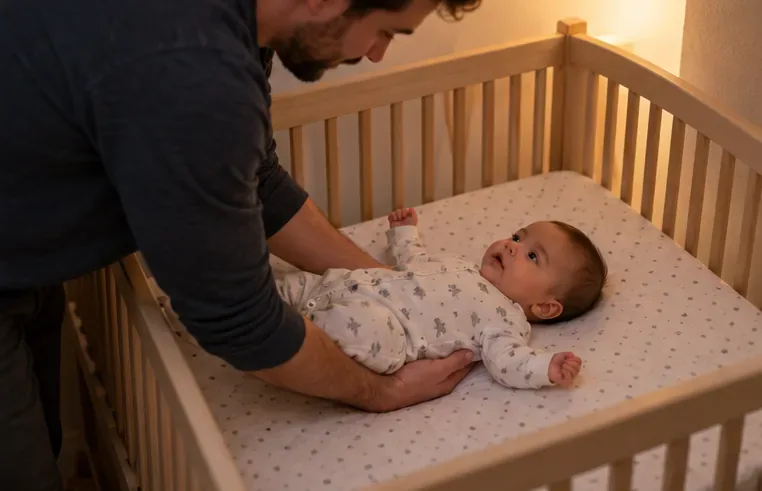
The intellectual development of children is built on a foundation of safety. Many studies show that children with the best mind, mind and body are children whose mothers show more attention, concern, closeness and love.
Children thrive through interacting with loved ones and observing family and community life. That means you have to pay attention to make them happy, communicate with them , react to their words and actions, and comfort them when they show anxiety.

Parents' love affects a child's development a lot
Babies need to know that their mothers will be there whenever they need them, but it won't be good if you make them feel like they're always in the spotlight. This only makes the baby feel more anxious. To help you stimulate your brain, you don't need to do something too "macro". Only with the following simple daily actions, mothers can help your baby develop in the healthiest way.
1 / Daily games
Your baby will be strongly stimulated through games such as hide and seek, take the pan out of the cupboard, and see the world around when being taken into the vegetable store or interacting with other people.
2 / Talk to your baby
Have you ever heard of the benefits of reading to your baby ? However, I would be more surprised to learn that it is even better to talk to your children often than to read. Talk to your baby as you do everyday tasks: folding clothes, washing dishes, cooking.
![What is best for a child's development?]()
How to communicate emotionally with children Right from the birth of a baby's mother has the ability to communicate emotionally. So what is emotional communication and why is it necessary to have emotional communication in a child? During the seminar on "Emotional communication" at Mother and Child bookstore (46 Le Loi, District 1) on October 29, organized by Baby's Friend company, Master of Clinical Psychology ...
3 / Free to explore
Instead of all day forbidding and not letting your child touch anything, you should establish safety measures so that your child can explore freely but still not in danger. According to research, children who are told "No" by adults often do not think in the usual way.
4 / Change in circumstances
If the baby is bored to sit in one place to nibble on toys, mothers can take them for a walk. If your baby refuses to lie still in the carrier, let him practice turning and lifting his body with both hands and feet. If your baby is unhappy about being alone while you clean the bathroom, take a break and have him play with you.
![What is best for a child's development?]()
Child's height: How is the standard to develop? Child's height develops differently through each stage. Therefore, the way to care for children also needs to change from time to time. Mother need to prepare what?
5 / Silence
However, just because every moment with your children is quality does not mean that every minute is busy. Babies need a lot of interaction with us, but they also need a lot of time to play with their toes, listen to music, stare at the dust particles in the sun's rays, and learn for themselves. of his muscles. Babies may need mothers to sit beside them during playtime, but they do not need mothers to interfere in their games.
>>> See more discussions with related topics:
Stimulates visual development of 5 months old baby
Stimulate children to be eager to learn