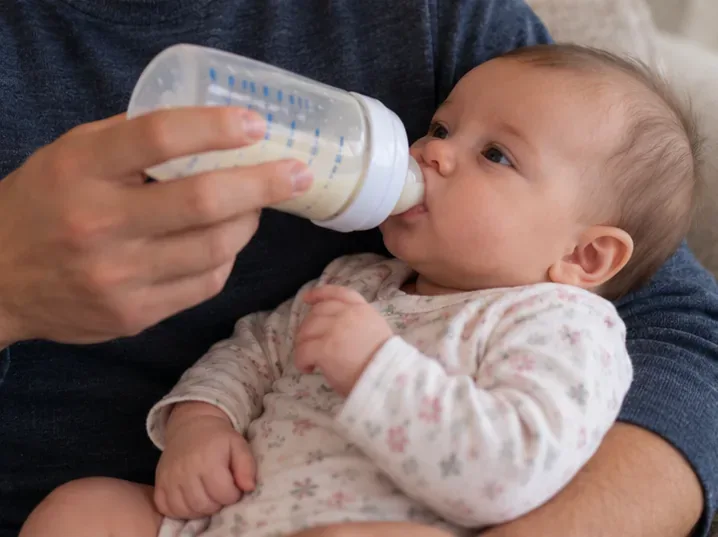
Infant formula milk

Breast milk is the leading source of food for young children, but for many reasons, some babies are unable to breastfeed or they cannot breastfeed. In these cases, infant formula will also provide adequate nutrition if properly prepared

Please follow the articles about formula milk to choose the right product, and at the same time prepare the right amount of milk required for the development of your baby.

Why mothers use formula milk?


The reason a mother chooses formula may be because she wants to wean her baby before 12 months. You may also need a formula to supplement your breast milk. Another case is that the baby is adopted and the mother has no milk. In addition, there are some health reasons such as the baby cannot breastfeed or the mother has a health problem and cannot breastfeed ...


Infant formula milk

Those younger than 12 months old should not drink regular cow's milk, skim milk, condensed milk, milk powder or condensed milk. If your baby is not breastfed, you should only offer your baby formula specially formulated for babies. Although the basic ingredient of these products is still cow's milk, but with added many essential ingredients. Most of these formulas are suitable for babies in relatively good health, born full term.

>> See also: Application for breastfeeding mothers

Infant formula milk

Some infant formulas are for children under 1 year old

The types of infant formula are usually divided according to the stage of development:

- Milk for the first stage, suitable for babies from birth: This group of dairy products is only for babies up to 12 months old. Typically, products are made from cow's milk, but can also be made from soy or goat milk. Unless there is some force majeure that you can't take it, cow's milk formula is still an optimal choice.

- Milk for children from 6 to 12 months.

- Milk fortified with essence: often used for babies who often vomit after eating. This type of milk is only used under the guidance of experts.

- Formula for preterm infants: This formula is not suitable for term babies or premature babies but has caught up with the growth rate of full term babies unless directed by a specialist. .


 

Leave a Comment

Why Diaper Rash Improves, Then Comes Back: Causes and Next Steps

Why Diaper Rash Improves, Then Comes Back: Causes and Next Steps

Recurring diaper rash may be linked to ongoing irritation, diarrhea, yeast, product sensitivity, or another skin condition. Learn what to track and when to call the pediatrician.

How to Clean Baby Feeding Equipment While Traveling Without a Dishwasher

How to Clean Baby Feeding Equipment While Traveling Without a Dishwasher

Learn a safe, practical way to hand-wash bottles and feeding equipment while traveling, including rinsing, air-drying, sanitizing, and safe-water tips.

What Should Parents Track When a Baby Has Fewer Wet Diapers?

What Should Parents Track When a Baby Has Fewer Wet Diapers?

Learn how to track a baby’s wet diapers, feeds, urine changes, and warning signs—and when a drop in output needs prompt medical advice.

Baby’s First Halloween: Comfortable Costumes and Short Photo Sessions

Baby’s First Halloween: Comfortable Costumes and Short Photo Sessions

Keep your baby comfortable in a simple Halloween costume, take a few quick photos, and follow practical guidance for warmth, car seats, and safe sleep.

Newborn fast breathing, is pneumonia visiting?

Newborn fast breathing, is pneumonia visiting?

Discover the key signs of newborn fast breathing, learn how to identify pneumonia risks, and explore effective solutions for infant respiratory health. Stay informed about your baby

Cooking oils for children 6 months old mothers should choose when children eat solids

Cooking oils for children 6 months old mothers should choose when children eat solids

Discover the best cooking oils for 6-month-old babies to ensure proper nutrition and development. Learn why fats are essential, how to use them, and which oils are most beneficial for your baby’s health.

Baby development from 3 to 6 months old

Baby development from 3 to 6 months old

Discover essential baby development milestones from 3 to 6 months old. Learn how to support your baby’s growth with expert tips and activities for better bonding and development.

Cradle ceremony for the baby, why is it so round?

Cradle ceremony for the baby, why is it so round?

Discover the significance of the cradle ceremony for your baby’s first birthday. Learn how to prepare the perfect offering trays, organize the event, and create lasting memories. Explore the traditions and modern practices for a meaningful celebration.

Compare the benefits of Glenn Doman method

Compare the benefits of Glenn Doman method

Discover the Glenn Doman method, a revolutionary early childhood education approach that enhances children

Breastfeeding: The baby has a thrush

Breastfeeding: The baby has a thrush

Learn about thrush in breastfeeding babies, its causes, symptoms, and effective treatments. Discover how to prevent and manage fungal infections for both mother and baby.