Not only are the baby uncomfortable, even when the baby feels bored while waiting for the time to feed or sleep, mothers always have to pocket small games to make them happier. At the same time, this is also an ideal way to teach newborn babies to increase concentration.

Peek-a-boo games never stop making babies enjoy
1 / Play peek
For children, this is never an old game. Babies always love surprises and surprises. Mom can hide her face behind her hands, books, blankets, pillows, ... Anything is fine, and don't forget to change the position of appearance to increase excitement for the baby.
2 / Singing and dancing
Mom can sing and dance or do one of the two, whatever, because baby loves funny sounds and actions. At an infant age, of course, babies can't understand what their mothers sing, but mothers should choose happy children's songs. Don't forget to lift the baby and swing to the mother's dance!
![Increase concentration for babies]()
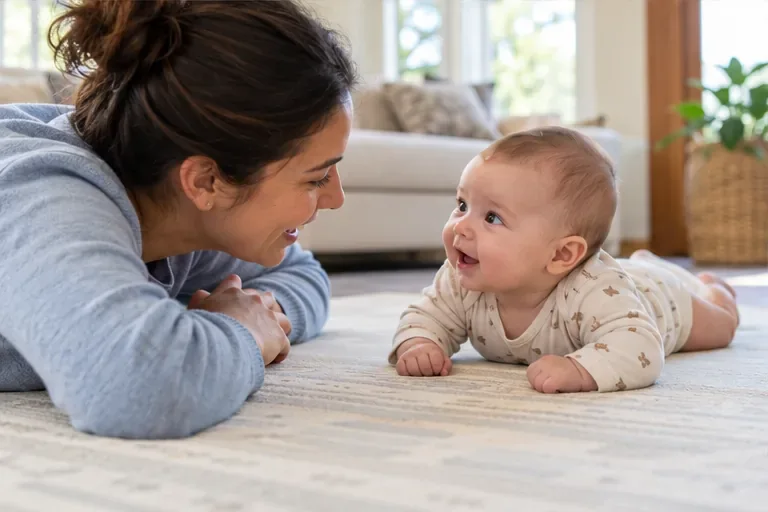
Small games with your child Learn to sing, play with children, play with children, play hide and seek, ... just create intimacy and stimulate children's activities when they are young.
3 / Make funny sound
The sound of birds singing, chickens crowing, dogs barking, cats chirping, horns ..., all the funny sounds coming from mothers will make babies excited. In addition, mothers can play the game of kissing the baby's belly and make a sound that makes the baby tick and surprise. As long as your baby joins the mother and plays the game, the baby will find it very enjoyable.
4 / Making a bad face
Stick out your tongue, show your teeth, frown, roll your eyes, ... don't be afraid to make a bad face in front of you. Your baby will focus on the change in mother's expression and will probably burst into laughter.
>>> Discussions on the same topic:
Be careful when letting your baby play ipad
Gather games for mom and baby