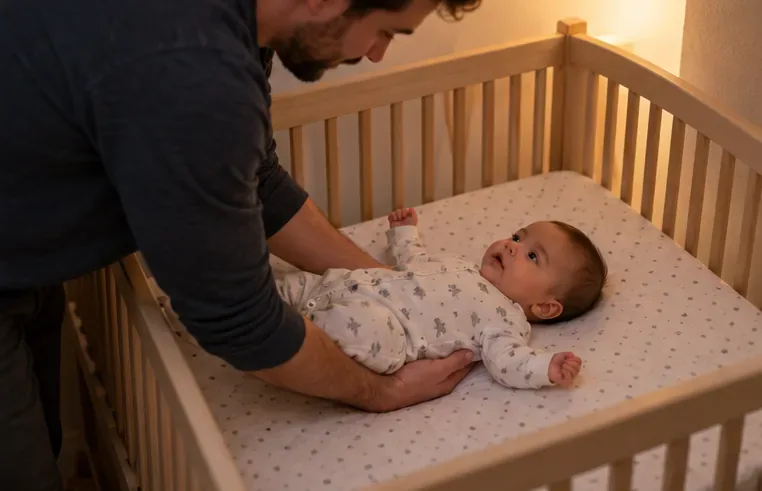
Discovering the dancing hand puppets in front of you will be a way to help babies up to 4 months old develop good eye coordination and interaction skills. Besides, tinkling sounds from rattling game will help your baby develop his or her hearing ability. 2 simple games but promises to bring many great interesting things. Try it now!
1 / Game for kids : Puppet
Compared with adults, infants' vision is only about 20-25 cm, the distance is just enough for the baby to fully see the objects in sight. This is also the ideal distance for mothers to perform exciting puppet performances for their babies
Preparation: Simple hand puppet set. Mothers can buy ready-made clothes or make their own at home.
Using a hard sheet of paper, cut a small rectangle and wrap it into a cylinder just enough to be inserted into your finger. Retrieve the tape or stapler. Continue to cut ears, beard or a hat attached and use colored markers to draw eyes, crowns, ears ... Babies and young children will often be impressed with faces with less lines.

You can also look up some of the puppet patterns available online
- How to play with your baby:
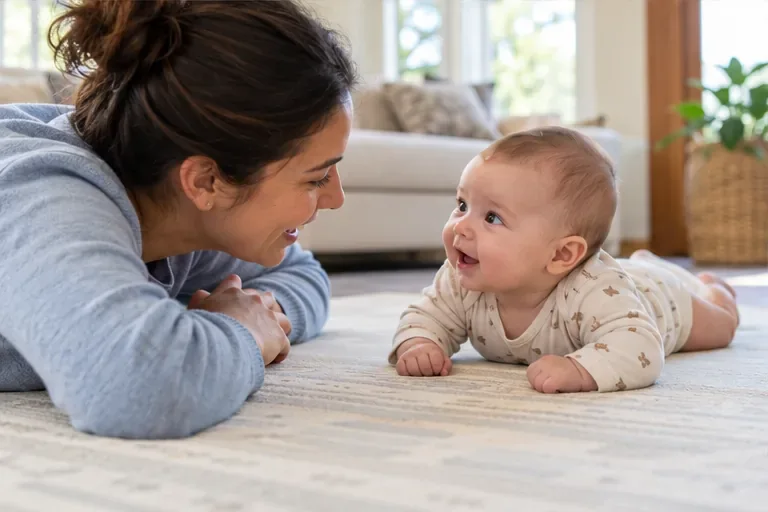
Have your baby lie on his back on the floor or on a bed or chair and then put his finger puppets on. Slowly raise your finger in sight and wait until your baby focuses on the tangled finger. Next, the mother can gently introduce the baby to each puppet. For example, "Hi, this is Mickey" or "Hi Su, Donald Duck is nice to meet Su" ...
When the puppet talks, the mother can curl her fingers like a bow. This is also a way to direct your baby's focus on the puppet. Wait a moment for your baby to have enough time to answer "puppet" and continue your baby's conversation with each "friend", mom!
At first, you shouldn't expect your child's eyes and head to be able to follow the whole "performance" movement in time. Your baby will need 2-3 months to perfect their skills. In particular, at this stage, the most important thing is to let your baby play comfortably .
2 / Baby game: Jingle rattle
Babies from birth to about 3 months love to hear clanging and tinkling sounds. Therefore, the rattles will be the ideal toy to stimulate your baby's vision to develop during this period.
![Games for babies under 4 months old: Puppet and rattle]()
Colorful eye-catching colors are both fun and games to help your baby develop
- How to play with your baby:
Place your baby on his back, use the rattle in front of him and gently shake it. Continue to move the rattles to the sides and shake again. Note, do not shake too loudly, avoid startling, panic. At first, the baby may only notice the change in the position of the rattles, but gradually, the baby can catch up with the fast and slow movements of the rattle.
This time may be too early for the baby to grasp objects, but you can try placing a light rusty plastic or fabric in your baby's hand. Your baby may not be able to curl his fingers to hold objects, but his hands may move a little. This practice helps to activate your baby's touch, just as he will discover that he can move his hand.
![Games for babies under 4 months old: Puppet and rattle]()
Educational games for children at home Educational games will help children strengthen their sensory motor ability and help children understand and love people more.