Only using lemons, chives or some natural foods right in the kitchen, mothers can help children "stop the cough" effectively and safely. However, not every mother knows how to cure a newborn cough from this nature.
content
1. Warm water
2. Use a warm washcloth
3. Clean the child's nose
4. Increase the humidity in the air
5. Coughing for babies with folk remedies
Mistakes to avoid when treating infant coughs
The American Medical Association recommends that mothers not give over-the-counter cough medicines to children under 6 years of age. Most cold and cough medicines contain dextromethorphan, which can adversely affect the baby's health. It can even lead to death in some cases where the baby is not metabolized.
In most cases, the baby has a minor cough that goes away on its own after a few weeks. Only when the child has symptoms of fever, cough lasting more than 2 weeks, difficulty breathing, the mother should bring her to the doctor for examination and treatment. With the common cough cough, mothers can apply the following cough remedies for babies.

Without medication, mothers can apply the following simple infant cough remedy
1. Warm water
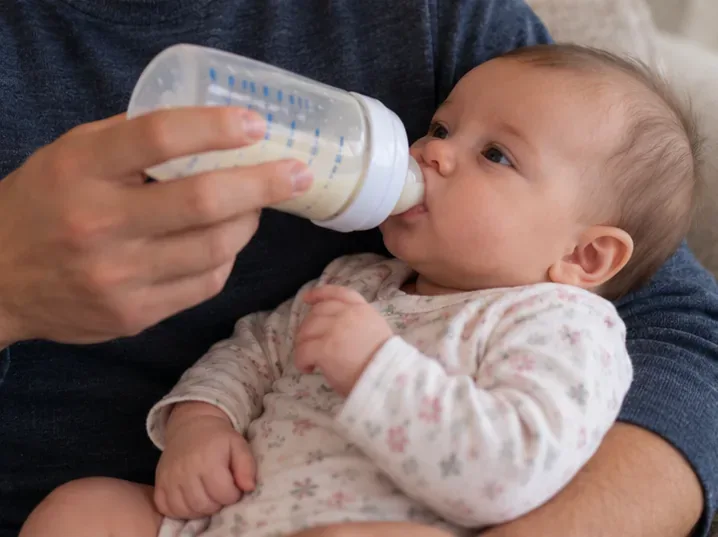
Coughing is the body's natural reflex that helps clear irritants and mucus from the airways. Give your child a drink of warm water that works to prevent nasal secretions, causing irritation of the throat, thereby significantly reducing coughing symptoms. Furthermore, water also has a calming effect on the throat.
As recommended by the American Academy of Pediatrics, mothers can give infants 3-12 months old to drink 1-3 tablespoons of warm water, 4 times a day to relieve cough.
2. Use a warm washcloth
The temperature will stimulate mucus to secrete instead of gathering, causing nasal congestion, airway congestion. Like giving a child a drink of warm water, applying a warm washcloth to a child's chest and neck can also help relieve coughs. If you don't use a warm towel, you can use a bottle of warm water. Be careful of the temperature of the water, avoid burning the baby's skin.
Note, do not apply towel for more than 20 minutes continuously, unless directed by a specialist. In case the child has a fever, the mother should not apply a hot towel to the child.
![Do you know how to cure a newborn cough without medication?]()
Infants with fever: How to handle it right? For first-time mothers, a fever is a big concern for babies. Why do you have a fever? How to take care of a feverish baby, what should be avoided? All the information mothers need to "deal" with their baby's fever are summarized in the following article. Consult now, mom
3. Clean the child's nose
Infants under 1 year old cannot "blow" their nose by themselves. Therefore, the baby needs the mother's help to "expel" all this mucus. In addition to nasal suction for babies , mothers should also use normal saline to help babies clean their nose to soothe irritated tissues as well as remove mucus that can cause coughing.
4. Increase the humidity in the air
Putting a nebulizer to humid the air in the bedroom can help the child's respiratory system work better, preventing the secretion of mucus in the nose. However, improper use of a humidifier will lead to negative health effects for children. Therefore, mothers should be very careful.
5. Coughing for babies with folk remedies
In addition to the above cough remedies for children, mothers can also refer to the following folk remedies passed by many people.
- Fish lettuce and rice water to treat coughs for babies effectively
Wash fish lettuce in a pot and boil with 1 cup of water to wash rice. Boil water, reduce heat and cook for about 20-30 minutes, then let it cool, filter the water and let the child drink 2-3 times a day.
Note:
Fish lettuce has a characteristic fishy smell, mothers can add a little sugar to make it easier for children to drink.
Give your child a drink about 1 hour after eating
Children should not drink too much, only drink 2-3 small spoons at a time.
- How to cure cough for children with chives leaves
Steam or steamer 5-6 chives leaves and rock sugar for 5-10 minutes. Filter for water and let your baby drink 2-3 times / day. This is an effective cough remedy for children that many mothers have applied from past to present.
![Do you know how to cure a newborn cough without medication?]()
You know 6 effects of chives leaves on babies? For babies, one of the safe and effective options for when your baby is feeling "stuck" is natural herbs. Chives leaves are one such herb. Let's explore the effects of chives leaves on babies, mom!
- Cough with pear
Pears after washing, remove the shell and the inner core, use a blender to puree or squeeze the juice. Children with a cough only need to drink pear juice 4-5 times a day, 3-4 small spoons each time. Do it consistently to effectively stop coughing attacks. In addition to being a cough suppressant, pear juice also helps relieve sore throats, hoarseness and dry mouth.
Without using antibiotics or cough medicine, mothers can treat babies' cough quickly and neatly with the above simple ways. However, mothers should still consult a doctor or pharmacist before using folk remedies to treat cough.
Mistakes to avoid when treating infant coughs
Give your baby antibiotics, cough medicines when they get sick . Many studies show that exposure to bacteria in the early stages is very beneficial for the development of the immune system.
Unintentionally stop the drug when cough symptoms improve . Not only can not cure cough symptoms, discontinue the medicine in the middle can also make the disease develop worse.
Follow an overly restrictive diet. At this time, children need nutritional supplements to strengthen the immune system and prevent bacteria. The reverse work can make children nutritional deficiencies, thereby leading to malnutrition.