A 20-day-old infant in Thailand was hospitalized with cyanosis, vomiting blood. The diagnosis was that the baby had enteritis because his grandmother gave him water too soon.
content
The baby got enteritis due to the inadvertent grandmother
Effects of premature drinking of water in babies
Treatment for jaundice in newborns
Giving children filtered water for "dessert" after weaning is a habit of many mothers. Even many elderly grandparents have the wrong opinion when using filtered water or cooled boiled water to cool drinks to treat diseases for babies. This is a deep wake-up lesson for those who are in the habit of taking care of this wrong baby.
The baby got enteritis due to the inadvertent grandmother
On social media, the mother of a 20-day-old boy in Thailand shared: “I just came home after 7 days in hospital with my 20-day-old baby. Baby was hospitalized with intestinal obstructive inflammation, almost necrotic bowel ”.
Her newborn baby had this condition as a result of her giving him boiled water to cure jaundice. The grandmother's view that if a newborn baby with jaundice gets a lot of water, they will urinate a lot and filter out the jaundice from the body. From there, this disease will quickly disappear.

Few would expect that giving water to babies is dangerous enough to get enteritis
Before leaving the hospital room and going home, the nurse advised me very carefully that water should not be given to children under 6 months old, even boiled water. And for sure this time I will remember. Fortunately, after 7 days of treatment at the hospital, my child has passed a critical crisis ".
The young mother shares her own story in order to give the most profound warning to young mothers with little experience hoping not to encounter her situation.
Effects of premature drinking of water in babies
Many scientific studies on the water requirements of breastfed babies are carried out in a variety of temperature conditions, from 22-41 degrees C and humidity from 9-96%. All these studies have come to the conclusion that breastmilk has provided the necessary amount of fluid for the baby, even in uncomfortably hot and humid weather.
The American Academy of Pediatrics also recommends: “Fluids such as water, glucose water and other beverages should not be given to infants who are breastfed unless directed by a doctor. Your baby is having special problems.
During the first 6 months, even in hot weather, water and fruit juices are not necessary for a breastfed infant, but also have potential risks of poisoning or allergies.
![Because she gave her water early, the 20-day-old child had an inflammatory bowel disease that required emergency care]()
Parents should only let babies drink water from 6 months on
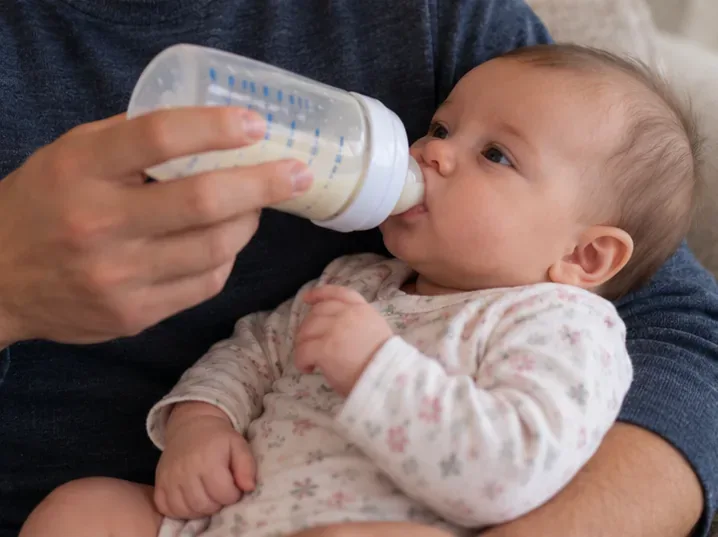
Similarly for children who drink formula milk, experts also advise that parents do not need to add water to their children. Formula milk has also provided enough water for the baby, even in hot weather.
According to Dr. Pham Ngoc Thach - Specialist of Urology, Children's Hospital 2: “For children under 6 months old, babies only need to drink milk, no need to drink filtered water for dessert and not because of kidney damage but not need. necessary ”.
Treatment for jaundice in newborns
In the case of jaundice like the Thai boy mentioned above, the mother can not by sunbathing and feeding properly. After 6 months of age, mothers should not drink water, causing dangerous enteritis.
Let your child sunbathe
Although the doctor will advise mothers to use light therapy to treat jaundice in the hospital, infant sunbathing still works very well.
According to Assoc. Dr. Nguyen Tien Dung - Former Head of Pediatrics Department - Bach Mai Hospital, depending on the child's age, how long mothers let their children sunbathe. However, for infants, the time to sunbathe is only from 10 to 15 minutes a day.
![Because she gave her water early, the 20-day-old child had an inflammatory bowel disease that required emergency care]()
Sunbathing is the best remedy for jaundice
“Within 10-15 minutes we take off clothes for the child. However, mothers do not have to remove all their children's clothes. You can wear thin clothes but light colors.
If the baby's clothes are removed, the better it is to let the sun shine. For infants, if the family is careful, they need to wear sunglasses or cover their eyes when sunbathing ”, Assoc. Dr. Dung said.
Breastfeed regularly:
Regular breastfeeding will help your baby go out more and help remove excess bilirubin from the stool. At the same time, breastfeeding will ensure all of your baby's nutritional needs.
If mothers do not have enough milk, the doctor may recommend formula to ensure baby's weight.
![Because she gave her water early, the 20-day-old child had an inflammatory bowel disease that required emergency care]()
A 4-year-old girl appears menstruation, warning of early puberty The situation that more and more children are getting into puberty soon, the faster they grow, the shorter they grow up as nowadays is alarming. The story of a 4-year-old girl who has been menstruating in China recently has contributed to helping parents pay more attention on how to care for their child.
The above-mentioned Thai baby's case is once again a profound vigilance lesson for those who are in the habit of giving their infants water to drink. When your baby is 6 months old, you can give your baby a few sips of water when he's thirsty.
However, do not give much drink because the baby's body is not adapted, which can cause the baby to enteritis, stomach pain and loss of appetite. After one year, your baby can consume raw foods and drink whole milk, you can give your baby water depending on his / her preference.