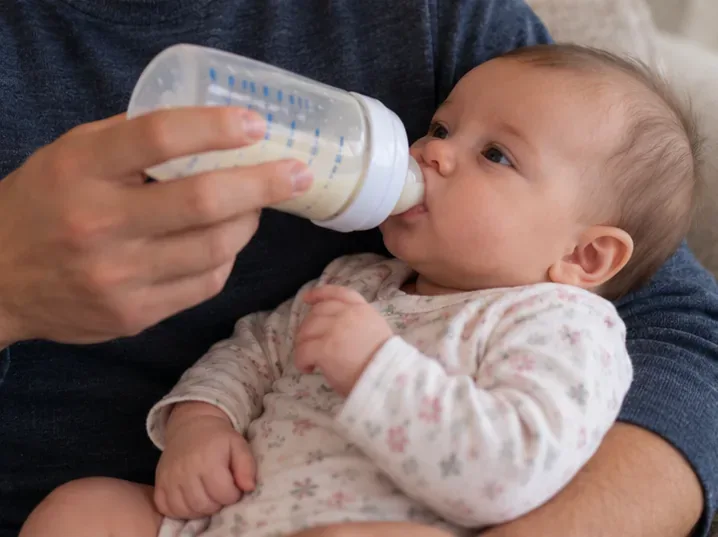
1-3 year old baby how much food is enough?

The nutritional needs of 1-3 year old children are not high. Every day, babies need about 40 calories per inch of height. This relative formula will help you figure out the amount of nutrients you need and specific foods for your baby

1-3 year old baby how much food is enough?

At this age, the baby is able to feed on its own, so you should prepare the right portion to eat or scoop up with a spoon.

Basically, the nutritional intake for a baby at this age is about a quarter of that of an adult. However, depending on the child's growth and daily activities, parents measure nutritional needs and decide how to feed the baby.

Below is a ration table for parents who are 1-3 years old. Have you prepared your child for nutritious diets ? Are you “forcing” your child to overeat? Let's take a look at the serving sizes of the most common food groups!


Food Groups Number of servings per day Size 1 serving of nutrients Calories per serving

Cereal 6 servings

- 1/4 - 1/2 slice of bread

-4 tablespoons of cooked rice, cereals, pasta

-20 g of dry cereal

-1 - 2 crackers

 250 calories After 2-3 servings

 1 tablespoon cooked vegetables / 1 year old

Example: 3 year olds need to eat 3 tablespoons of cooked vegetables in 1 serving

 75 calories Fruit 2 - 3 servings

 -22 g of canned or cooked fruit

-1/2 pieces of ripe fruit

-1/4 - 1/2 cup of juice

 75 calories Milk and dairy products 2 - 3 servings

 -1/2 cup of milk

-1 cheese ball

-1/3 box of yogurt

 300 - 450 calories: Meat, fish, eggs, milk, tofu 2 servings

 -2 tbsp minced meat

- 1/2 egg (including whites, yolks)

 200 calories

Nuts: Beans, flax… 2 servings 2 tablespoons of soaked and cooked seeds 200 calories

Peanut butter 1 serving 1 tablespoon 95 calories

 

Leave a Comment

How to Dress a Baby for Sleep Without Guessing the Room Temperature

How to Dress a Baby for Sleep Without Guessing the Room Temperature

Learn how to choose baby sleep layers using current safe-sleep guidance, your baby's chest cues, and product labels—without relying on one room-temperature number.

What Helps a Baby Adjust When Bedtime Shifts Later Than Usual?

What Helps a Baby Adjust When Bedtime Shifts Later Than Usual?

A later-than-usual bedtime does not have to derail a baby’s sleep. Learn how to preserve familiar cues, handle overtiredness, reset gently, and keep sleep safe.

Why Teething Symptoms Can Start Weeks Before a Tooth Appears

Why Teething Symptoms Can Start Weeks Before a Tooth Appears

Teething discomfort can begin before a tooth breaks through, but symptoms are not a reliable countdown. Learn what is typical and when to call a clinician.

How to Tell Whether Your Baby Is Ready to Drop a Nap

How to Tell Whether Your Baby Is Ready to Drop a Nap

Learn how to tell a true nap transition from a temporary nap strike, protect enough total sleep, try a schedule change safely, and know when to ask a pediatrician.

Why Does a Baby Wake 30 Minutes Into Every Nap?

Why Does a Baby Wake 30 Minutes Into Every Nap?

A baby waking after 30 minutes may be reaching a lighter stage of sleep, reacting to timing or discomfort, or simply taking a short nap. Learn what to observe, what to try safely, and when to call your pediatrician.

How to Serve Finger Foods Safely When Your Baby Has Few Teeth

How to Serve Finger Foods Safely When Your Baby Has Few Teeth

Few teeth do not rule out finger foods. Learn how to choose soft textures, cut foods safely, supervise meals, and recognize choking warning signs.

How to Encourage Tummy Time When Your Baby Cries: Gentle Options That Work

How to Encourage Tummy Time When Your Baby Cries: Gentle Options That Work

Compare gentle tummy-time positions, timing, and support options for a baby who cries right away, with clear supervision and sleep-safety guidance.

Why Would a Baby Suddenly Reject a Familiar Solid Food?

Why Would a Baby Suddenly Reject a Familiar Solid Food?

A baby may refuse a familiar solid food because of fullness, timing, texture, teething, or illness. Learn gentle next steps and when to call a pediatrician.

How to Introduce a Bottle When a Breastfed Baby Refuses It

How to Introduce a Bottle When a Breastfed Baby Refuses It

A practical guide to bottle refusal in breastfed babies: compare timing, caregiver, nipple flow, milk temperature, paced feeding, and when to get help.

How Two Caregivers Can Follow the Same Baby Sleep Routine

How Two Caregivers Can Follow the Same Baby Sleep Routine

Help two caregivers share a calm, flexible baby sleep routine with a clear handoff, age-aware steps, and the same safe-sleep finish.