7-month-old children: What is good to eat?

Completely supplementing your baby's nutritional needs is essential for your child's comprehensive development both physically and mentally. However, how to feed the child correctly? Refer now to the "standards" necessary for the following 7-month-old kid!

7-month-old children: What is good to eat?

Each baby will have its own nutritional needs, but still have to follow certain "standards"

1 / The essential nutrients for children

According to experts, in the first 6 months of life, babies can satisfy their nutritional needs through breast milk or formula milk. However, at a later stage, children need to be supplemented with nutrition through natural foods.


As recommended, the nutritional requirements for 7-month-old babies need at least 95g of carbohydrates, 30g of total fat, and 11g of protein in the daily diet. With breastfed babies, you should consult your doctor to know if your baby has enough calcium or not.


2 /  Breast milk or formula?

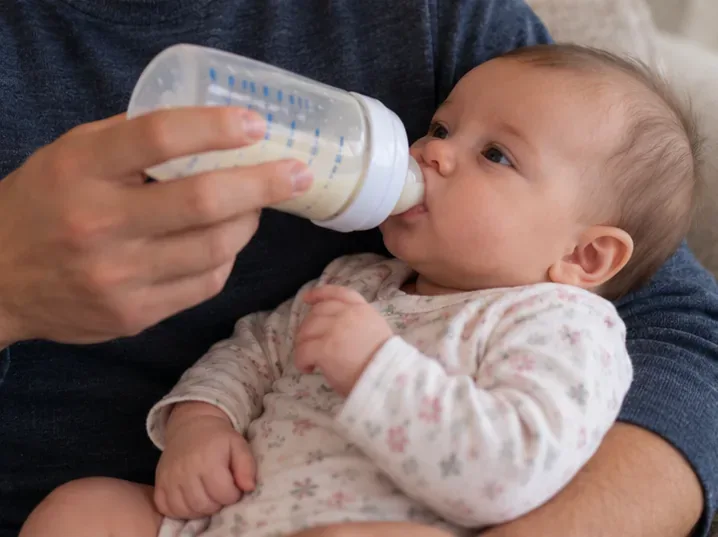
According to experts, 7 months old babies still need to breastfeed or drink formula 3 to 5 times per day. Because it is a concentrated source of nutrients and contains many beneficial fats, including omega-3 fatty acids.

In addition, the American Academy of Pediatrics recommends that 6-month-olds drink about 180ml to 240ml of formula or breast milk per meal (roughly the same amount as milk for 7 months old) depending on the amount of food. supplementary food for the child.

7-month-old children: What is good to eat?

Choose milk for children, what should mothers pay attention to? With the benefits of breast milk, parents have to consider a lot when choosing formula for their babies. Do you know what criteria you must base to evaluate this "adoptive mother" of the baby?


3 / Nutrition menu for 7-month-old children

Brocade, oats or infant cereals mixed with formula, or breast milk are common nutritional menus for your baby during this period. If, after 7 months of age, and already in the habit of eating infant cereals two to three times a day, mothers can try to include mashed fruits and vegetables in your baby's diet. In particular, note that only 1 type of fruit and vegetable should be given to children. If you want to let your baby try a new food, you should feed your baby little by little, and wait until 2-3 days to see if your baby has allergies or not, then let him try another food.

Experts recommend giving children fruits and vegetables four times a day, with 2 to 3 teaspoons each time. Many 7-month-olds are already able to eat full-cream baby yogurt.

7-month-old children: What is good to eat?


4 / Choose food for your baby

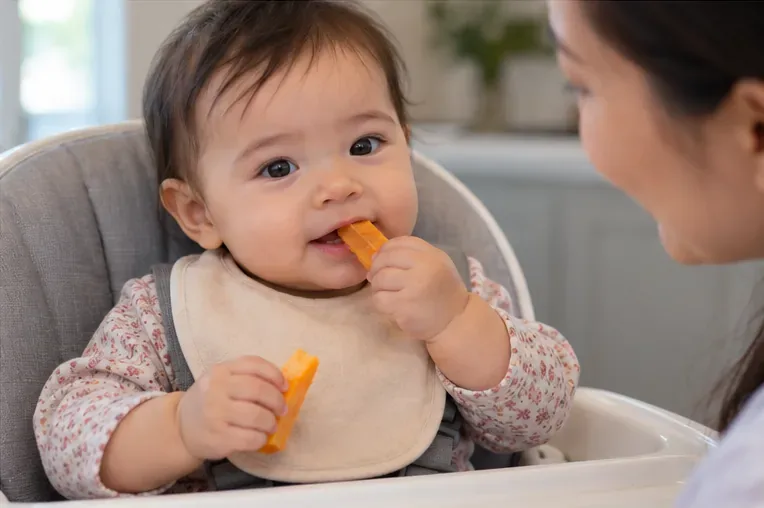
Some 7-month-olds are ready to try foods like soft cooked vegetables, bananas, soft crackers, pasta and toast. You should avoid foods that can cause choking like fruits, vegetables, grapes, peanut butter, popcorn, nuts and beans.

>>> See more discussions with related topics:

7 months old baby weighing 10kg 8 are obese?

Are leafy greens fighting malnutrition for your baby?

Leave a Comment

How Two Caregivers Can Follow the Same Baby Sleep Routine

How Two Caregivers Can Follow the Same Baby Sleep Routine

Help two caregivers share a calm, flexible baby sleep routine with a clear handoff, age-aware steps, and the same safe-sleep finish.

Why Does a Baby Rub Their Face and Ears When Tired?

Why Does a Baby Rub Their Face and Ears When Tired?

Face or ear rubbing can accompany tiredness, but it is not a diagnosis. Learn common explanations, what to watch for, and when to call the pediatrician.

Why Some Babies Crawl Backward Before Moving Forward

Why Some Babies Crawl Backward Before Moving Forward

Babies may scoot backward as they learn to coordinate their arms and legs. Learn what is common, how to encourage safe floor play, and when to ask a pediatrician.

Why Diaper Rash Improves, Then Comes Back: Causes and Next Steps

Why Diaper Rash Improves, Then Comes Back: Causes and Next Steps

Recurring diaper rash may be linked to ongoing irritation, diarrhea, yeast, product sensitivity, or another skin condition. Learn what to track and when to call the pediatrician.

How to Clean Baby Feeding Equipment While Traveling Without a Dishwasher

How to Clean Baby Feeding Equipment While Traveling Without a Dishwasher

Learn a safe, practical way to hand-wash bottles and feeding equipment while traveling, including rinsing, air-drying, sanitizing, and safe-water tips.

What Should Parents Track When a Baby Has Fewer Wet Diapers?

What Should Parents Track When a Baby Has Fewer Wet Diapers?

Learn how to track a baby’s wet diapers, feeds, urine changes, and warning signs—and when a drop in output needs prompt medical advice.

Baby’s First Halloween: Comfortable Costumes and Short Photo Sessions

Baby’s First Halloween: Comfortable Costumes and Short Photo Sessions

Keep your baby comfortable in a simple Halloween costume, take a few quick photos, and follow practical guidance for warmth, car seats, and safe sleep.

Newborn fast breathing, is pneumonia visiting?

Newborn fast breathing, is pneumonia visiting?

Discover the key signs of newborn fast breathing, learn how to identify pneumonia risks, and explore effective solutions for infant respiratory health. Stay informed about your baby

Cooking oils for children 6 months old mothers should choose when children eat solids

Cooking oils for children 6 months old mothers should choose when children eat solids

Discover the best cooking oils for 6-month-old babies to ensure proper nutrition and development. Learn why fats are essential, how to use them, and which oils are most beneficial for your baby’s health.

Baby development from 3 to 6 months old

Baby development from 3 to 6 months old

Discover essential baby development milestones from 3 to 6 months old. Learn how to support your baby’s growth with expert tips and activities for better bonding and development.