What do you know about the order of teething in your baby and how to take care of your baby's teeth to avoid tooth decay or dental infection? Refer to the following information now!

Mother should let the baby get used to brushing from early, best from 18 months
1 / Teething sequence in children
Starting from 6 months, babies begin to develop first baby teeth, usually the first middle front teeth, then the lower jaw. Babies can teething earlier at 5 months, or later at 8 months of age. At this time, mothers should clean their baby's mouth with a soft towel, gently brush their teeth every morning and night.
![Teething in children and dental care procedures]()
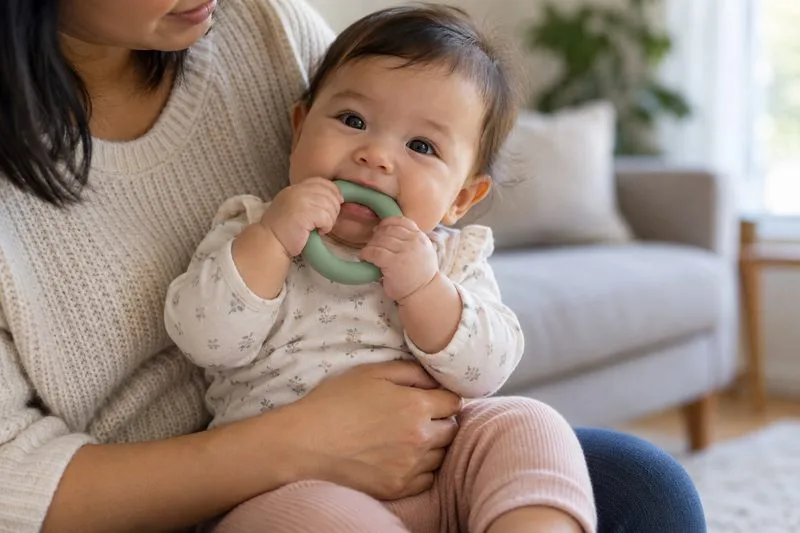
Teething children: Reduce discomfort when teething For some babies, the teething process is nothing remarkable, but for some other babies it is very painful and uncomfortable. Mom should learn some ways to make the baby more comfortable.
Your child's 32 permanent teeth will replace baby teeth when they are 6 years old or older. At this stage, the baby's dental care begins to become more difficult, when the mother can hardly force the child to do this and that, especially for the child to brush his / her teeth. Like it or not, reminding your baby to brush his teeth twice a day is essential to keeping the "root" of the person.
2 / Teach children to brush their teeth
To easily teach children to brush their teeth when they grow up, mothers should let them get acquainted with toothpaste early, typically around 18 months of age. Choose a low-fluoride toothpaste, because children under 6 years old who ingest a lot of fluoride can harm tooth enamel, leading to toothache. Spraying with a moderate amount of toothpaste, about the size of a pea is best.
When you first practice brushing your teeth, mothers should stand behind or let the child sit on their lap, arms around behind their head, and help the baby hold the toothbrush. Stand in front of the mirror so the baby can observe the mother's instructions more easily.
Children's brushes should also be carefully selected, with a size suitable for young age, soft bristles, round brush tips to help brush teeth clean and not harm your baby's gums.
How to brush your teeth correctly: Place the toothbrush palm facing the gum line at an angle of 45 degrees compared to the teeth, gently start brushing the outside, the inside, brushing in the direction of up and down, in circular order. Absolutely do not brush the teeth horizontally, do not let children hit too hard causing scratching the gums, wear of teeth.
Teaching children to rinse their mouths is also extremely important, because improper rinsing, ingestion of toothpaste can cause excess fluoride, and damage to tooth enamel. Teach your baby to rinse his mouth so that the water seeps in his mouth, then spit it out. At least rinse your mouth 2-3 times or more after brushing.
Teething in children is very important, if improper hygiene can cause tooth decay or other oral infections. To ensure the safety of the "root" of the child, the mother should regularly take her for regular dental visits at reputable dentists.
For the best oral protection for your baby, mothers should also pay special attention to your baby's diet. Avoid giving children a lot of sugary snacks, not giving them lots of soft drinks. Before going to bed, never give your baby candy mom!