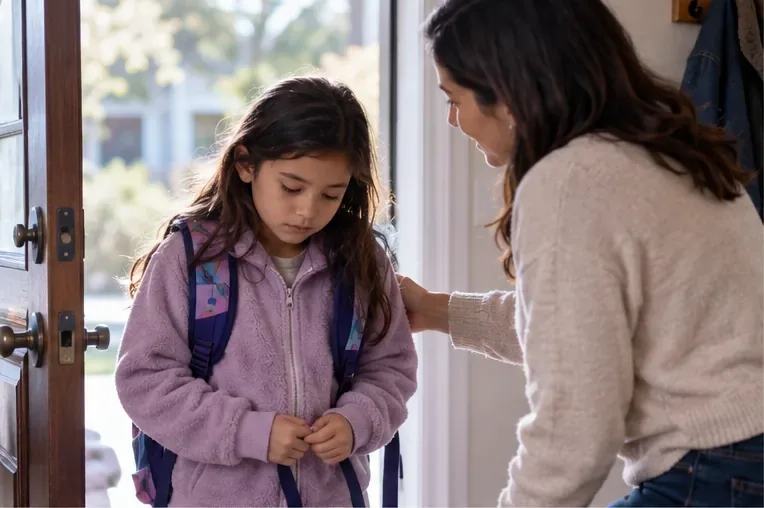
How to Teach Chores Without Redoing Every Task for Your Child

Teach kids to do chores with fewer reminders: set a clear finish line, model one task, step back, and correct only what is unsafe or unfinished.

For first-time mothers, it is very common to worry about whether the baby is getting enough milk or not. Just grasping some signs to identify that you can be somewhat reassuring.
Your baby is getting enough breast milk is a way for your baby to develop and grow every day. If you are wondering about the supply of milk for your baby, the following article will help you know when your baby is getting enough milk and when it is lacking.
During the period of breastfeeding, you can observe the following signs to know that the amount of breast milk is enough:
Breasts are softer after a breast-feeding because the amount of breastmilk eases the breasts, making them less tight. The baby feels comfortable and relaxed after feeding;
Your baby has steadily gained weight since the birthweight mark. Usually, depending on the condition and absorption, the baby's weight will increase to about 225g to 2kg per month in the months after birth;
Your baby will wet at least 6 diapers a day after feeding. However, during the first few days, when babies only receive nutritious colostrum , they only wet 1 or 2 diapers a day. Once your baby begins to receive breast milk regularly, he will begin to urinate more;
During the first month, your baby defecates 3 times a day and the stools are usually yellow-brown within 5 to 7 days after birth. When the baby starts to eat solids , (when the baby is 4 to 6 months old) the bowel movement is active at least once a day.
The baby is constantly losing weight. If your baby doesn't start gaining weight 5 days after birth, parents need to take the baby to see a doctor for health advice;
Your baby wets less than 6 diapers within 24 hours of 5 days after birth. Your baby has little and dark stools after the first 5 days;
Your baby's urine is dark, like the color of apple juice. If your baby's urine is pale or low, it may be caused by not drinking enough fluids. So this could also be a sign that your baby is lacking milk or water;
Baby looks tired and sluggish. The baby sleeps as soon as the mother breastfeeds the baby, but then the baby fusses again when you stop breastfeeding. The baby's eyes and mouth are dry. Your baby doesn't seem to feel full even if you feed for more than an hour. Breasts do not get softer after breastfeeding. Rarely does a baby swallow milk while feeding.
Breast milk is an essential source of nutrients for your baby's development in the first months of life. Mothers can observe the above suggestions to take measures to increase milk secretion and help babies get enough milk!
Teach kids to do chores with fewer reminders: set a clear finish line, model one task, step back, and correct only what is unsafe or unfinished.
Learn why toilet-trained children may start having pee or poop accidents again, what patterns to track, how to respond calmly, and when to call the pediatrician.
A child may repeat a reassurance question to process information, seek connection, or manage worry. Learn how to respond and when persistent anxiety needs support.
Learn how to set screen-time boundaries with predictable routines, warnings, calm follow-through, and better transitions—without turning every device handoff into a fight.
Teach children to handle losing without shame or explosive anger by validating feelings, setting behavior limits, modeling recovery, and practicing at the right difficulty.
A calm, practical plan for after-school meltdowns: reduce overload, keep limits clear, track patterns, coordinate with school, and know when to seek help.
Learn how to respond when a child feels unwanted, ask supportive questions, recognize bullying or ongoing distress, and know when to seek extra help.
Learn how to set up a shared bedroom for siblings with different bedtimes, from planning around age-based sleep needs to creating separate sleep spaces and quiet routines.
Compare full-day, gradual, and temporary at-home return plans, plus health checks and school supports that can help a child reenter safely.
Learn when a child can try to solve a friendship problem, when adults should step in, and how to tell whether support is helping or needs to change.