Home
» Pregnancy
»
Why Can Morning Sickness Return After Several Better Days?
Why Can Morning Sickness Return After Several Better Days?
Morning sickness can return after a few better days because pregnancy nausea often fluctuates rather than improving in a straight line. Symptoms may feel stronger again when you are tired, go longer without eating, encounter a smell or food that triggers nausea, or become dehydrated. A brief return does not, by itself, show that something is wrong with the pregnancy. But severe vomiting, dehydration, pain, fever, or symptoms that begin later in pregnancy deserve medical advice.
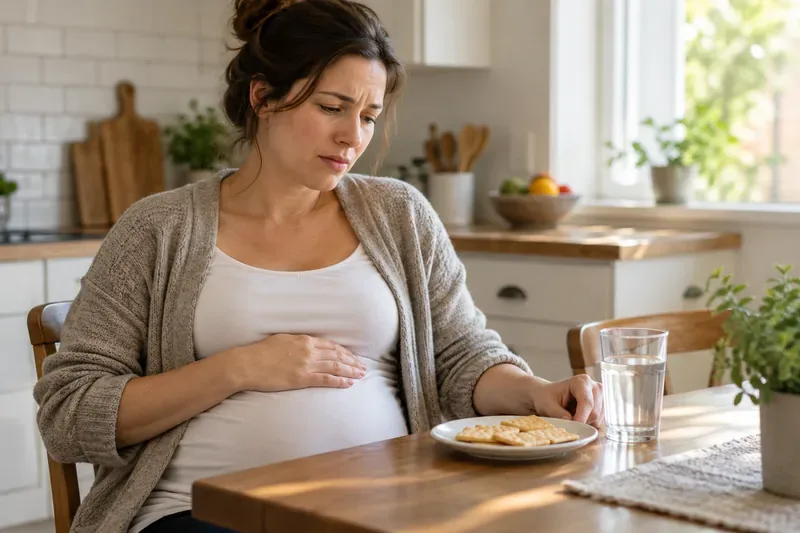
A glass of water and plain crackers are on the table as a pregnant woman pauses during a return of nausea.
“Morning sickness” is a common name for nausea and vomiting of pregnancy, but it can happen at any time of day or night. For example, you might feel well for several mornings, then feel sick again after a poor night’s sleep or when a cooking smell brings symptoms back. That pattern can be frustrating, but a few good days do not always mean nausea has ended for good.
Why can nausea come and go?
Pregnancy sickness is linked to pregnancy-related hormonal changes. Those changes continue even when you have a day or two with fewer symptoms, and nausea can vary from one day to the next. Researchers have identified pregnancy hormones that contribute to nausea, but there is no single day-to-day pattern that predicts exactly when symptoms will ease or return.
Daily conditions can also affect how you feel. Fatigue can make nausea worse. Some people notice symptoms after particular foods or smells, or when cooking odors are stronger. Going a long time without eating may make it harder to cope, while small, frequent meals and a bland snack first thing in the morning are common suggestions in pregnancy guidance. These measures can help some people; they do not eliminate nausea for everyone.
Fluids matter too. If you have been drinking less because you feel sick, dehydration can make nausea worse and can become a health concern of its own. Sipping small amounts often may be easier than drinking a full glass at once. If you cannot keep fluids down, do not rely on home strategies alone.
Does a return of nausea mean the pregnancy is in danger?
Several days of improvement followed by nausea do not, by themselves, confirm either a problem or a healthy pregnancy. Pregnancy symptoms vary, and nausea alone cannot tell you how the pregnancy is progressing. Likewise, feeling less nauseated for a day is not a reliable test of pregnancy status. If you have other symptoms or feel worried, contact your pregnancy care professional rather than trying to interpret the symptom pattern on its own.
Most pregnancy sickness improves by around 16 to 20 weeks, but some people feel sick longer. It may also begin at different times, and “morning” sickness can occur at night. If vomiting first starts after 16 weeks, or nausea comes with abdominal pain or pain when urinating, the Royal College of Obstetricians and Gynaecologists advises that other causes should be considered. A stomach infection or urinary tract infection, for example, may need assessment.
What can you try if symptoms are mild?
If you can drink, eat some food, and manage your usual activities, try adjusting one or two practical triggers at a time:
Eat small amounts more often. Plain crackers, toast, rice, potatoes, or other foods that are easy for you to tolerate may be simpler than a large meal. Keep a snack nearby if an empty stomach seems to make symptoms worse.
Take fluids in frequent small sips. Water is one option. Cold drinks or ice chips may be easier for some people. Aim to keep fluids going, and seek advice if even small sips come back up.
Reduce specific triggers where possible. If a smell or food reliably sets off nausea, ask someone else to prepare it or choose a cooler, less aromatic meal. Avoid cutting out whole food groups without asking your clinician how to maintain nutrition.
Prioritize rest. If nausea is worse after a short night or busy day, take breaks when you can. Tiredness can worsen symptoms, though rest is not a substitute for treatment when you are becoming dehydrated.
Track the pattern briefly. Note when nausea returns, what you ate or drank, sleep, triggers, vomiting, and whether you are urinating normally. This can help you explain the change at an appointment.
Do not start, stop, or change prescription medicines, vitamins, or supplements without checking with your pregnancy care professional. Some anti-nausea medicines are used during pregnancy, and a clinician can discuss which choices fit your health history and local guidance. If an iron supplement seems to worsen nausea, ask before pausing it; do not discontinue a prescribed medicine on your own.
When should you call a clinician?
Contact your midwife, obstetric clinician, or local medical service if nausea is persistent, is getting worse, interferes with daily activities, or makes it hard to eat and drink normally. Ask for help early if you have had severe pregnancy sickness before or need essential medication that you can no longer keep down.
Seek prompt medical advice if you are vomiting and:
Cannot keep food or fluids down for 24 hours.
Have very dark urine or have not urinated for more than eight hours.
Feel very weak, dizzy, or faint when standing.
Have abdominal pain, a high temperature, blood in your vomit, or weight loss.
These can be signs that you need assessment for dehydration, hyperemesis gravidarum, or another cause. Hyperemesis gravidarum is severe, persistent pregnancy sickness that can make it difficult to eat, drink, or carry out daily activities. Treatment may include anti-sickness medicine and fluids; a clinician can assess what is appropriate. If symptoms feel urgent or you are rapidly worsening, use your local urgent-care or emergency service.
What if nausea returns later in pregnancy?
New or renewed nausea later in pregnancy may still be pregnancy-related, but it should not automatically be assumed to be ordinary morning sickness—especially if it comes with pain, fever, diarrhea, urinary symptoms, or a general feeling of being unwell. Contact your care team for guidance. In the second half of pregnancy, nausea or vomiting alongside severe headache, vision changes, or pain high under the ribs also warrants urgent pregnancy-care advice, because those symptoms need assessment.
If you have a short-lived return of mild nausea, can keep fluids down, are urinating normally, and have no other concerning symptoms, it may be reasonable to use the approaches that previously helped and monitor how you feel. If it persists, escalates, or is accompanied by warning signs, call rather than waiting for the next routine appointment.