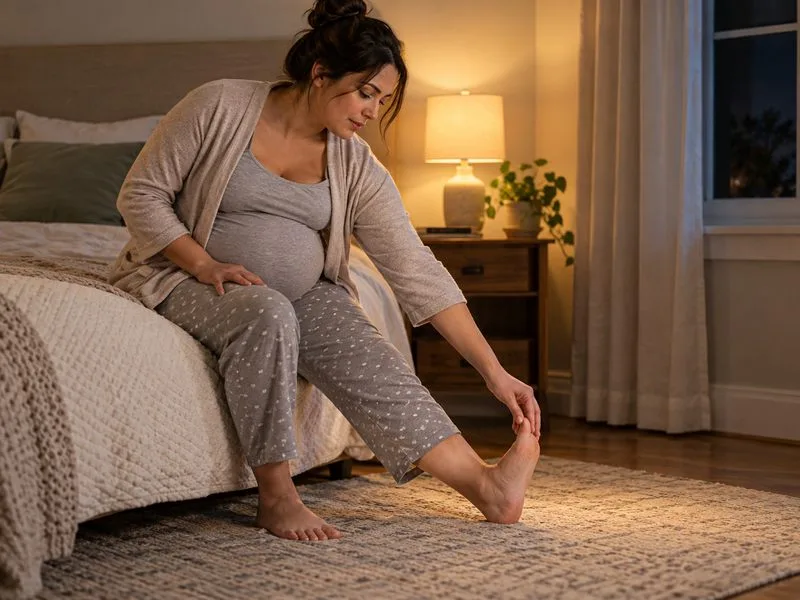
Illustrative example: Maya is 30 weeks pregnant and wakes with aching on the outside of one hip after lying on that side. Rolling over also hurts. This is a hypothetical example, not a diagnosis or a report of a real patient. It shows how someone might test simple comfort changes while watching for symptoms that need clinical assessment.
Pregnancy-related hip pain can come from more than one source. Pain in the hips may be part of pelvic girdle pain (PGP), which can also affect the lower back, groin, pubic area, or thighs. PGP often hurts with turning in bed, walking, stairs, or movements that separate the legs. Hip-joint, nerve, muscle, or other causes can feel different, so a sleep position cannot identify the cause by itself.
Start with a side-lying position that supports the whole leg
For many people, the first adjustment is to lie on the side that feels less painful and place a pillow between the thighs, knees, and, if needed, ankles. Supporting the lower leg as well as the knees can help the upper leg rest without dropping forward or twisting the pelvis. A small pillow or folded blanket under the abdomen may make side-lying feel steadier. Keep the support comfortable; there is no required pillow brand, shape, or exact height.
Maya could begin with pillows she already has: one between her legs and a smaller one under her bump. She should adjust the height so her top hip does not feel pulled upward and her top knee does not fall far across her body. If the pressure on the lower hip remains uncomfortable, she can try the opposite side, with the same leg support. Either side is acceptable for comfort.
A full-length body pillow can be convenient because it supports the bump and legs together, but ordinary pillows are easier to rearrange and may work just as well. The useful test is whether a setup reduces pressure and twisting enough to help the person settle and stay asleep. A pillow that pushes the knees too far apart or makes the hips feel uneven is not the right setup for that person.
Follow pregnancy sleep guidance without forcing a painful side
After 28 weeks, NHS guidance recommends starting sleep on either side rather than on the back. The left side is not the only acceptable side. If someone wakes up on their back, the NHS advises turning onto a side before going back to sleep; there is no need to panic about having briefly woken that way. Sleep position advice and hip-comfort advice can work together: choose either side, then use pillows to reduce pressure.
If both sides are painful or a person cannot find a position that feels safe and tolerable, they should ask their prenatal clinician or midwife for individualized advice. Avoid trying to sleep flat on the back for the whole night in late pregnancy as a workaround. A clinician or pregnancy-focused physical therapist can discuss safe alternatives based on gestational age and the person’s health history.
Make turning over gentler
For Maya, the hardest moment may be the turn rather than the position itself. A controlled “log roll” can reduce the wide, twisting movement that often aggravates pelvic discomfort: bend the knees slightly, keep them close together, turn the shoulders and hips as one unit, and use the arms to help reposition. Move slowly and stop if it causes sharp or worsening pain. A pillow placed between the knees can stay there during the turn if it does not get in the way.
Getting into bed can also be broken into smaller movements. Sit on the edge, lower onto the side using the arms, and bring the legs onto the bed together. To get up, roll onto the side first, bring the legs over the edge together, and push up with the arms. These are options to try, not exercises everyone must perform. If a movement is difficult or unsafe, ask a clinician or physical therapist to demonstrate an alternative.
Reduce nighttime aggravators where practical
Sleep comfort can be affected by daytime strain as well as the mattress position. If walking, stairs, standing on one leg, or spreading the knees increases pain, consider sitting to dress, taking stairs one step at a time, limiting repeated trips, and asking for help with heavy lifting. Gentle movement and rest can both matter; strict bed rest is not a general treatment for pelvic pain. Avoid activities that reliably worsen symptoms, but ask a care professional before starting exercises or substantially restricting activity.
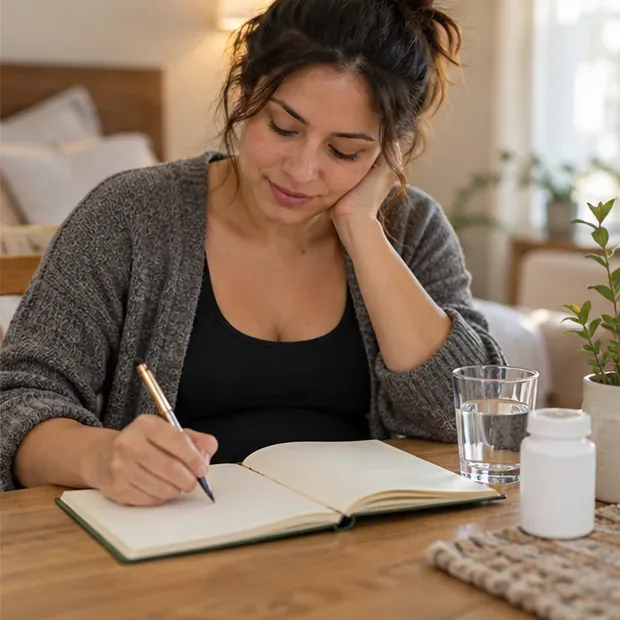
Maya can keep a brief note for a few nights: which side she started on, where each pillow was placed, what movement woke her, how often pain interrupted sleep, and how she felt when getting up. Change one part of the setup at a time. That makes it easier to tell whether support under the bump, a longer leg pillow, or switching sides helped. A comfort log is not a diagnostic test, but it gives a midwife or physical therapist concrete information.
A thicker duvet or mattress topper may feel more comfortable for some people, but it is a personal comfort choice, not a proven fix for every cause of hip pain. If a surface sags or makes turning harder, it may be counterproductive. The goal is a position that feels supported and allows reasonably easy movement, not a special product or a promise of pain-free sleep.
Know when to ask for help
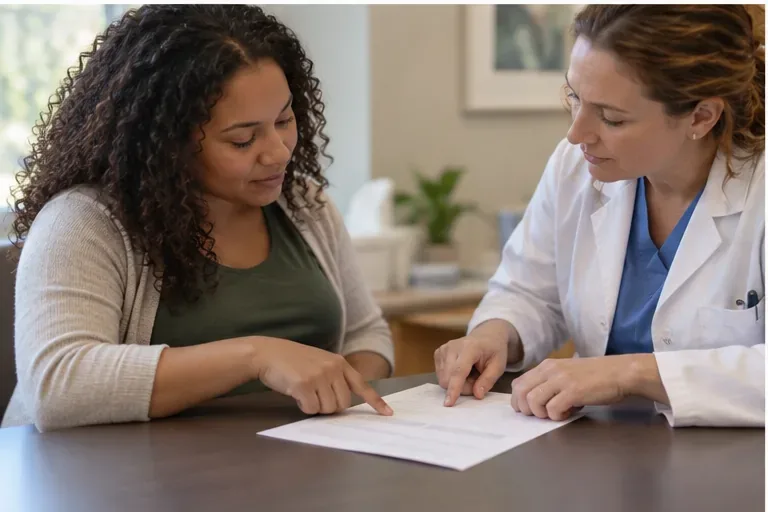
Contact a midwife, obstetric clinician, or primary care professional if pain is making it hard to move around, turn in bed, get in or out of a car, climb stairs, or sleep. These limitations can be signs of PGP, and early assessment may lead to pregnancy-focused physiotherapy, movement advice, or other support. Severe or worsening pain deserves prompt attention even if changing pillows helps a little.
Seek urgent maternity or emergency advice for warning signs such as vaginal bleeding, fluid leaking, fever, severe or persistent abdominal pain, a sudden change in the baby’s usual movements, or sudden swelling accompanied by other concerning symptoms. Sudden breathlessness, chest pain, fainting, or a life-threatening feeling needs emergency care. Local maternity services may use different phone numbers and thresholds; follow the instructions provided for the pregnancy and location.
Do not start a pain medicine, sleep aid, or herbal product during pregnancy without checking with a clinician or pharmacist who knows the pregnancy. Likewise, a pillow arrangement should not delay assessment when pain is severe, new, or affecting normal movement.
How to tell whether the setup is helping
Comfort is improving when it takes less effort to settle, pain wakes the person less often, turning is more manageable, or getting out of bed feels easier. It is reasonable to try a different pillow height or the other side when the first setup leaves pressure in the same place. If several adjustments do not help, or sleep and daily activity remain disrupted, change the plan by seeking an assessment rather than adding more pillows indefinitely.
In Maya’s hypothetical case, the useful outcome is not proving that she has PGP. It is finding a tolerable way to sleep, noticing what movements trigger pain, and sharing that pattern with her care team if the problem continues. Pregnancy hip pain is not something a person has to silently endure, and comfort measures have limits: only a clinician can evaluate persistent or concerning pain and recommend care suited to the individual.
Sources