Home
» Pregnancy
»
Pregnant During Flu Season? Questions to Ask at Your Prenatal Visit
Pregnant During Flu Season? Questions to Ask at Your Prenatal Visit
Pregnant during the autumn flu season? Use a prenatal visit to leave with two concrete decisions: when and where to get this season’s flu shot, and whom to contact if flu symptoms begin. Pregnancy increases the risk of serious flu illness, so the plan for a possible infection matters as much as the vaccination discussion. This U.S.-focused reference reflects CDC guidance available in September 2026; your obstetric clinician can adapt it to your history and local vaccine availability. CDC: flu and pregnancy
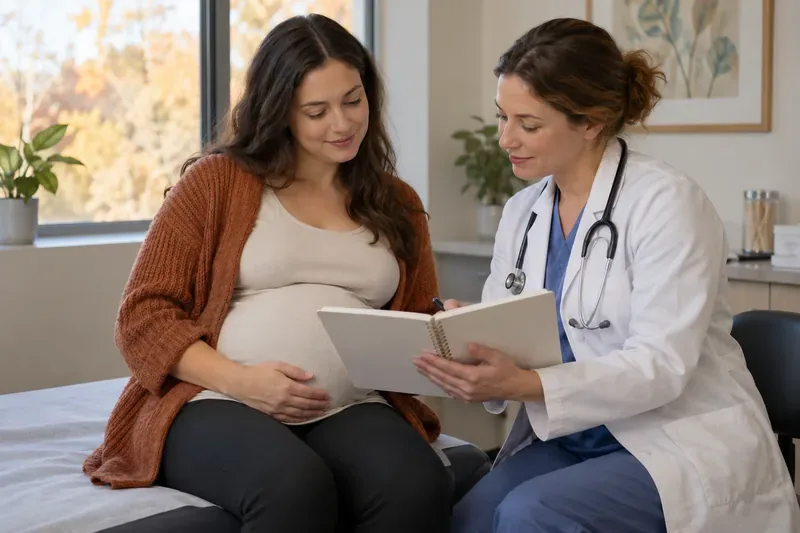
A pregnant patient and prenatal clinician review an open notebook during a visit; bringing questions in writing can help turn general flu advice into a personal plan.
Quick questions to bring to the visit
Topic
Question to ask
Useful answer to take home
Vaccination
“Have I had the 2026–27 flu shot, and can I get it today?”
The vaccine type, date, and where it will be recorded.
Individual history
“Do my allergies, past vaccine reactions, or health conditions change the plan?”
Any specific precaution and an appropriate place to receive the shot.
Symptoms
“Which number do I call first if I develop fever, cough, or body aches?”
A daytime and after-hours contact, plus when to seek urgent care.
Treatment
“If flu is suspected, how quickly can I be evaluated and treated?”
A clear route to prompt assessment and prescription treatment if indicated.
Exposure
“What should I do if someone at home has flu?”
Practical prevention steps and whether your circumstances merit a call.
Save those answers in your phone before leaving. A plan is most useful when you can follow it on an evening or weekend, not just during office hours.
Which flu vaccine should I ask for, and when?
Ask for the current season’s flu shot. CDC’s interim clinical considerations for 2026–27 say pregnant people should receive an inactivated or recombinant influenza vaccine; the live attenuated nasal spray is not used during pregnancy. Vaccination can be given in any trimester. September and October are generally good times for most adults, and vaccination should continue later in the season while flu viruses circulate and vaccine is available. If you were vaccinated last season, ask about this season’s dose rather than assuming last year’s shot covers this autumn. CDC: 2026–27 interim influenza vaccine considerations
The 2026–27 vaccines have updated virus components compared with 2025–26. That is a reason to confirm which season’s vaccine is offered, not a reason to search for a special pregnancy-branded product. If your prenatal practice does not stock it, ask whether a pharmacy or another clinic can provide an appropriate shot and how to send the vaccination record back to your prenatal team. CDC says special written permission from an obstetric clinician is not generally required to get a flu shot at another site. CDC: 2026–27 flu season updatesCDC: vaccine safety in pregnancy
What if I am early in pregnancy or have a vaccine concern?
Being in the first trimester by itself is not a reason to postpone a flu shot once the autumn vaccine is available. If you have had a severe reaction to a prior flu vaccine or a particular ingredient, tell the clinician exactly what happened and which vaccine you received, if known. Ask which product and setting are appropriate for you. An egg allergy alone does not automatically exclude an otherwise suitable flu shot, according to CDC, but your full reaction history still belongs in the conversation. Common side effects, such as soreness at the injection site and fatigue, are usually short-lived. Bring a list of medicines and any history of asthma, diabetes, or heart disease so your team can address risks beyond vaccination. CDC: flu shot safety, side effects, and allergies
Ask what protection to expect. Vaccination lowers the risk of flu and serious illness but does not make infection impossible. Antibodies passed during pregnancy can also help protect an infant during the early months, before babies are old enough for their own flu vaccine. Your clinician can explain how that benefit relates to your due date without promising a particular outcome for an individual baby. CDC: protection during pregnancy and after birth
What should I do if I develop flu symptoms?
Before you get sick, ask your team to define the first call. Fever or feeling feverish, cough, sore throat, runny nose, headache, muscle aches, and unusual fatigue can be flu symptoms; some people with flu do not have a fever. If they develop while you are pregnant, contact your obstetric team promptly, even if the symptoms seem mild. Say that you are pregnant, give your gestational week and symptom start time, and mention any known flu exposure or positive home test. The same prompt-call plan is relevant during the first two weeks after delivery or a pregnancy loss. CDC: flu treatment guidance for obstetric care
Ask, “Would you start treatment while a test is pending?” CDC advises clinicians not to delay antiviral treatment for suspected flu in pregnancy while awaiting laboratory confirmation; a negative rapid test does not necessarily rule flu out. Prescription antivirals work best when begun early, particularly within the first one to two days, but a later call is still worthwhile. CDC identifies oral oseltamivir as the preferred flu treatment during pregnancy because it has the most supporting pregnancy data. A clinician should decide whether to prescribe it and advise on fever treatment. Baloxavir is not recommended during pregnancy or while breastfeeding because adequate safety and effectiveness data are lacking. CDC: obstetric antiviral recommendationsCDC: treating flu with antiviral drugs
Which signs should bypass the routine callback?
Ask your prenatal team where to go for urgent evaluation. CDC lists trouble breathing, chest pain, a fever of 100.4°F (38°C) or higher, severe vomiting or inability to keep fluids down, and fetal movement that stops or slows as urgent maternal warning signs. If you have a severe symptom, seek immediate medical care instead of waiting for a routine appointment or a flu test. A change in fetal movement deserves attention according to your own pregnancy stage and care plan. These warning signs can also point to problems other than flu. CDC: urgent maternal warning signs
What if someone in my home gets flu?
Ask which household steps are realistic for your situation: reducing close contact with a sick person, improving indoor air, covering coughs and sneezes, and washing hands. If you had close contact with someone likely to have flu, tell your clinician when the exposure happened and whether you have symptoms. Preventive antiviral medication after exposure is considered for selected pregnant patients, including some who cannot receive a flu vaccine or are unlikely to respond to it; it is not an automatic prescription for every exposure. If symptoms begin, ask about evaluation and early treatment even if you have already been vaccinated. CDC: additional flu prevention actionsCDC: post-exposure considerations
A one-minute checklist before you leave
Confirm whether today’s shot is the 2026–27 inactivated or recombinant flu vaccine, or write down where you will get it.
Record the vaccination date and how the record reaches your prenatal team.
Save the clinic’s daytime, after-hours, and urgent-care instructions.
Ask what to report when calling with symptoms: onset time, temperature, breathing symptoms, exposure, and fetal movement concerns when applicable.
Clarify any personal vaccine or treatment questions linked to your allergies, medications, and medical conditions.
A useful visit ends with a vaccination appointment or completed shot and a contact plan you could act on immediately. If you leave unsure which number to call, ask the desk or clinical team to write it down. This article is a preparation aid, not a substitute for an individual assessment; recommendations and product availability can change, so confirm the current local plan with your prenatal clinician.