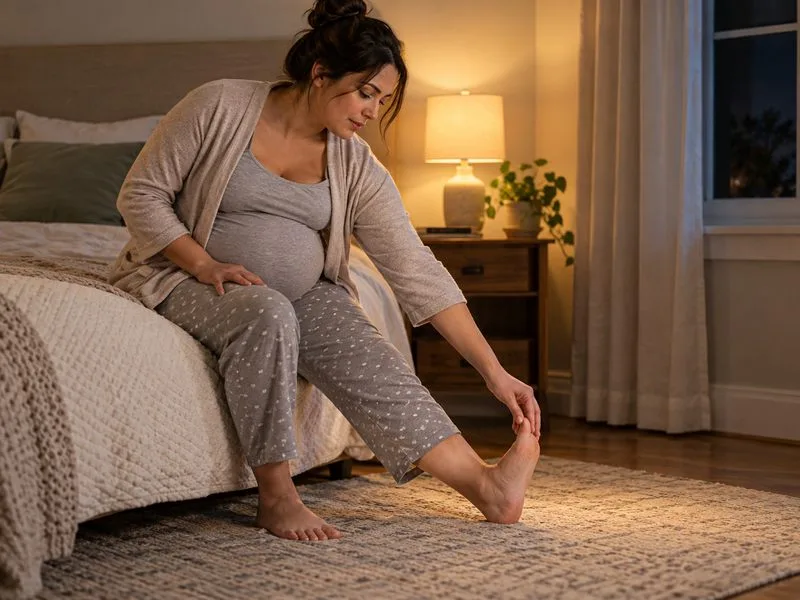
You finish a walk, carry groceries, or reach the end of a busy day and notice your belly tightening. After sitting down and drinking water, the tightenings may ease—or they may keep coming. That pattern can happen with Braxton Hicks contractions, but it is not a reliable way to tell practice contractions from labor.
Braxton Hicks contractions are temporary tightenings of the uterus. They may feel like a firm belly, pressure, or mild cramps, and some can be uncomfortable or painful. They are often irregular and do not steadily build in frequency and strength like labor contractions. They can occur for weeks before labor, and many people notice them more later in the day. Your own pattern may differ.
What hydration can change
When you are short on fluids, uterine tightenings may become more noticeable or frequent. Physical activity and dehydration in pregnancy have been associated with a small increase in uterine contractions, according to the American College of Obstetricians and Gynecologists (ACOG). This association does not prove that dehydration is the cause of every tightening, and drinking water cannot prevent or stop true labor.
If you have been sweating, exercising, spending time in heat, vomiting, or drinking less than usual, pause and drink water. Take comfortable sips rather than forcing a large amount quickly. Keep drinking according to thirst and your maternity clinician’s advice. If you have been told to limit fluids or have a condition that affects fluid intake, follow your clinician’s plan instead of general advice.
Hydration can help if low fluid intake is contributing, but contractions may ease for other reasons too. They may settle as your activity changes or simply pause on their own. Conversely, practice contractions may continue even after you drink. The response to water is useful information to note, not a diagnostic test.
What activity and rest can change
Some people notice tightenings during or after exercise, prolonged standing, lifting, or a particularly active day. ACOG notes the association between physical activity and a small increase in uterine contractions, while also stating that exercise in uncomplicated pregnancies is not generally linked to a higher risk of preterm birth. This does not mean you should ignore contractions that are regular, painful, or unusual for you.
When tightening starts during activity, stop and rest in a comfortable position. If you have been standing or walking, sit or lie on your side. If you have been sitting for a long time, a gentle position change or short easy walk may feel better, provided you have no warning signs and your care team has not advised you to limit activity. Avoid pushing through symptoms to finish a workout or task.
Rest and a change of position may reduce tightenings that are related to exertion. They do not establish that labor is absent. ACOG explains that timing contractions and observing whether they continue with rest and hydration can help you describe what is happening; if you are unsure, contact your obstetric clinician. Sometimes an examination is needed to determine whether the cervix is changing.
A practical response, from easiest to more involved
- Pause and notice the pattern. Stop strenuous activity and note when each tightening starts, how long it lasts, and how far apart the starts are. A phone timer or written notes can help. Do not focus only on how hard your abdomen feels.
- Change position and rest. Sit or lie on your side if you have been active or standing. If you have been sitting still for a long time, change position gently. Choose a comfortable, cool place.
- Drink water if you may be behind on fluids. Sip at a steady, comfortable pace. If you have nausea, vomiting, diarrhea, or cannot keep fluids down, contact your care team for individualized advice.
- Reassess without relying on one sign. Notice whether the tightenings become less frequent or stop, and whether they remain irregular. Also check for fluid leakage, bleeding, changes in fetal movement, increasing pain, or a regular pattern. Improvement is reassuring only in context; it does not rule out labor.
- Call your maternity team when the pattern or your symptoms concern you. Tell them how many weeks pregnant you are, when the tightenings began, their timing and duration, what changed after rest or fluids, and whether you have other symptoms. Follow the specific call instructions you were given.
Quick comparison: what the pattern may suggest
| What you notice | What it may mean | Useful next step |
|---|
| Occasional, irregular tightening that settles after rest or a position change | Can fit with practice contractions, but does not confirm the cause | Rest, drink if appropriate, and keep track if it returns |
| Tightening after exercise, heat, or a long active day | Activity or low fluid intake may be associated with more uterine contractions | Stop exertion, cool down, rest, and hydrate according to your care plan |
| Contractions that become regular, closer together, longer, or stronger | Could be labor, including preterm labor before 37 weeks | Call your maternity team promptly; do not wait to see whether water stops them |
| Fluid leaking, vaginal bleeding, reduced fetal movement, or severe/persistent pain | Needs prompt clinical assessment | Contact your maternity unit or clinician now and follow their instructions |
When to contact your care team
If you are under 37 weeks and have regular or frequent contractions, call your maternity clinician or labor and delivery unit promptly, even if they are not very painful or seem to ease briefly. ACOG lists frequent uterine tightening as a possible sign of preterm labor; the threshold and advice can depend on your history and local care plan. Do not use a general online cutoff to override instructions you were given.
At any stage of pregnancy, call promptly for a gush or ongoing trickle of fluid, vaginal bleeding, a clear decrease in your baby’s usual movement, strong or worsening pain, or contractions that concern you. If contractions are becoming regular and progressively stronger or closer together near your due date, follow your clinician’s labor instructions. When in doubt, it is appropriate to call rather than try to diagnose the pattern at home.
People with a prior preterm birth, a multiple pregnancy, a short cervix, or other pregnancy complications may have personalized instructions. Use those instructions even if the tightening improves after fluids or rest. General hydration and activity advice is not a substitute for an individualized assessment.
How to check whether your response helped
After pausing, resting, and drinking if appropriate, review the timing you recorded. Are the tightenings fading or staying irregular, or are they continuing at predictable intervals and becoming stronger? Have any warning signs appeared? The practical goal is to feel more comfortable and give your care team clear information—not to prove that everything is normal. If symptoms persist, return, or feel different from your usual pattern, call your maternity team.
Sources