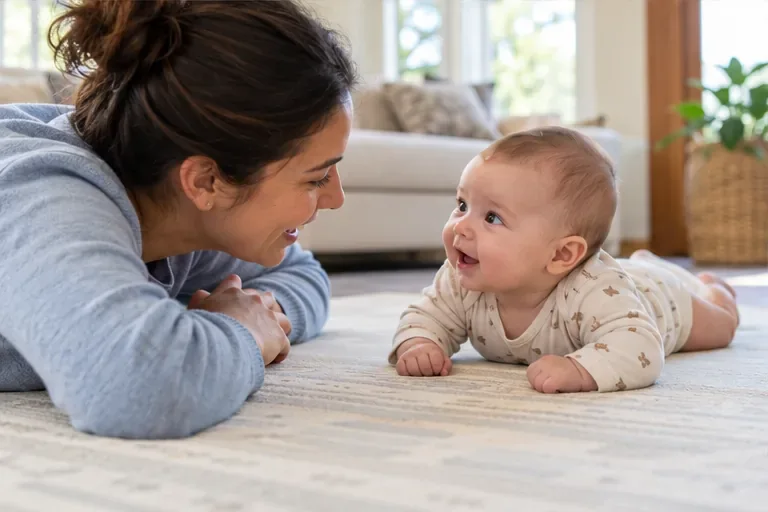
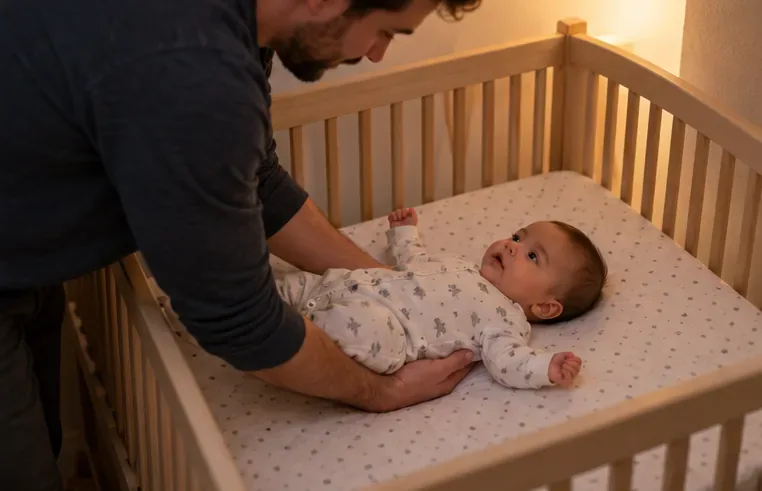
When your baby is 3 months old, it means that he will wake up and play with his mother more. Read stories to babies, just cats, dogs, planes ... In fact, babies cannot absorb all these new and quite complex things. Mothers should play simpler games with the baby.

Mom should play simple games with babies
1 / Pretty fingers
Start with the thumb, the up and down movement accompanied by a sound like a finger talking to your baby. You should only say simple lines like: "Hello baby" or make animal sounds to attract the baby's attention.
![3 games for mom and baby]()
Increasing concentration for babies Not only when babies are uncomfortable, even when babies feel bored while waiting for time to feed or sleep, mothers always have to pocket small games to make babies happy. looks more. At the same time, this is also an ideal way to teach infants to increase concentration.
2 / Eyes, nose, mouth
Move the baby's beautiful hands up each part of the mother's face. Every time where you stop, you can make a hum or a moa to describe it like a baby kiss for you.
3 / Big, small
Mom took the baby's hand and asked, "How big are you?". Then open your baby's arm and say, "This big." Although this game is simple, it will still make your child enjoy it.
In addition to the above 3 games, mothers can also increase their excitement through looking in the mirror, looking at different large and small shapes, looking at the rolling ball with bells ringing inside.
![3 games for mom and baby]()
Let your baby look in the mirror to stimulate development When the baby has passed the main eating and sleeping period, about 3 months or more, the mother can carry the baby around the house to visit. Especially, when the mother was first exposed to the mirror, she noticed the change in the baby's facial expression. In fact, every child loves seeing himself in the mirror. Instead of letting your baby ...