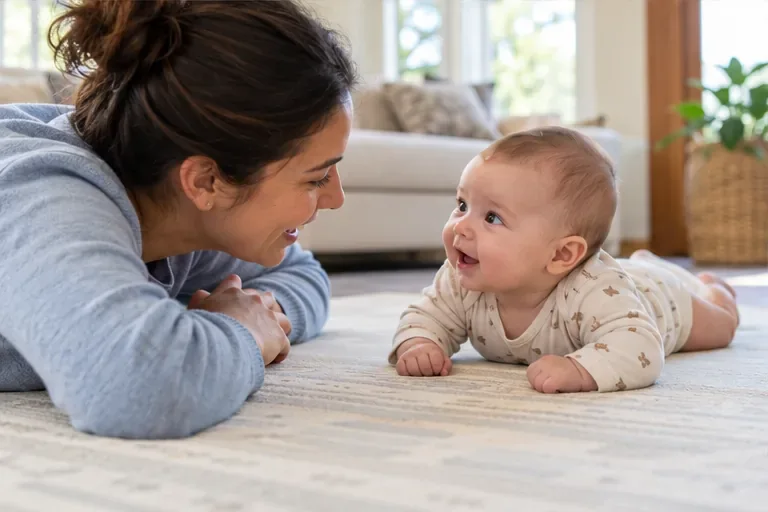
When the baby has passed the main eating and sleeping period, about 3 months or more, the mother can carry the baby around the house to visit. Especially, when the mother was first exposed to the mirror, she noticed the change in the baby's facial expression. In fact, every child loves seeing himself in the mirror. Instead of letting the baby look at herself, mothers can play with them while learning in the mirror to stimulate their development.

Baby loves to look at me in the mirror
If you have a large mirror in your home, you should sit down and place your baby on your lap, facing the mirror at a distance just enough to help your baby see clearly. If the mirror is small, you can stand holding the baby in front of the mirror. Next, she points to the mirror and tells the baby how beautiful her face is. Only part of the baby's face so she can feel the excitement she is doing with her face in the mirror. Of course, the baby will not be able to understand 100% of what the mother said, but at least he will find it interesting and excited.
What effect does this game actually have? It is a lesson in concentration, discovery and follow-up. In addition, it promotes the baby's development in the ability to interact emotionally with the mother and herself. Simple but the result is great, isn't it? Now, it's time for mom to introduce her to her face in the mirror!
![Let your baby look in the mirror to stimulate development]()
Is it necessary to stimulate the development of the baby from the womb? At 18 weeks, the mother can feel the baby's movement in the abdomen. However, the baby's brain has grown miraculously in the early days of the embryo formation. So should pregnant mothers seriously invest in stimulating the baby's brain to develop by listening to music, listening to good stories ...
MarryBaby