For children, especially babies and young children, indoor "traps" are even more worrying than street hazards. Washing machines, sockets, table edges ..., so many "deadly traps" exist in your own home.
Unlike adults, children, especially young children, cannot understand and know exactly what could be harmful to them. With a curiosity and an adventurous mentality, your baby can try anything that feels "interesting" and not foresee the possible consequences. Therefore, to protect the safety of the baby, parents always have to "be one step ahead", limit and minimize the risks that children may face.

Just a second of neglect, an unfortunate accident could have happened
1 / Set "safe mode" for the house
- Set fire alarm, water temperature lock below 40 degrees and set safety switch or circuit breaker for indoor operation.
- Replace electrical equipment and wires if there is any sign of damage or wear. Short-wire devices should be used, this will limit the child's ability to pull and move objects.
- With tools and equipment with springs or chains, you should have an outside cover to protect your baby's beautiful little hands. Chances are, the baby will stick his hand in and get stuck there, mom.
- It is recommended to use sheathing boxes or outlets that are not used indoors. Ideally, the switch and the power outlet should be designed at a high, out of reach of children.
- Use induction lights in stairs or toilets.
- If there is an indoor swimming pool, you should put up a fence around, and should have a secure lock.
- Use safety guards in the balcony area, windows. Store all items that your baby can use to climb.
- Lock windows, especially those that are overhead.
- Wrapped next to the table, next to the cabinet in the house
- Store all the tools that can cause harm to the baby such as knives, scissors, drills ... in a safe place, out of reach.
- Equipped with a basic ambulance box in the house and a list of phone numbers and addresses of the hospital near the house, ambulance, fire ...
2 / Create a safe area for your baby
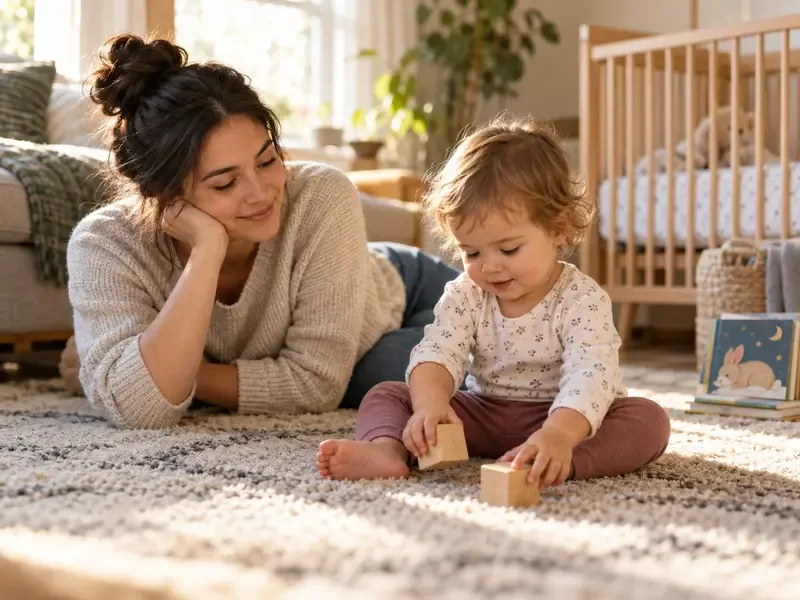
In addition to taking care of the baby, the mother also has a ton of housework as well as work at the company that need to be taken care of, and cannot always "supervise" the baby 24/7. Therefore, mothers should establish a safe area in the house, so that the baby can play freely, and you do not need to worry too much. However, mother do not ignore me for too long! There is no danger, but the baby can still injure himself during play.
3 / Safe in the kitchen
- Do not use tablecloths that are too much larger than the table top. Baby can reach for the leftover towel and pull all the food on the table. The risk of burns in these cases is very high, you should pay attention!
- Store sharp and sharp objects such as knives, scissors, and kitchen utensils in a locked cabinet. Should not be stored in too high places, because when it falls, the danger is even more.
- Unplug kitchen appliances such as presses and blender after use and store them in a safe place, out of reach of children.
![Safety in the home: Easy but difficult]()
Baby care: Basic first aid, mothers need to know Children are active, love to machine, explore, and explore around. With just a little negligence of adults and babies, it is very easy to have accidents due to the above nature. If mothers are not equipped with basic first aid skills, the consequences of not providing timely emergency aid for the baby are very unpredictable.
4 / Safe in bathroom and laundry
- Install a safety lock so that your baby cannot adjust the level of hot and cold water in the bathroom
- Store cosmetics, personal hygiene products in cabinets or places out of reach of children.
- Child safety lock should be used whether or not you use a washing machine. For top load washing machines, should limit the seat or objects around because the baby can use them to climb into the washing machine. In particular, mothers should note that children should not be allowed to play in the washing machine area, many unfortunate accidents have occurred due to their parents' carelessness.
>>> See more discussions with related topics:
Consulting baby safe bed
Safe for your baby to sleep separately in a crib