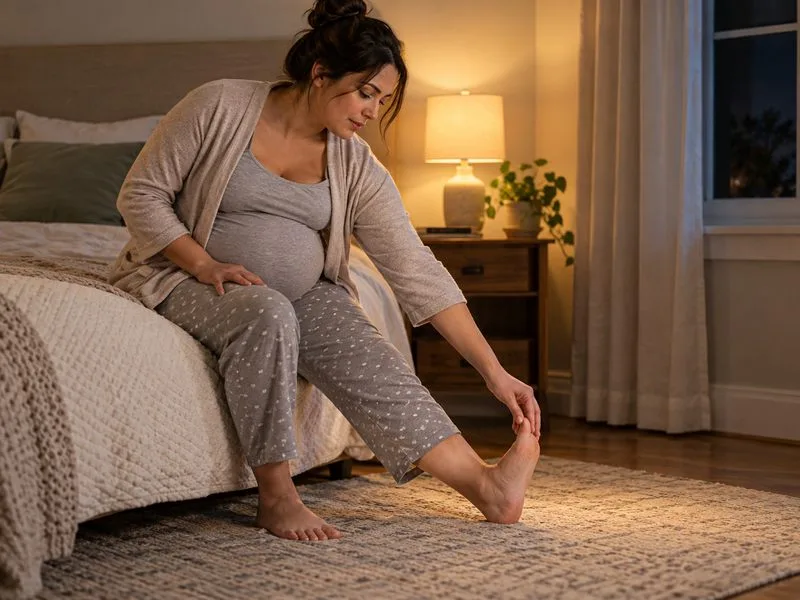
Pregnant woman lying on the right side is not a common question of many pregnant women. In general, in the first few months, a pregnant woman lying on her right side will not cause any effect, but in the last few months, this position can adversely affect the fetus.
In addition to nutrition, sleeping posture of pregnant women also affects the health and development of the fetus. In the first 3 months, you can sleep comfortably in any position, but when the 2nd and 3rd trimester, when your abdomen starts to grow, you will have a headache in choosing a comfortable position to sleep.
Sleep disturbance is a problem that most pregnant women face, especially after the first 3 months of pregnancy . Getting bigger, swollen feet and sore feet, and frequent urge to urinate are all factors that make you feel uncomfortable sleeping.
At this point, a good night's sleep is very important for pregnant women. However, if pregnant women only sleep well when lying on the right side, is it okay? Please join aFamilyToday Health to follow the following shares to get answers to this problem.
Pregnant woman lying on the right side okay?
In the first few months, you can lie on your back, on your side or on your stomach, depending on your preference. However, when it comes to the second and third trimesters, lying on your back or on your stomach will make you feel uncomfortable. There are many pregnant women who complain about sleeplessness often and find it easier to sleep on their right side. But, is pregnant woman lying on her right side okay?
According to studies, pregnant women lying on their right side while sleeping will not cause any danger. Studies have shown that it is better for pregnant women to lie on their left side than on their right side. As observed, pregnant women lying on their left side are less likely to have a preterm birth compared to women who lie on their right side. In addition, lying on your back and on your right side will also reduce blood flow to the fetus. Therefore, to ensure the baby's development, experts still recommend lying on your left side while sleeping.
During pregnancy, experts recommend avoiding stress. Therefore, while lying on your right side may not be good, if you feel uncomfortable changing positions, lie down on your favorite position. Or to ensure safety, you can consult your doctor about good sleeping position for pregnant women .
Sleeping positions should be avoided during pregnancy

In addition to lying on the right side, pregnant mothers should also avoid tummy or supine positions because:
Lying on your back during pregnancy can put weight on the spine, back muscles, intestines, large blood vessels, especially the lower aorta (this is the vein that carries blood to the lower body). This reduces the amount of blood circulating to the heart and fetus, thereby impeding the supply of oxygen and nutrients to the baby. Not only that, lying on your back can also reduce blood pressure, cause dizziness, snoring and even lead to sleep apnea . In addition to circulation problems, lying on your back also increases the risk of pain in the joints, the risk of hemorrhoids and negative effects on the digestive system.
Tummy position is also not recommended for pregnant women because this position not only makes you uncomfortable but also hurts your baby.
The secret to helping pregnant women have a good night's sleep
So you are clear that pregnant woman lying on her right side is okay. Here are a few tips to help you get a good night's sleep during pregnancy:
Use a pillow for pregnant women: You can place a pillow between your knees or under your stomach. You can also use a pillow behind your back to feel more comfortable sleeping.
Avoid full food, drink plenty of water before going to bed: Although pregnant women often feel hungry at night, you should not eat at 2 - 3 hours before going to bed. The reason is that eating at this time is easy to get heartburn, causing discomfort. In addition, you should drink less water because during pregnancy, your baby will put pressure on your bladder, making you feel sad urinating often.
Create a comfortable, gentle sleeping environment: If you find it difficult to sleep, you may consider changing bedrooms, beds. Bedrooms should be airy, peaceful, noisy and light in the bedroom should be reduced. In addition, you should also avoid using electronic devices that can harm your sleep such as televisions, tablets, cell phones ...
Sleep in the right position: According to research, the best sleeping position is the one lying on your left side. This is a suitable position to support the development of the fetus in the womb. In addition, this posture will help the pregnant woman's body not suffer any pressure, creating conditions for the cardiovascular system to function normally. In addition, the kidneys will also easily excrete waste, reducing the amount of water accumulated in the body, helping pregnant women avoid the risk of edema during pregnancy.
Although lying on the right side will not cause much danger, experts still advise pregnant women to limit lying in this position, but lying on the left side. However, it's better not to stay in one position forever, it's better to change your position from time to time. Therefore, you have complete flexibility to choose the best sleeping position for you.