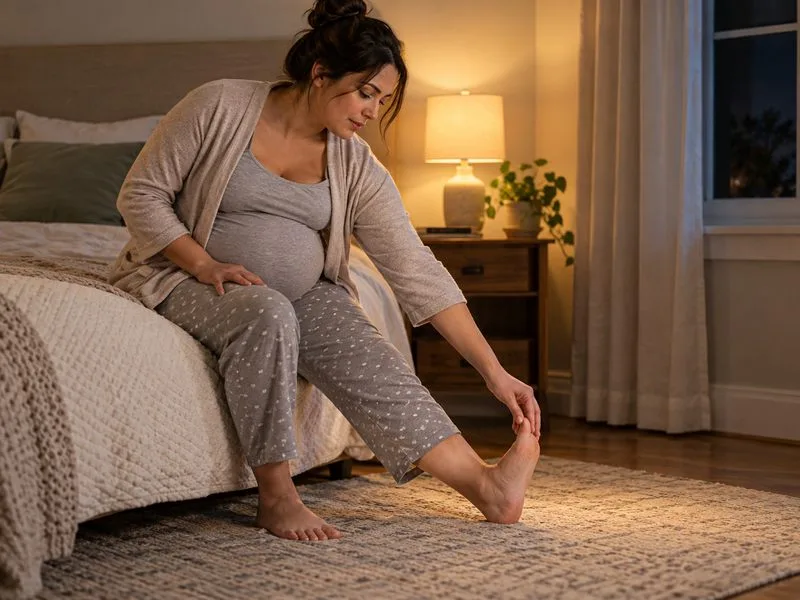
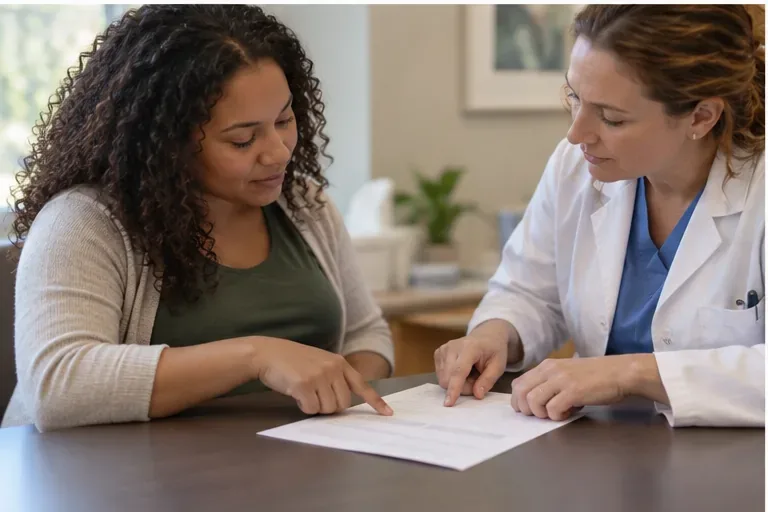
Today many mothers and fathers are involved in their careers without considering having children. Wait until they are nearly 40, they begin to think about having children. Some people think that getting pregnant in your 40s won't have to worry about things like your finances and career. However, pregnancy at this age brings many health problems for you as well as the baby. Let's find out why with aFamilyToday Health.
The natural chance of getting pregnant in women in their 40s is only 5% - 20%
This opportunity depends on the exact age. For women 40 years old, the chance of conception is about 20%, and will drop to just under 5% at age 45 and on (calculated separately for each cycle).
After the age of 45, you will have a very hard time getting pregnant naturally. The closer you get to menopause, the more severe a drop in your egg count will be. At this age, your fertility decreases not only because of the reduced number of eggs, but also a decrease in egg quality. Beyond the age of 40, an egg released from your ovary is at a higher risk of structural problems (chromosomal abnormalities). Eggs with chromosomal abnormalities can increase the risk of miscarriage and birth defects.
What are the advantages and disadvantages of being pregnant in your 40s?
Favorable during pregnancy at the age of 40
Surely everyone finds that the most beneficial thing about having a baby at this age is that you are prepared both mentally and financially. You have had time to experience life, have a stable career, and have a long-established sympathy with your husband. All are solid foundations for a happy family.
Age gives you experience and knowledge to easily care for your baby. Older women also tend to breastfeed more naturally. Your income is higher so you don't have to worry about your finances much, returning to work after the postpartum period is nothing to worry about.
Also, when you are in your 40s pregnant, you are more likely to have twins. From 45 years of age, the rate of twins of women is approximately 50% because the closer to menopause, the more endocrine system in the woman's body will have to work, that sometimes makes eggs. drop 2 fruits at the same time in one cycle. Both eggs can be fertilized and you will become pregnant as a result. If you are on fertility drugs, the follicle stimulating hormone (FSH), the more likely you are to have twins.
Disadvantage of pregnancy at the age of 40
If you become pregnant at the age of 40, you will need more care during pregnancy. When pregnant at this age, women will often experience many health disadvantages.
If you have any health problems, your doctor will record your pregnancy as a "high risk pregnancy". While it sounds serious, it will help you get the care you need to make sure your mom is round. More specifically, you are twice as likely to have the following problems than younger women:
Gestational diabetes;
Pre-eclampsia ;
Hypertension;
Placenta striker;
Young placenta.
It will also be harder to give birth, you may have a caesarean or a preterm birth. The fetus in the womb will have an unusual fetal position and pattern during labor. Your baby is also at risk of being underweight at birth.
Your risk of having chromosomal abnormalities increases with age. The risk of having a baby with Down syndrome in a woman 40 years old is 1/200. This rate is very high compared with 1/700 among women aged 35 to 39, accounting for 1/1500 in women 20 to 24 years old.
Age is considered to be one of the factors that increase the risk of fetal problems in pregnancy screening tests. Your doctor may do tests with amniocentesis or placenta biopsy to be more sure of the fetal chromosomal abnormality.
These chromosomal abnormalities also increase the risk of miscarriage. About half of all pregnant women aged 42 have a miscarriage. This rate even increases to a quarter of women over 45 years old.
At first glance, it seems that being pregnant in your 40s has too many disadvantages. But do not worry too much, remember that there are still a lot of women over 40 and still have favorable pregnancy. So do not give up the dream of being a mother at this age due to a little difficulty.
What should you do if you want to get pregnant in your 40s?
First you need to make lifestyle changes to make conception easy. Make sure there are no cigarette smoke in your home. You should also maintain a reasonable weight and be good with all things related to alcohol like alcohol, beer.
If you have sex 3 times a week for 3 consecutive months, do not use any contraceptive and are still not pregnant, see your doctor. Several health problems can make it difficult to conceive at this age.
Before deciding to become pregnant, see your doctor right away if you have the following problems:
Irregular menstruation;
The body has polycystic ovary syndrome;
You are suffering from a sexually transmitted infection (STD).
And remember not to just go to see the doctor alone, it's best both husband and wife should go together because your husband also needs to be checked.
Risk to the fetus when the mother is 40 years of age and older
About one-third of all pregnancies in women aged 40 to 44 have miscarried. There are many reasons for this: the egg is defective so the fetus cannot develop, the endometrium is not thick enough for the embryo to develop or the blood supply to the uterus is not enough to sustain the fetus.
The ratio of each other for strikers, each other will also increase. Babies also have an increased risk of being born prematurely or underweight.
You may be interested in some of the following articles:
Should you get pregnant after age 35?
How to choose the best vitamin before pregnancy?