You should carefully choose safe foods when giving them to your baby and carefully supervise them while they eat. Avoid giving your baby fruits, small and hard seeds such as grapes, raisins, longan, custard-apple (na), ...
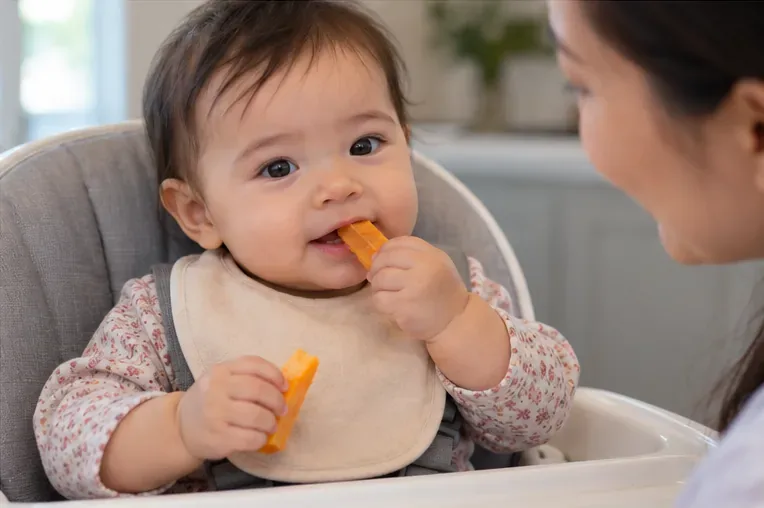
The self-directed weaning method - BLW weaning method - not only helps the baby feel happy, but also stimulates the baby to eat better thanks to the baby's hand and eye movements and functional coordination between the two parts this.
When can your baby try BLW weaning?
About 6 months on, your baby will start to eat solids and get acquainted with many different foods. When your baby is a little older (around 7 or 8 months) at this time, your baby's gums are a little stiffer, and she tends to put everything in her mouth. Let your baby learn to eat with raw, soft foods.
Benefits of the BLW weaning method:
According to many scientists, the baby-led weaning method - BLW weaning method - is not only a fun method, stimulates the baby to eat well, but also helps the baby develop carefully. hand motor and hand-eye coordination skills. Through eating, babies learn how to distinguish materials, colors, flavors… of each type of food. Your baby will also be acquainted with many different foods.

In addition, another benefit of this weaning method is that it helps your baby avoid anorexia , and helps him have a good eating habit when he grows up.
![Try the BLW weaning method - run by your baby]()
How to feed the baby to self-feed?
Initially, the baby is not used to it, the baby's teeth are not yet developed, so you should choose soft, easy to digest foods that do not cause choking for your baby.
A toddler who is just starting to pick up food will create mess while eating. You should prepare a napkin and spread a thin carpet under the baby seat to ensure hygiene.
Place a moderate amount of bite-sized food on the plate and place it in front of your baby to keep track of how your baby is eating. You can add more when your baby has finished eating and shows signs of wanting to eat more.
The snacks for babies to spontaneously have to be soft, easy to handle, of medium size because they are too small to hold, and too big they are easy to choke or choke.
Let your baby get used to many flavors, many different foods in the period from 9 months to 15-18 months will be able to prevent picky eating habits in the future. While preparing food, you should avoid salt seasoning, if there is only a little to be good for your baby's digestive system.
Through this self-directed baby weaning method, babies will also learn to distinguish the unique materials, colors, and flavors of each type of food; Therefore, you should change the menu every day so that your baby always feels delicious
Note when giving babies self-commanding
solids : When they first practice BLW weaning, they can easily choke and choke. Your baby may not chew before swallowing or choose large pieces to eat. Therefore, you should carefully choose safe foods when giving them to your baby and carefully supervise them while they eat. Avoid giving your baby fruits, small and hard seeds such as grapes, raisins, longan, custard-apple (na), ...
The first phase of the self-directed weaning method - BLW weaning method, you may get tired of the mess your baby comes up afterwards. So prepare well mentally and should not be angry with the baby. Be patient and guide your baby slowly.