When indoors, it's best to let your baby walk barefoot. Bare feet help children cling to slippery surfaces like wood or ceramic tiles better.
Walking is a big development in a baby's life. This is also something that parents often wonder and worry about when the baby will know to walk. In fact, each baby learns to follow their own progress, so don't worry when your baby is still a toddler while a friend's little angel is already walking. The following information will help you identify signs when your baby is ready to walk, and what you can do to help.
When can the baby walk?
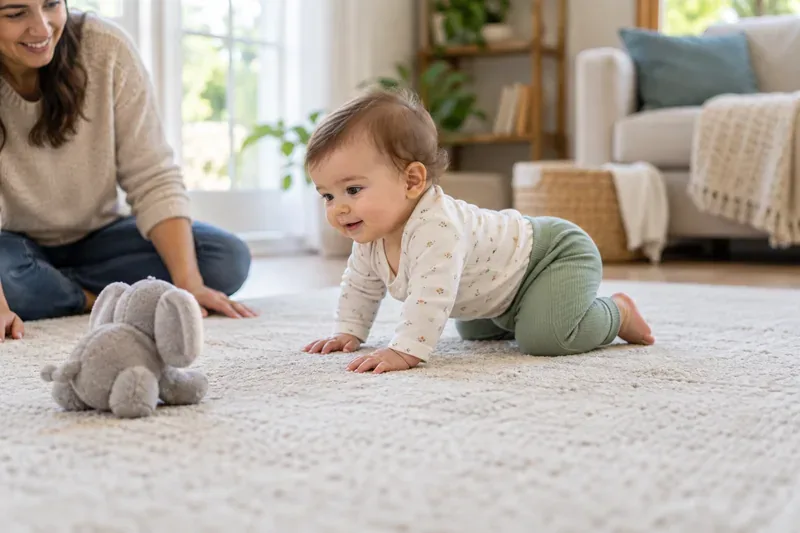
Most babies take their first steps on cradle day , but usually between 9 and 18 months of age. Do not worry if your baby does not develop according to normal procedures. Some babies never crawl from standing to walking, this is completely normal. It is important at this stage that your baby uses his arms and legs at the same time to move. If your baby acts like the one below, it's a sign he is about to walk:
Roll around
Cows cross
Escape
Climb stairs manually
Keep track of your baby's progress. Do you see your baby being more active than last month? Does your baby lift a little off the ground? If so, you don't have to worry. However, if your baby is more than 1 year old and doesn't show any signs of wanting to walk, you'll need to talk to your doctor.
How to encourage your baby to walk?
Most babies spend around 1,000 hours of practice from the moment they can stand until they can walk alone. You can help prepare your baby for the following first steps:
When your baby is born:
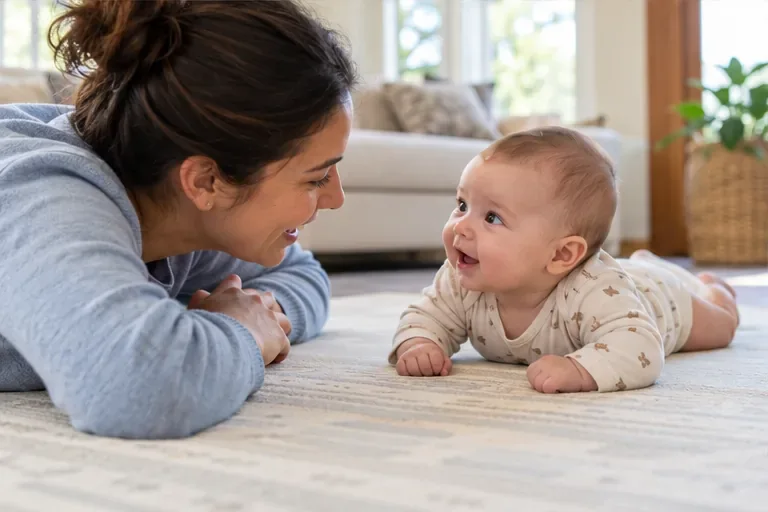
The most important requirement for walking is to have strong back muscles, and your baby develops strong back muscles by lifting his head while lying on his stomach. So you need to spend a lot of time with your baby on his tummy when he wakes up. You can also put toys or interesting objects out of your baby's reach to stimulate your baby.
When babies can sit:
Help babies practice balance and movement by rolling a cake back and forth with your baby. Or you can hold a toy in front of your baby and move the toy sideways. This will help your baby lean to one side and the other. As your baby leans forward or crawls, he will develop strength in his neck, back, legs and arms, as well as adjust hips more. This will help your baby pull over to stand up and pull back safely.
When your baby can stand:
You can hold your baby's hand so that he can walk in front of him, at the same time, let go of one hand from time to time so he can experience balance. Or you can stand a little further away from your baby and encourage her when she can stand on her own. Don't forget to encourage and give lots of compliments.
When the baby knows "walking":
After the baby has learned to stand, he can begin to place his fingerprints all over the house as he leaps from the wall to the chair to the table. Help your baby by arranging sturdy furniture so that he can cling and walk around the room. Your baby may not be able to sit down while standing, but he or she will want to learn before walking on his own. Stand close to the baby, use your hands to help him gently put his butt down. After that, your baby will be able to sit down without hurting her butt.

Parents play an important supporting role to help prepare children for the first steps in life.
Safety principles
Toddlers can move around faster than you think! The following preparatory steps will help protect your baby from danger:
Eliminate low tables with sharp edges difficult to shield to prevent injury to babies when bumping. (Lacerations above or in eyebrows are common among toddlers in hospital emergency rooms.)
Store items that are easy to fall.
Check home cables or objects that your baby might fall over. Take away the doormats, pull back the loose rugs that have been moved and remind, watch your baby's siblings take away all their toys.
Install safety doors above and below stairs, and don't forget to supervise while your baby is on stairs.
Store and lock all items that are potentially dangerous to your baby.
Should I buy a walker?
The short answer is no! You should know, the Canadian government has taken a move to ban the sale of all walkers , and the American Academy of Pediatrics recommends a similar ban in this country. According to statistics, every year, thousands of children are admitted to work due to injuries from using a walker, such as falling downstairs or approaching a hot kitchen. In addition, the walkers also prevent the normal development of the upper muscles of the baby's feet.
Ruffled and elliptical chairs for babies are also not a good idea. While these chairs help keep your baby upright, they do not help your baby learn to walk faster. In fact, these devices even slow your baby's walk if used too often. Not to mention, the baby's body is not properly adjusted when he sits on these chairs. Better yet, let your baby play on the floor or in a private play area.
The first shoes for the baby
When indoors, it's best to let your baby walk barefoot. Bare feet help children cling to slippery surfaces like wood or ceramic tiles better. Out of the house, your baby will need a pair of shoes. The following recommendations will help you find shoes that fit your baby's feet:
Don't buy shoes in the early morning hours, as feet usually grow around 5% by the end of the day.
Your baby should stand when you try on baby shoes. Make sure you can press the full width of your big toe between the tip of the shoe and the bottom of your baby's toes, and the heel should have just enough space to fit your little toe.
Let your toddler put shoes around the shop for about five minutes, then take off the shoes and observe their feet. If there are any irritation, the shoes are not suitable for babies.
Check the fit of shoes monthly. Because at this stage the baby's feet develop very quickly. And be prepared to visit a shoe store every 2-3 months.
In the end, no matter how excited you are when your toddler takes his first steps, you must be persistent. Each child has its own time frame to reach this milestone. So the best help you can give your baby is: motivating, setting safety rules, and waiting. Because sooner or later, your baby's toddler steps will also imprint your home!