How to Introduce a Bottle When a Breastfed Baby Refuses It
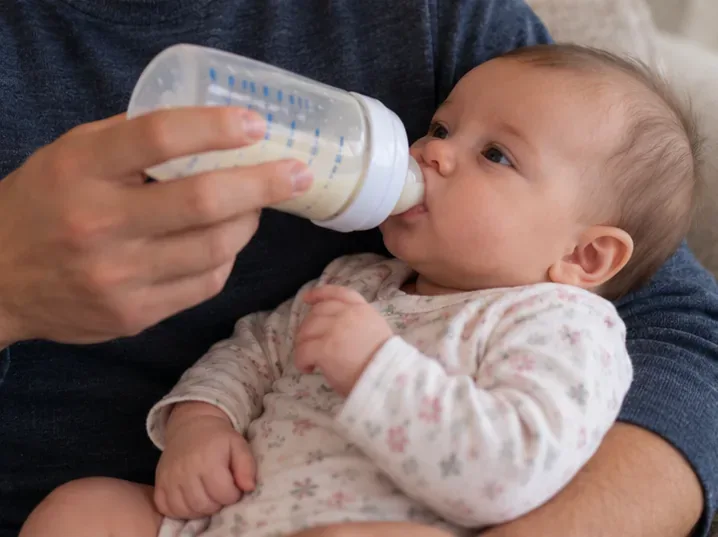
A practical guide to bottle refusal in breastfed babies: compare timing, caregiver, nipple flow, milk temperature, paced feeding, and when to get help.
Putting away the worry of how much breastfeeding is enough, mothers with weaning babies keep spinning, wondering if their babies are well fed. If you have not found the answer for yourself, immediately refer to the following post!
1 / The child's daily serving size
As recommended by health experts, even when the baby starts to eat solids, the mother should still breastfeed her baby. Even for babies in the period from 4-6 months old, milk is still the baby's main food and the baby's weaning during this period is mainly to learn with the taste of food. Therefore, in this "early" beginning, each mother should only feed the baby about 3 tablespoons of food. You can feed your baby 1-2 times per day, depending on needs. However, for babies who are new to solids , mothers should only start giving babies a little try before gradually increasing their diet.
From 6-12 months of age, the child's diet can increase with about 6-8 teaspoons of food each time and at this time, the mother can feed the baby 2 main meals and 2 snacks a day. By the time you are 1 year old, the amount of food your baby gets each day will depend a lot on the weight and volume of the baby's stomach. Accordingly, for each kilogram of his weight, the baby needs about 112 calories with the volume of the stomach each time can only consume about 200 grams of food. During this period, food has become a source of energy "feeding" children all day and milk is just one of the snacks, helping children add calcium.
The theory is so, but experts also believe that it is children who decide how much food they need each day. While many young mothers worry about whether their kids are eating a sufficient amount of food each day, most child nutrition and psychology experts say that children will never starve themselves. my body. So if you notice that your baby doesn't seem to want to eat, don't worry! Maybe your baby's stomach is in a state of "redundancy" then mom.

5 classic mistakes when feeding baby solids Breastfeeding is one of the new development steps, not only helping to add nutrients to the body but also helping to form and develop chewing and swallowing skills for babies. Therefore, the process of practicing solids-feeding is very important, because if you are not careful, your mother's mistakes can adversely affect the development ...
2 / Note when the mother feeds the baby
Even though it's the same age, your baby will probably eat less than your neighbors' babies. Because during the weaning phase, each baby's diet will depend a lot on when to start, the amount of food and how you puree or chop food.
Babies in the teething phase tend to eat less than usual. However, this condition will quickly go away as the baby becomes better.
Most babies will find it annoying to have to stop their engaging game to eat something. In this case, mothers should "pull" the toy out of the baby's sight and draw the child's attention about the plate.
- As long as the child's weight and height are still within the permitted standards, mothers don't need to worry too much.

Nutrition for the baby in the weaning stage
>>> See more discussions with related topics:
List of foods that are not meant to be processed together
Should I feed my baby brown rice often?
A practical guide to bottle refusal in breastfed babies: compare timing, caregiver, nipple flow, milk temperature, paced feeding, and when to get help.
Help two caregivers share a calm, flexible baby sleep routine with a clear handoff, age-aware steps, and the same safe-sleep finish.
Face or ear rubbing can accompany tiredness, but it is not a diagnosis. Learn common explanations, what to watch for, and when to call the pediatrician.
Babies may scoot backward as they learn to coordinate their arms and legs. Learn what is common, how to encourage safe floor play, and when to ask a pediatrician.
Recurring diaper rash may be linked to ongoing irritation, diarrhea, yeast, product sensitivity, or another skin condition. Learn what to track and when to call the pediatrician.
Learn a safe, practical way to hand-wash bottles and feeding equipment while traveling, including rinsing, air-drying, sanitizing, and safe-water tips.
Learn how to track a baby’s wet diapers, feeds, urine changes, and warning signs—and when a drop in output needs prompt medical advice.
Keep your baby comfortable in a simple Halloween costume, take a few quick photos, and follow practical guidance for warmth, car seats, and safe sleep.
Discover the key signs of newborn fast breathing, learn how to identify pneumonia risks, and explore effective solutions for infant respiratory health. Stay informed about your baby
Discover the best cooking oils for 6-month-old babies to ensure proper nutrition and development. Learn why fats are essential, how to use them, and which oils are most beneficial for your baby’s health.