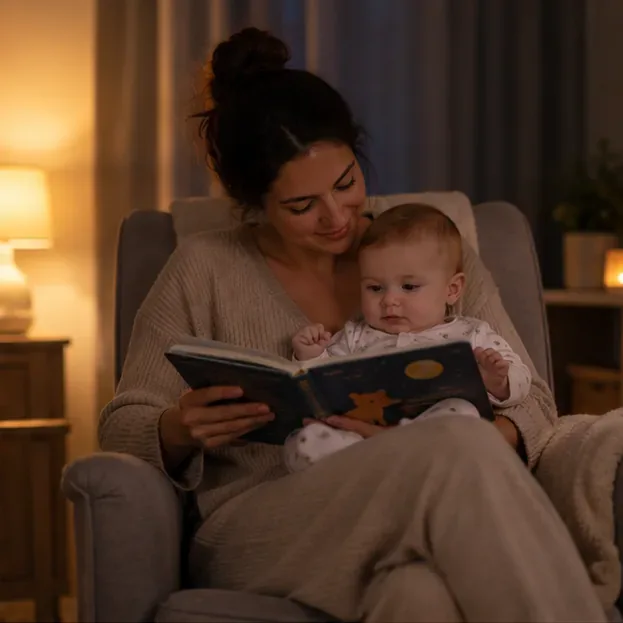
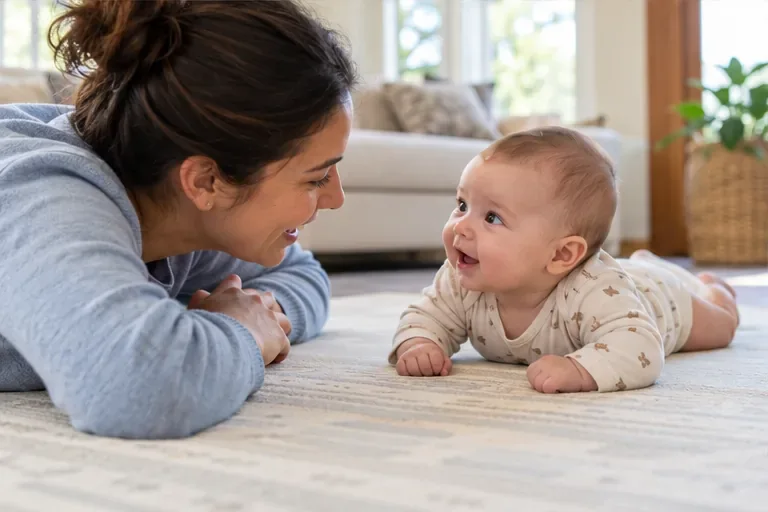
The earlier you read to your child, the better mother helps her build a rich vocabulary. At the same time, listening to good stories also helps children develop communication skills when growing up
You may already know that reading to children is very important in the development of language and cognitive ability but do not understand the specific effects of this activity. Why does the American Academy of Pediatrics encourage reading for babies?

Reading for babies and children has many benefits
Reading to your baby is talking to your baby- and talking to your baby is one of the most important things parents need to do. Talking doesn't just bring benefits to your baby's cognitive development. It is also the main way to secure social links. Reading provides a foundation for expressing emotions, thereby provoking interest in children. The act of moving the lips, and the way you convey meaning through your eyes, is a limitless flow of messages that your child finds extremely captivating. So in the first year of a baby's life, reading is like an inaugural speech, bringing in a lot of good things later. In addition, this is also a way to help parents and children not spend time focusing on the screen of electronic devices, an obstacle that accidentally enters family affection.
![Read books to your child as soon as possible]()
Turn off the phone and take care of your family's happiness. Do you want indomitable objects like your phone, computer or tablet to squeeze between yourself and the people you love? Try to take your eyes off the screen, turn off these "addictive" things to give your family quality time to spend, you will find life much more meaningful!
You should start with colorful books. Reading poetry, singing, talking, ... are all suitable activities to lead children on the journey of developing their language skills.
In toddlers, reading books to children plays an important part in forming a foundation for children to prepare to learn to speak. Again, the value here is not only reading to your baby, but also helping you to bond with your baby. Interacting with your baby - for example, by telling your baby to point to pictures, expand ideas, answer questions, and even simulate stories - will help enrich your inner acumen. communication skills and promote skills for later reading learning.
![Read books to your child as soon as possible]()
Teaching your children to practice speaking: From birth to 3 years Your baby's speaking skills started very rudimentary, from the ee language then gradually became each sentence, each paragraph. As someone who is always with your child in every step of development, parents play an important role in the development of their child's speech, especially in the initial stage.
As your child grows and reads books on their own, set time for parent and baby reading, which makes them feel the importance of reading - and reassures you that they will read. Don't be afraid that your children read books that you don't feel are suitable for. Any reading is beneficial. Both parents and children should read, and read diligently.