When you get pregnant in the second stage of pregnancy, your legs get bigger and the shoes will start to tighten, causing your feet to swell. This phenomenon is often uncomfortable for pregnant mothers, but do not worry too much. The following shares can help you feel better.
Why are pregnant mother's ankles and feet often swollen?
Pregnancy swelling, also known as edema , is caused by excess fluid flowing into your tissues. Almost half of all women get this when they are 22 to 27 weeks pregnant. In the third trimester of pregnancy, edema can be caused by either too much amniotic fluid or you are having twins or more. The swelling may increase late in the day or on summer days. After giving birth, this phenomenon will disappear automatically.
The main cause of this phenomenon is that your body retains fluids to support you and your baby. Fluid stays in the cells and causes blood flow to increase, making the ankles and feet of pregnant women swell. In addition, some mothers experience swelling in their arms, but not many people experience it.
In addition, the uterus puts pressure on the blood vessels from head to toe. When the veins narrow, blood begins to flow down your legs and causes swelling in your legs.
How to reduce edema for pregnant mothers?
Swelling in the feet and hands is completely normal for women during pregnancy. However, there are some things you can try to make yourself more comfortable during pregnancy:
Lie on your side to reduce hematoma pressure in your leg;
Raised footrest - you can put a cushion under your feet while you lie in bed or place a small chair under your desk to hang up when you go to work;
Opt for shoes that are comfortable and you shouldn't wear shoes that are too tight;
Do not cross your legs or ankles while sitting;
Avoid standing for long periods of time, you should go for regular walks to help keep blood flowing in your legs;
Don't wear tight-fitting socks and be sure to take them off before getting out of bed the next morning so that blood doesn't build around your ankles;
Drink plenty of water - don't be surprised, this is a way to help pregnant mothers retain a moderate amount of water;
Exercise regularly, walk, bike in place. Swimming and aerobics are great when your feet are swollen, water helps to reduce swelling. Therefore, you should choose the water level in the lake as high as your shoulder.
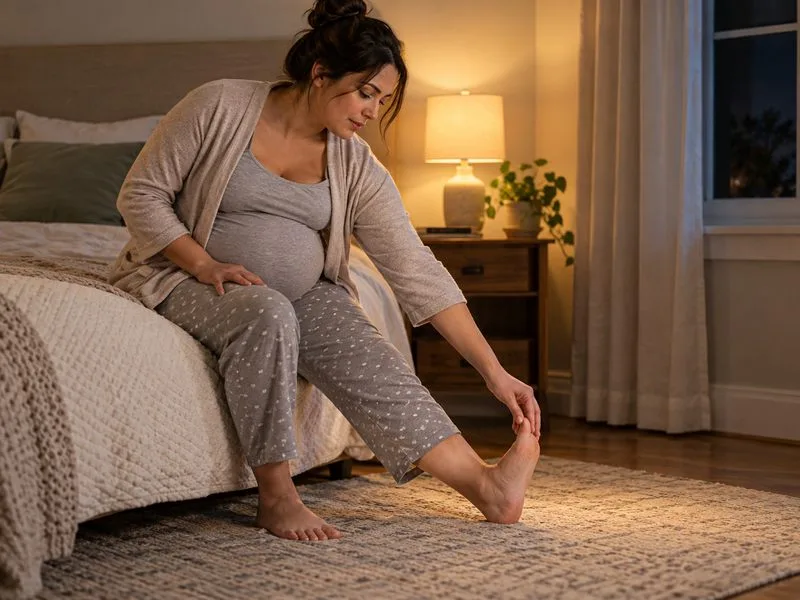
If you can't get up, bend your legs up and stretch them up and down, or rotate your feet in a circle.
Practice eating healthy foods and avoid snacking. You add natural foods rich in vitamins C and E to your daily diet. Foods rich in vitamin C include citrus, green peppers, red peppers, watermelon, potatoes, tomatoes, strawberries, cabbage, and broccoli. Foods rich in vitamin E include vegetable oils (especially corn oil, soybean oil and wheat germ oil), sunflower seeds, wheat germ, corn, cashews and almonds.
Prospective mothers also do not worry too much about their feet swollen. After the baby is born, the edema will go away. Remember that any changes made during pregnancy benefit your baby's future development.