How to Teach Chores Without Redoing Every Task for Your Child

Teach kids to do chores with fewer reminders: set a clear finish line, model one task, step back, and correct only what is unsafe or unfinished.
Gallstones in young children are a rare condition. However, in recent years, people with gallstones have the tendency to increase, including children. The disease can have many effects on the health and development of children if it is not detected early and treated in time.
Not only in adults, gallstones can also occur in children. This disease makes children feel pain and discomfort. How do I know if my child has gallstones? aFamilyToday Health will help you find the answer to this problem shortly.
Gallbladder stones are stone-like stones that form in the gallbladder. In fact, these are abnormal deposits of bile, a small organ located under the liver. Children who are overweight, obese or have an unhealthy lifestyle are more susceptible to this disease.
Gallstones have 2 main types:
Cholesterol gallstones are cholesterol in the body that is coagulated. This type of stone is more common in people who are overweight, obese, pregnant women, and the elderly.
Bile pigmented stones are composed of calcified bilirubin or calcium bilirubinat. This type of gallstone can be brown or black in color. Children with acute liver disease or leukemia are more likely to get it.
How do I know if my baby is likely to have this disease or not? You can tell if your child has symptoms such as:
Right shoulder pain
Sudden pain in the upper abdomen
Back pain between the shoulder blades
Nausea
Vomiting
Fever
Inflammation of the pancreas
Here are some of the main causes that can lead to stone formation:
Children who are overweight and obese have a higher risk of gallstones than other children. Obesity increases cholesterol levels in the body, leading to the formation of stones in the gallbladder.
Gallstones can be genetic. If someone in the family has gallstones, the child will be at higher risk of this disease.
Certain cholesterol-lowering drugs can increase cholesterol levels in the gallbladder, leading to the formation of stones.
Children with type 2 diabetes have a very high risk of it.

Your baby's doctor may order some of the following tests:
Blood tests
Supersonic
Endoscopic ultrasound
CAT scan
Pancreatic magnetic resonance imaging (MRCP)
Retrograde cholangioscopy (ERCP)
Hepatobiliary scintigraphy
If the child's condition returns, returns many times, or complications have become severe, the doctor may prescribe gallbladder removal surgery:
During surgery, your doctor will remove the gallbladder through small incisions in your abdomen. This will help prevent stone formation.
This surgery is more complicated with a large incision cut below the right rib of the abdomen. Your doctor will use this incision to remove the gallbladder.
Extracorporeal lithotripsy is a non-invasive procedure that breaks the stone from afar without surgical intervention. Children who are not suitable for surgery can perform this treatment.
Here are a few simple tips you can try:
Pay attention to the child's diet. Don't give your child too much cholesterol-rich foods like fast food . If the child is overweight or obese, encourage him to exercise more. A well-balanced diet not only reduces the risk of gallstones, but also limits many other dangerous diseases.
Don't let your child skip any meals, as frequent skipping meals can lead to stone formation.
Teach kids to do chores with fewer reminders: set a clear finish line, model one task, step back, and correct only what is unsafe or unfinished.
Learn why toilet-trained children may start having pee or poop accidents again, what patterns to track, how to respond calmly, and when to call the pediatrician.
A child may repeat a reassurance question to process information, seek connection, or manage worry. Learn how to respond and when persistent anxiety needs support.
Learn how to set screen-time boundaries with predictable routines, warnings, calm follow-through, and better transitions—without turning every device handoff into a fight.
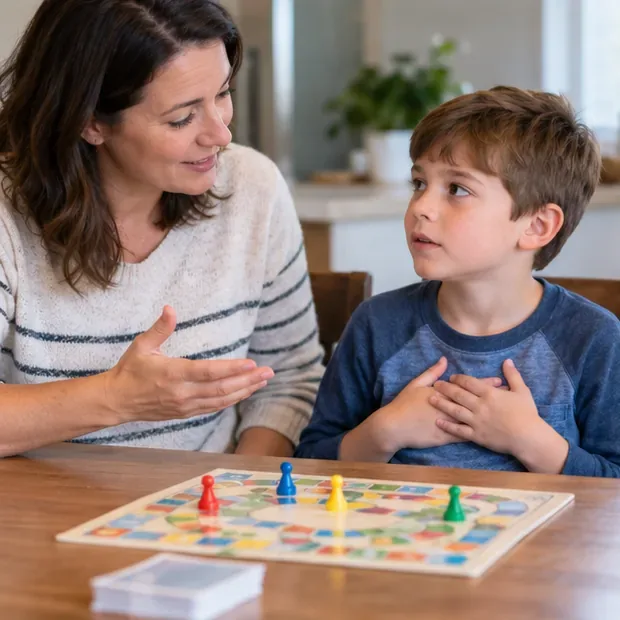
Teach children to handle losing without shame or explosive anger by validating feelings, setting behavior limits, modeling recovery, and practicing at the right difficulty.
A calm, practical plan for after-school meltdowns: reduce overload, keep limits clear, track patterns, coordinate with school, and know when to seek help.
Learn how to respond when a child feels unwanted, ask supportive questions, recognize bullying or ongoing distress, and know when to seek extra help.
Learn how to set up a shared bedroom for siblings with different bedtimes, from planning around age-based sleep needs to creating separate sleep spaces and quiet routines.
Compare full-day, gradual, and temporary at-home return plans, plus health checks and school supports that can help a child reenter safely.
Learn when a child can try to solve a friendship problem, when adults should step in, and how to tell whether support is helping or needs to change.