How to Teach Chores Without Redoing Every Task for Your Child
Teach kids to do chores with fewer reminders: set a clear finish line, model one task, step back, and correct only what is unsafe or unfinished.

Do you know that in the first months of your baby's life, your baby not only knows how to sleep or eat, but is also developing cognitive abilities at the same time?
Each baby will have a different growth rate. However, parents can foresee their child's leaps towards the stage milestones.
The children love their parents' voice very much. If she stuck out her tongue, she would imitate you. She still doesn't understand what she can do. At 6 weeks, children will not realize the existence of parents without or with anyone around. Therefore, the baby will not be afraid of strangers and welcome affection from anyone.
Darling begins to know how to do many things. Babies recognize toys, classify and love to see pictures of their parents. By 6 months, your baby will happily reach for, hold, throw or even put it in his mouth. Your child may also find that he has held a toy before. Baby recognizes the shape, composition and color of objects. For example, as long as you show the pictures of cats, the other picture is a dog, your baby will be surprised and laughed.
I already know my name and feel uncomfortable with strangers or when I go to new places. Children are able to perform many actions they want, know how to use toys, such as drums to hit and teddy bears to hug.
If you pay attention, you will see your children imitate what adults did yesterday. Babies learn a new game like releasing a swing from a cradle to make a cry. However, children still do not understand the game of hide and seek, so if parents hide toys, they will not be able to find them.
Baby starts to follow and cry every time the parents leave. Baby is very uncomfortable when not seeing relatives anywhere. In addition, if you see a reflection of yourself in the mirror, your baby will not realize it is himself. Besides, you will know how to say the first words.
Children will let parents understand what they want with a combination of words and actions. Children also learn to imitate the actions of their parents. Children will curiously open the closet or empty the toy box to explore, as well as know how to solve the problem and gradually be able to find the lost or hidden object.
I started to practice walking and speaking, thinking, solving problems by concentrating on thinking rather than tinkering. Babies who are able to find and retrieve the items themselves have also started to pretend or imitate. Sometimes your child's frustration turns into anger. Babies will wear their parents in strange situations.
At the 18th month, she still plays with other friends, but when she is 2 years old, she won't want to share toys anymore. I do not know how to put myself in other people's shoes, so in case if I hit you accidentally, because I do not feel pain, she guesses other people will not hurt. Also, when they touch a chair, they say it hurts you.
Hope the article will help parents understand more about your child's cognitive development!
Teach kids to do chores with fewer reminders: set a clear finish line, model one task, step back, and correct only what is unsafe or unfinished.
Learn why toilet-trained children may start having pee or poop accidents again, what patterns to track, how to respond calmly, and when to call the pediatrician.
A child may repeat a reassurance question to process information, seek connection, or manage worry. Learn how to respond and when persistent anxiety needs support.
Learn how to set screen-time boundaries with predictable routines, warnings, calm follow-through, and better transitions—without turning every device handoff into a fight.
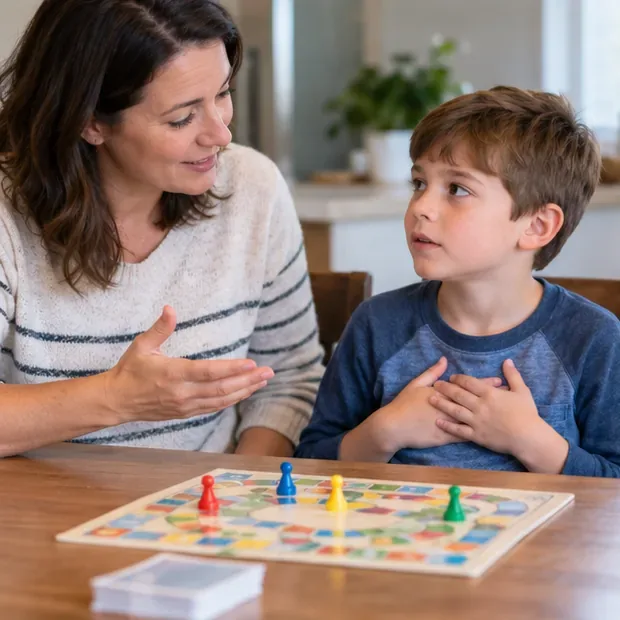
Teach children to handle losing without shame or explosive anger by validating feelings, setting behavior limits, modeling recovery, and practicing at the right difficulty.
A calm, practical plan for after-school meltdowns: reduce overload, keep limits clear, track patterns, coordinate with school, and know when to seek help.
Learn how to respond when a child feels unwanted, ask supportive questions, recognize bullying or ongoing distress, and know when to seek extra help.
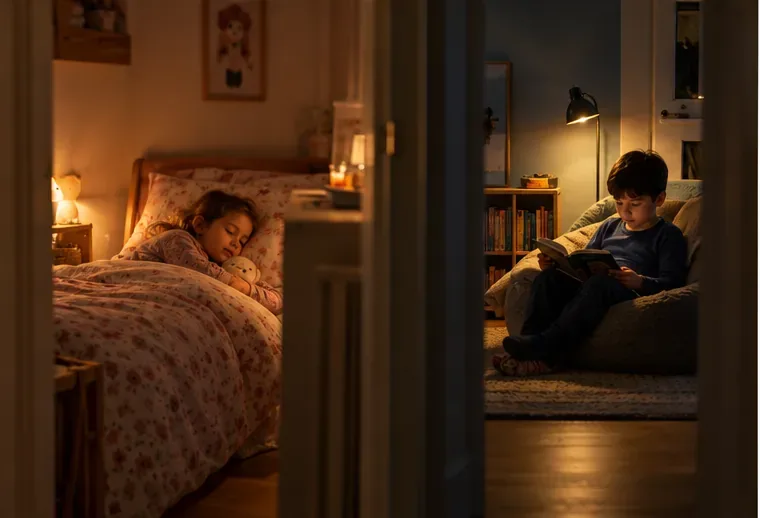
Learn how to set up a shared bedroom for siblings with different bedtimes, from planning around age-based sleep needs to creating separate sleep spaces and quiet routines.
Compare full-day, gradual, and temporary at-home return plans, plus health checks and school supports that can help a child reenter safely.
Learn when a child can try to solve a friendship problem, when adults should step in, and how to tell whether support is helping or needs to change.