Do you know, from 0 to 3 months of age, your baby can be aware of the world around him? Stimulating the baby's senses abilities at this stage is the foundation for future intelligence development of the child. Do not miss the following article to teach smart children right from the moment of birth!

With simple ways, mothers can help children develop intelligence from an early age
1 / Stimulate vision development
To increase the child's concentration, for children under 1 month old, mothers should let babies look at the black and white stripes for 3 minutes a day, continuously for 1 week. This way helps babies increase their ability to focus from 5 seconds to 60 -90 seconds. Increasing ability to focus helps children have a good foundation for future learning. 6 months old, if the baby is bored with the black and white stripes, the mother can "upgrade" to black and white checkered stripes.
In addition, mothers should also keep the alphabet, with large, red print letters near the baby's bed. Bring your baby closer to the alphabet for 2-3 seconds each time and repeat several times. Children who are exposed to small alphabet will have faster font recognition.
2 / Hearing development
Let your baby listen to music every day for 15 to 30 minutes each time. Music has a positive impact on the baby's brain development, stimulating the senses, expanding awareness and feeling.
When letting children listen to music , mothers should use their hands to hold the baby's armpits, let them stand on their own feet and rock the baby gently to the music. Soothing music with soothing sounds like ballet music will help your baby grow well. Soothing children's music, with funny sounds, is also very suitable for children.
![Smart parenting from birth]()
6 things you should not ignore if you want your child to be smart Many scientists have shown that, apart from genetic factors, there are many other factors that can affect your child's intelligence. You should pay special attention to the following things in order not to miss the opportunity to help your baby smarter!
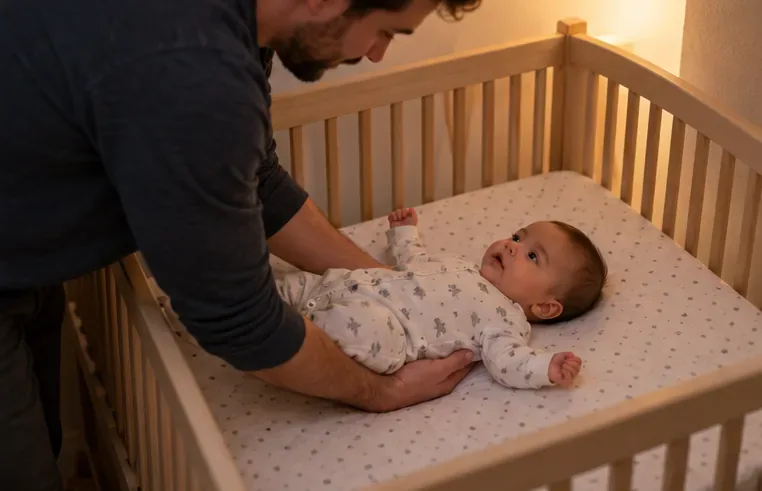
Mother's voice is also one of the sounds that helps your baby develop his hearing. No matter what you do, from changing diapers to bathing your baby, you should talk gently with your baby. While changing your baby's diaper, you can hold hands, tell your baby, "Here are the hands, feet" and repeat over and over again.
3 / Touch
When breastfeeding, mothers should move the nipple to touch different positions on the baby's face such as lips, mouth, upper jaw, lower jaw, chin, left cheek, right cheek. This helps your baby learn to adjust the space, feel the top, bottom, left and right position.
Alternatively, you can also use your finger or a towel to gently rub the upper and lower jaw. Children will learn how to recognize feelings when licking and biting dissimilar objects.
![Smart parenting from birth]()
10 smart parenting strategies Temporarily put aside genetic factors, intelligence is a gift that mothers can "give" more to the baby. Do not just go around looking for brain-healthy foods, there are many other useful tips to raise smart children. How many of these secrets have you applied?
4 / The ability to hold
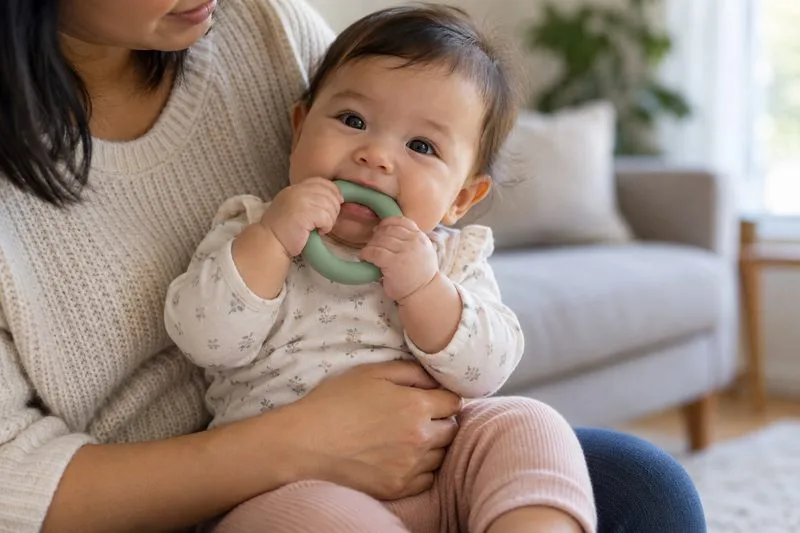
The ability to hold objects with your baby right from the moment of birth. Try touching my palm, can you see your baby's fingers wrapped around your hand? This is the reflex that appears in the first few weeks of life. To stimulate this skill of children, mothers should often let babies hold hands, put toys or colorful objects away and encourage babies to hold them.
>>> See more discussions with related topics:
Teaching smart children: 3 years old is too late
Smart parenting methods