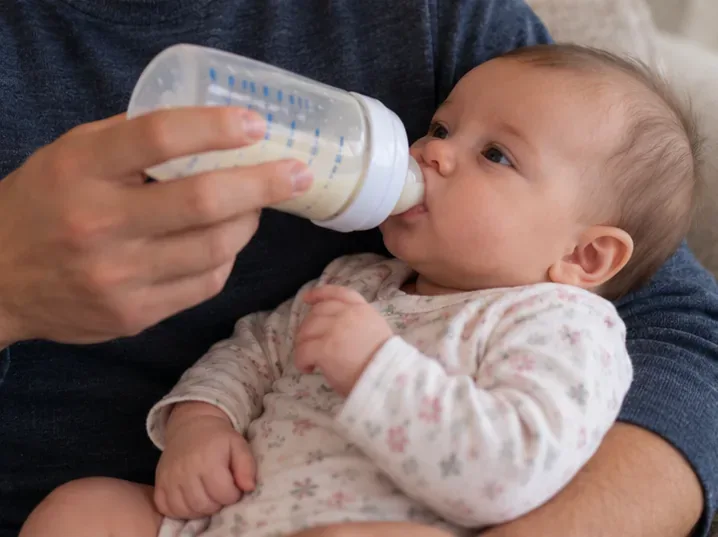
An infant's breathlessness, if accompanied by symptoms such as fever, nasal congestion, and wheezing, may indicate a respiratory problem. Mom needs special attention in these cases.
Infants will have a slightly different breathing rate than adults . Instead of breathing 12 to 20 times per minute as an adult, the infant's breathing rate was 40 to 60 times higher. The baby's normal breathing cycle will be deep and fast at first and then slowly and shallower.

Strong breathing can be caused by a variety of reasons
You can actively count your baby's breathing by holding your baby in his lap when the baby is relaxed and not fussy. Next, mothers gently lift the baby's shirt from the chest and monitor the breathing through the abdomen or chest. Each baby's breath is counted as 1 beat, you can slowly count for 1 minute and can count again from 2 to 3 times to get the most accurate results.
When counting, mothers should also patiently count all the baby's breaths within 1 minute and avoid the case of counting half the way and then stop and multiply. This action will be inaccurate as the infant's breathing does not always repeat. The breathing rate of a perfectly healthy baby is about 40 to 60 times / minute during the 1 month period and from 35 to 60 minutes / time for babies under 6 months old.
When falling asleep at night, your baby will sometimes breathe hard, quickly or make a sound like wheezing, whining or whistle ... The cause of this phenomenon is due to the nasal structure of newborn babies. Usually very small and the nose seems to be the only airway, so the baby will not be able to actively adjust the breathing rhythm. This will lead to nasal congestion and also affect other respiratory systems.
However, if your little angel is still eating and drinking normally, gaining weight steadily and showing no signs of fussiness or discomfort, moms can rest assured that babies breathing hard and fast is the sign. Significantly not worrying.
![Is breathing hard in a baby a sign of concern?]()
What is the sign of newborn wheezing? There are many causes of baby wheezing. The most common cause is due to the child's respiratory illnesses such as bronchitis, pneumonia or asthma.
Some symptoms are dangerous when babies are breathing heavily
In the case of infants breathing heavily without any other negative signs, mothers need not worry too much. However, if the infant breathes heavily with the following symptoms, the mother should take him to the hospital immediately.
Nasal congestion : A common cause for a baby to breathe heavily is a stuffy nose. Most children will have a lot of runny nose, wheezing, stuffy nose. If you just got it, you just need to clean your baby's nose regularly or use reputable nasal sprays specifically intended for young children. If after 2 weeks, you still do not see any improvement in your baby's symptoms, you should seek immediate medical attention.
Fever: Your baby who has a fever will also experience strong, fast breathing. This action will dispel the child's heat and help the body recover more quickly.
Vigorous exercise: Just like an adult with vigorous exercise, children will begin to breathe hard and fast to help the body provide more oxygen for cell activities. To minimize the need for children to breathe hard and fast due to inhaling dust and smoke, mothers should pay attention to keep their child's play environment clean and well ventilated.
Wheezing or with sounds: If your baby has this symptom, he or she may have asthma or a viral infection. The strong and fast breathing at this time is because the baby is blocked in an area in the airway leading to a wheezing, sounding case. You can let your baby inhale albuterol or use a nebulizer to help your child improve this condition.
Through this article, MarryBaby hopes to help mothers relieve the problems of babies breathing heavily. In addition, regular monitoring of your baby's breathing and keeping the baby's living environment clean and well-ventilated will be helpful suggestions to help your little angel avoid sex-related diseases. Respiratory.