Do you know, children from 0-1 years old need to eat how many meals and serving sizes each to ensure brain development in this important period? If you are still wondering, immediately refer to the following detailed menu for your baby!
Not only ensuring to provide the necessary nutrients for the child's physical and brain development, planning a diet, a diet suitable for the baby's age in the first year also helps. avoid unnecessary weight gain. MarryBaby tells mom the suggested menu based on the needs and frequency of eating according to each month, your child's age!

In order for your child to develop healthy, a proper nutrition is very important
1 / Menu for children from 0 - 1 year old
Month of age Breast milk
Formula milk
(ml)
Cereals
Vegetable
0-1 month Breastfeeding 2-3 hours / time 6-8 times / day and 60-90ml / time Not needed
1-4 months 6-8 times / day and about 150ml / time 6-8 times / day and 180-240ml / time Not needed
4-6 months 7-8 times / day and about 180ml / time 900 - 1300ml / day 1-2 tablespoons of cereal / day then gradually increase to 3-4 tablespoons / time
6-8 months 180 - 240ml / time Feeding your baby 3-5 times / day Give your baby a try a number of different cereals 4 times / day, 2-3 tbsp / time
8-12 months 120-180ml / time during the day and 180-240ml / time before going to bed 3-4 times / day No need for 4 times / day, 3-4 tbsp / time
2 / Things to note
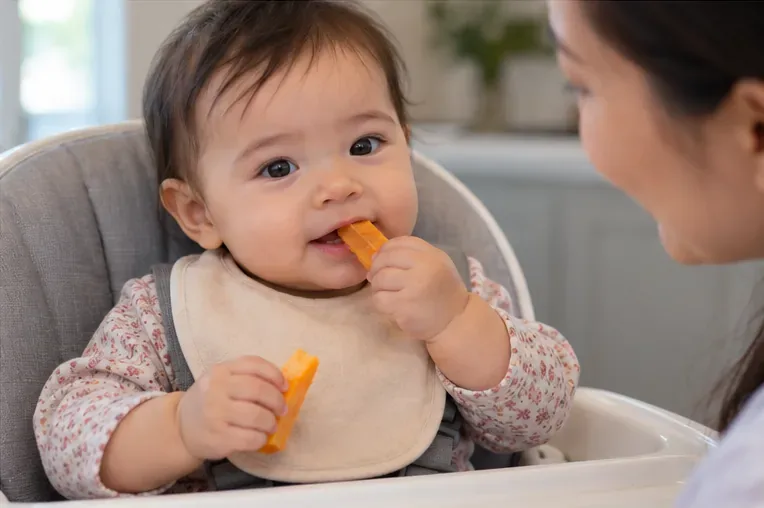
- For children under 1 year old who are learning to wean, mothers can give them a try some fruits and vegetables such as: beetroot, beans, pumpkin, sweet potato, carrot, potato, peas, melon, peaches, pears, apricots, apples and bananas. In particular, mothers should puree before feeding, and the consistency of the food may change with the age of the baby.
- Foods to avoid for children under 1 year of age : In addition to spices such as salt, sugar ..., mother nor infant under 1 year old should try to eat honey. Although it contains many nutritional components, with an incomplete immune system and digestive system, children under 1 year old are susceptible to being poisoned when eating honey. Be careful mom!
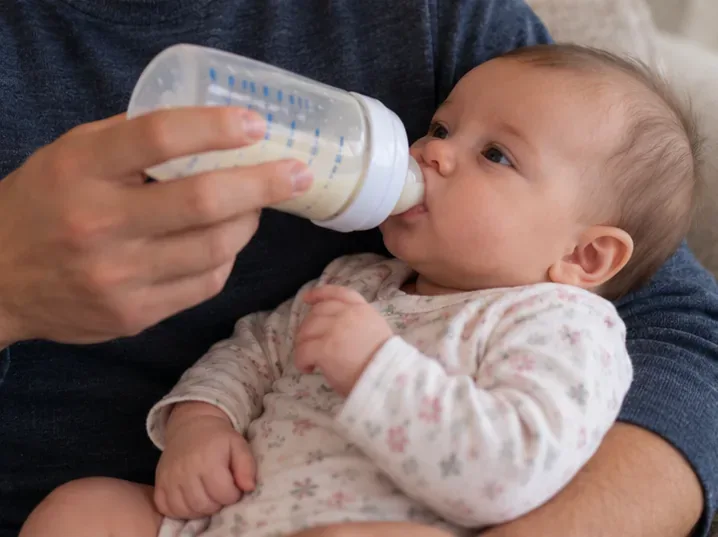
- If the baby falls asleep without getting enough milk and the baby is showing signs of underweight for his or her age, mothers should wake up the baby to continue feeding. Note that the baby should not keep the bottle and sleep, because it can affect the baby's oral development in the future.
- Breastfeed your baby for at least the first 6 months of life, and can continue to breastfeed until 18-24 months of age. If you intend to wean your baby before the age of 1, the mother should give her baby rice cereals to supplement her body with iron.
- 6-8 months old, mothers can let babies learn to eat, but they should not give them hard foods such as raw vegetables, candies, nuts, slices or large pieces of apples. At the same time, mothers should also avoid sweet or salty foods for babies. It is possible for your baby to try the crackers, baby biscuits for the teething stage.
![Detailed menu for children from 0-1 years old]()
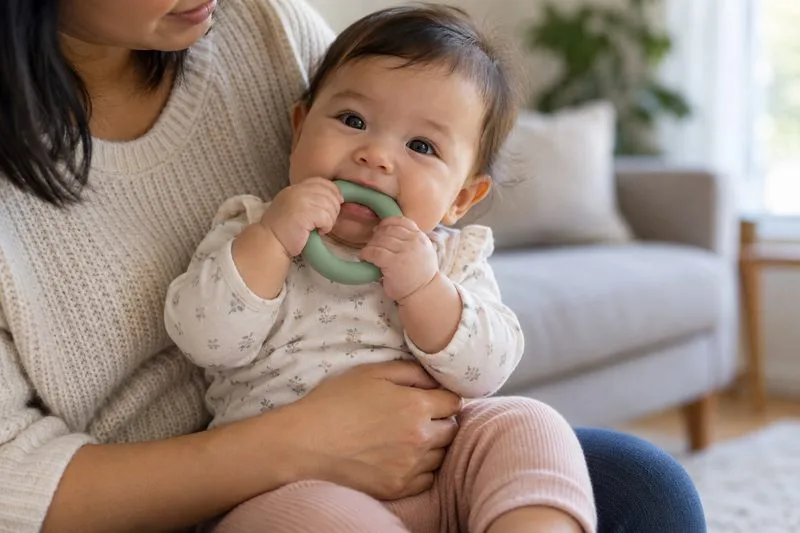
Nutrition for your baby in the teething period Soft and spongy pureed foods are still top priority, because these pureed foods help babies eat a lot without having to chew. Even older babies can eat this food at teething if it is difficult to chew the food.
>>> See more discussions with related topics:
Sharing experiences in caring for a baby under 1 year old
Teaching delicious food for children under 1 and a half years old