If you intend to add canned foods, processed foods to the list of 6-month baby snacks, you should stop immediately. Replace with a healthier choice than mom!
When the baby is 6 months old, the mother is able to introduce to her baby new snacks besides the main source of nutrition, which is milk. The starting point seems difficult, so sometimes mothers choose processed foods to make eating simple and less clack. However, canned foods are not suitable for a 6-month baby snack list.

Not all foods can be preserved for long
1 / Absolutely away from canned food
Practicing weaning for babies really takes a lot of time and effort, if mothers prepare food for their babies by hand. The time to crush, puree, and cook did not take a few minutes to finish, while the result was not very positive. The baby does not seem to be salty with this whole fresh food.
On the contrary, when feeding canned foods such as mashed fruit, beaten eggs, the attitude is much more positive. Even though the recommended information on the packaging states that the product is suitable for 3-6 month babies, low in sugar and sodium, mothers should still be careful.
Already processed and canned, it must be more or less preservative, and while it is clearly stated that it is low in sodium, nutritionists conclude that the amount of sodium in canned foods for babies maybe 20 times more.
It is best to try to make snacks for your baby 6 months at home. With canned corn and peas, mothers can buy and grind them with rice flour, because these foods contain a lot of nitrates. Limit how much processed foods your children eat, the more mothers create opportunities for their children to develop healthy eating habits in the future.
![Baby foods for 6 months: Stay away from canned foods]()
10 principles to help your children have healthy eating habits No need to be a qualified nutritionist, just master the following golden rules that you can help the whole family build a healthy eating habit strong.
2 / List of snacks for babies 6 months
Mom can refer to the following list of friendly 6-month baby snacks:
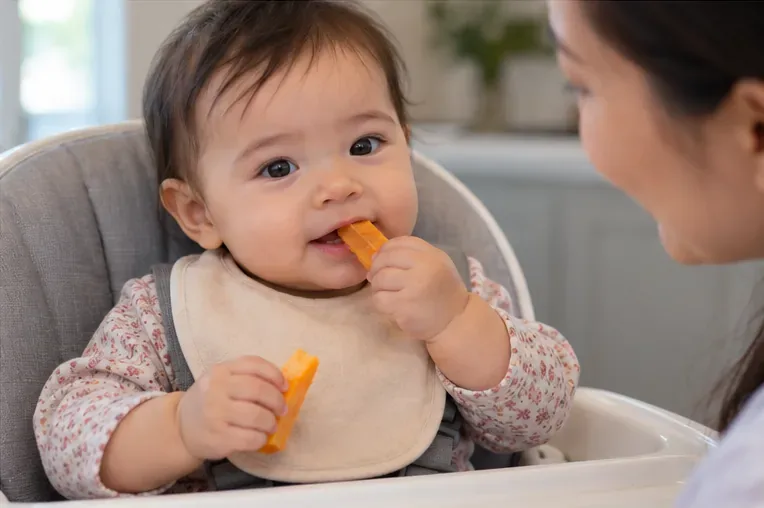
Fruits: Apple, avocado, banana, mango, papaya, peach, pear, plum.
Vegetables: Pumpkin, carrot, peas, squash, sweet potato.
Grains: Barley, oatmeal, rice.
Meat protein is also a great starting point when your baby learns to wean, especially iron rich red meat. However, mom should only add a small amount with rice flour and puree.
3 / How to preserve baby food
If you do not have time, you can prepare baby food for one time, then put it in a plastic box and freeze it in the refrigerator. The best storage time is 1 week. However, depending on the type of food, some still retain nutrients, some are lost and sometimes still infected, not good for your baby's health.
The list of foods that can be preserved can be referenced: blueberries, broccoli, cauliflower, carrots, corn, green beans, peaches, peas, pumpkin, sweet potatoes. Apples, avocados and bananas can also be preserved for a long time, but often change color, typically browning. Mother is not too worried.
>>> Discussions on the same topic:
What are the preparations for the baby to start weaning?
Practice weaning for children - Mother's success and mistakes
Practice weaning from about 6 months old