It seems like a "sneaky" way out of the house without your child's knowledge is a good idea, but actually this way makes things worse when the baby no longer feels secure with the presence of parents.
Remember to say goodbye to your baby when you leave
This is a simple thing to reassure your child's psychology but many parents ignore it. On the contrary, many parents even try to escape from home while their baby is not paying attention because they are afraid that their baby will be crying and demanding. This is a big mistake because it can prevent you from feeling the pain of seeing your baby cry, but can worsen the fear of distance in the child's psychology.
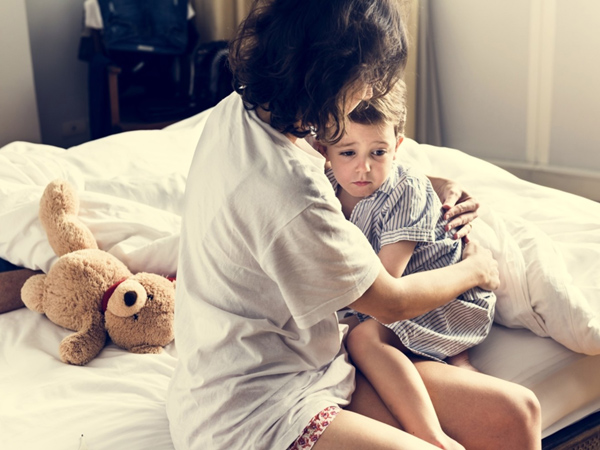
If your baby thinks that you can disappear whenever he or she is not paying attention, he will always be watching you, never leaving you out of sight. Some other parents take advantage of when the baby sleeps to get out of the house, especially at night, it seems that everything is going well if the baby doesn't wake up. But think how the psychology of children will panic if they accidentally wake up and their parents suddenly disappear?
Let your baby go out
For children psychology, saying goodbye is always easier when the baby is away. Instead of leaving your baby and going outside, ask a family member to take him to the park for a play or a walk when you are about to leave the house. Do not hesitate to let your baby know that you will also go out later, otherwise he will be very sad to not see you.
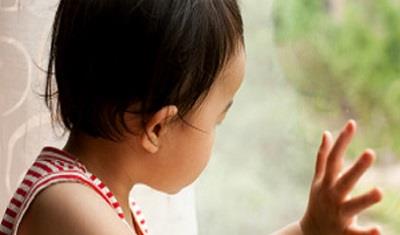
Psychological training for young children to get used to separating from parents, they will have the opportunity to develop independence early
Help your baby look forward
Although communication ability is still limited due to low vocabulary, he understands more than what can be said. So, you mentally prepare your baby for leaving by telling him ahead of time. It would be much better if they knew where you were going and when they would come back. You should also give your baby some information such as who will look after him and what he / she will do during this time.
Finally, you should help your baby visualize when you are away from home as an independent time when she can have fun activities. To see how much your baby has grasped the conversation with you, you can ask him questions like: "Do you know where Mom and Dad are going?" Or: "Who will watch over you when you and I go out to dinner?" These pre-prepared steps will help reinforce young children's psychology before the changes.
Focus on the positives
Fear of distance is not just a problem for toddlers, but you may even feel emotional when you think about the prospect of separation. If you show that fear, the baby will recognize it and respond. Moreover, if you exaggerate, the breakup will only increase the insecurity of the child's psychology.
So, try to stay calm and positive even when the baby is agitated. When your baby is fussy, talk to your baby in a gentle voice and reassure him that you'll be back soon. So that the breakup is not heavy, you can say funny things like: "I'll see you later, crocodile" or: "I'll just go for a while, crocodile" and practice your baby to respond to distract your baby from fear of distance.
Play the game “feeling naming”
It will take a long time for babies to truly understand their emotions, but they can learn to categorize their emotions simply. When your baby begins to panic, tell him, “I know you're sad when I'm gone. The feeling that you are having is that you miss you and I miss you too ”. Sometimes what a baby needs is a way to express fear. Teaching your child to name feelings can help alleviate this fear.