What to Pack for a Pet Sitter Besides Food and Medicine
Prepare a pet-sitter kit with care instructions, emergency contacts, comfort items, cleanup supplies, ID details, and home-access notes—plus a practical handoff checklist.
Be pro-active to prevent illness and injury and keep your dog healthy and happy. Use the list below as a guide for care at each stage of your dog’s life. Also, talk with your vet about what is best for you and your pet.
Initial exam within 48 hours of adoption.
Four to five combination vaccinations at three-week intervals, starting at the age of 6 to 8 weeks. Rabies vaccination at 16 weeks.
Wormings as prescribed by your veterinarian, at two- to three-week intervals or until the fecal test comes up clear.
Heartworm preventive. No heartworm test required if puppy’s mother was on preventive and puppy is started by the age of 12 weeks.
Follow-up exam at time of final vaccinations to spot congenital problems, retained baby teeth, and so on.
Spaying or neutering, as early as 8 weeks, as recommended by your veterinarian.
Annual examination, which may include periodic chemistry prolife and urinalysis, especially for older pets and prior to procedures requiring anesthesia.
Combination vaccination, annually. Rabies vaccination, once every three years or as required by law.
Heartworm testing.
Dental cleaning and scaling under anesthesia, annually or as recommended by your veterinarian.
Heartworm preventive, daily or monthly
Nail trim, weekly
Regular bathing and grooming
Home exam, including checking for lumps and bumps, weekly
Tooth-brushing, two to three times a week
Regular flea-control program
Prepare a pet-sitter kit with care instructions, emergency contacts, comfort items, cleanup supplies, ID details, and home-access notes—plus a practical handoff checklist.
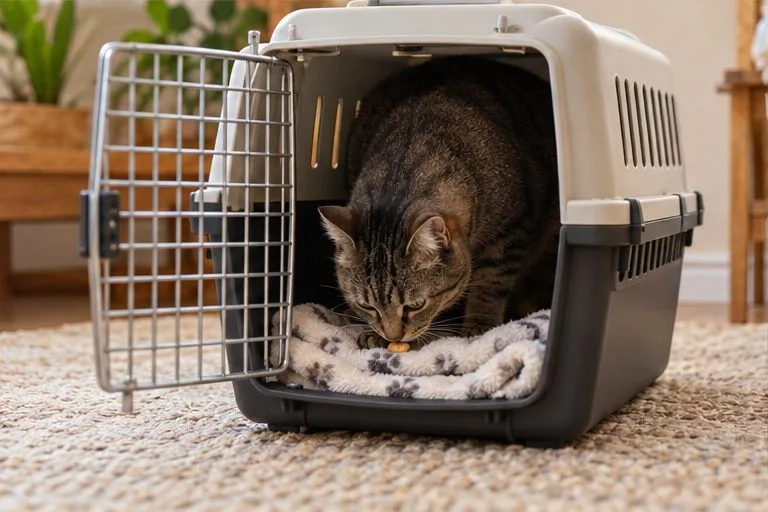
Learn how to choose a cat carrier, build comfort with gradual reward-based practice, and prepare for a safer, less stressful veterinary trip.
A rabbit that skips hay but accepts treats may have dental pain, GI trouble, stress, or a diet preference. Learn what to watch, what to change, and when to call a rabbit-savvy vet.
A cat may scratch beside a post because the spot, texture, angle, stability, or location suits it better. Learn what to observe and how to adjust the setup.
A pet’s evening restlessness may follow natural activity rhythms, routine cues, unmet needs, or health changes. Learn what to observe and when to call a veterinarian.
Introduce a new litter box gently: keep the familiar box available, use familiar litter, and let your cat choose. Learn when avoidance needs veterinary care.
Learn how to compare boredom and separation-related anxiety in pets, what to record on video, when to call a veterinarian, and which low-risk changes may help.
Plan a safer, gradual introduction when a dog guards food or toys. Learn how to separate resources, read stress signals, measure progress, and know when to get expert help.
Help a dog or cat accept nail care with gradual, reward-based practice. Learn what progress looks like, when to pause, and when to ask a veterinarian or groomer for help.
Learn how to wash a pet bed with less lingering detergent scent. Compare fragrance-free options, follow the care label, rinse thoroughly, and dry every layer safely.