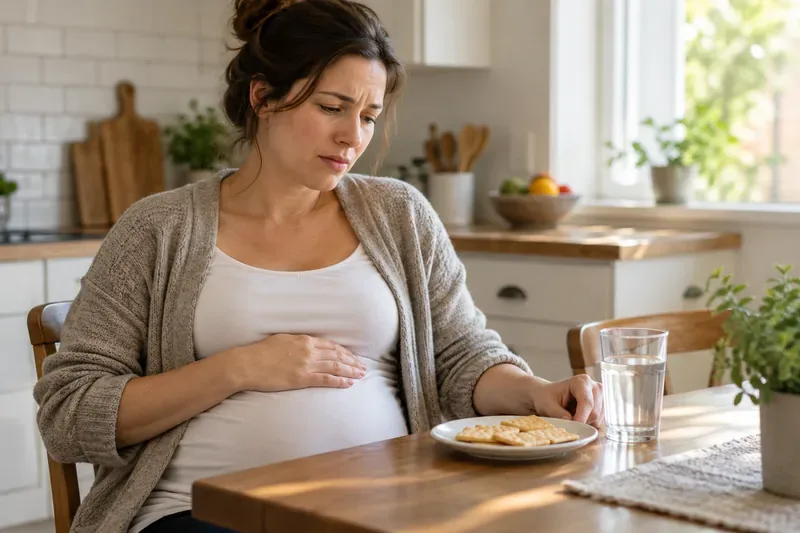
Pain in the epigastric region in pregnant women occurs in the middle of the upper abdomen and just below the chest. The pain has many causes, from simple to complex.
It is very common to experience epigastric pain during pregnancy. This condition comes from an acid reflux or pressure on the abdomen caused by an enlarged uterus. The process of changing hormonal levels during pregnancy can also aggravate acid reflux and epigastric pain in pregnant women.
Severe or persistent epigastric pain during pregnancy can be a sign of some serious health problems. Please join aFamilyToday Health to learn about this situation in pregnant women through the following article.
Causes of epigastric pain in pregnant women
Some reasons why pregnant women have epigastric pain are:
1. Acid reflux
Reflux occurs when stomach acids or food are pushed back toward the esophagus. If this happens, pregnant women will feel pain in the chest, abdomen and throat. Over time, persistent acid reflux can cause gastroesophageal reflux disease (GERD), affecting the health and psychology of pregnant women. Common signs of acid reflux include:
Heartburn
Undigested
Cough is constant
Sore throat, hoarseness
It feels like the throat is having seeds
The mouth has an unusually sour, fishy smell.
Some measures to improve this include:
Limit coffee intake
Split the portion size of each meal
Suck on a slice of ginger or enjoy a cup of ginger tea
Pay attention to sleeping position during pregnancy , keep your head up a bit so that the acid won't have a chance to back up
Limit spicy, hot, greasy foods and foods high in acid (citrus fruits, tomatoes).
2. Heartburn, indigestion
Indigestion, heartburn during pregnancy often occurs when pregnant mothers absorb foods that are not too stomach friendly, making this organ difficult to digest. On the other hand, sometimes stomach acids can irritate the lining of the digestive system. Common signs of the above condition include:
Nausea
Full stomach
Distention.
The above manifestations often appear with epigastric pain in pregnant women. For relief, you can follow some suggestions below:
Drink a lot of water
Do not eat before bed
Busy clothes are spacious and airy
Stand or sit upright for a while after each meal
Limit foods that you think may cause indigestion.
3. Overeating

The stomach is a very flexible, elastic organ for the digestion of food. However, if you eat too much, it will cause your stomach to swell more than it can expand, causing indigestion, acid reflux and heartburn. In addition, pregnant mothers easily encounter overeating due to the psychology of eating for two or if you have cravings during pregnancy .
4. Lactose intolerance
Lactose intolerance can be another cause of epigastric pain in pregnant women and its associated symptoms include:
Stomachache
Diarrhea
Vomiting
Undigested
Flatulence.
Milk and dairy products are major sources of several nutrients and minerals, especially calcium. Calcium is responsible for supporting the development of fetal bones and teeth. The restriction of these foods can affect the calcium supply to pregnant mothers and babies growing up in the womb. Therefore, you should consult and consult your doctor for suitable solutions for this problem.
Pregnant mothers should learn about calcium sources for lactose intolerant mothers to add to the daily menu, such as:
Soy products
Whole grains
Nuts and beans
Broccoli
Dried fruit
Spinach
Molasses.
5. Esophagitis or gastritis
Esophagitis and gastritis are two conditions that arise from acid reflux, infections, immune system disorders, and irritation from certain medications. If left untreated, the lining of the esophagus or stomach may damage or even bleed. Other signs of infection include:
Shortness of breath
Nausea
The cough doesn't go away
Having trouble swallowing
Pain in the epigastric region.
6. Diaphragmatic hernia
A diaphragmatic hernia occurs when part of the stomach pushes up through the diaphragm and into the chest. In addition to epigastric pain, other common symptoms of a diaphragmatic hernia include:
Undigested
Burp loudly
Itching, burning pain in the throat
A burning sensation in the chest
This is usually only common in the elderly, but does not rule out any possible risk.
7. Gallbladder disorder
Problems with the gallbladder such as gallstones and cholecystitis can also cause epigastric pain during pregnancy. Symptoms include:
Severe pain near the top, right side of the stomach after eating
Burning in the chest and throat
Not good eating
Flatulence
Jaundice.
How to treat epigastric pain during pregnancy?
![Find the cause of epigastric pain in pregnant women]()
Treatment of epigastric pain in pregnant women depends on the cause. If the pain is caused by diet or overeating, your doctor may recommend changing this routine, such as:
Do exercises for pregnant women for about 30 minutes a day
Eat healthy foods that support your digestive system, including ginger, yogurt
Take in extra B vitamins to reduce nausea and vomiting. However, pregnant mothers consult with your doctor before using any dietary supplement to avoid unwanted side effects.
If your upper stomach pain is the result of taking certain medications, such as NSAIDs (nonsteroidal anti-inflammatory drugs) , your doctor may ask you to stop taking these medications and suggest other ways to manage them. pain as well as does not affect fetal health.
When should pregnant women with epigastric pain see a doctor?
Pregnant women should see a doctor if epigastric pain suddenly becomes severe, occurs with constant frequency as well as interferes with daily activities. In addition, some danger signs that should not be ignored include:
High fever
Shortness of breath
Fainting
Chest pain
Vomiting of blood
The stools are black in color
Blood appears in the stool.